Nvidia: Jensen Huang Mediates Tensions Over AI Chips
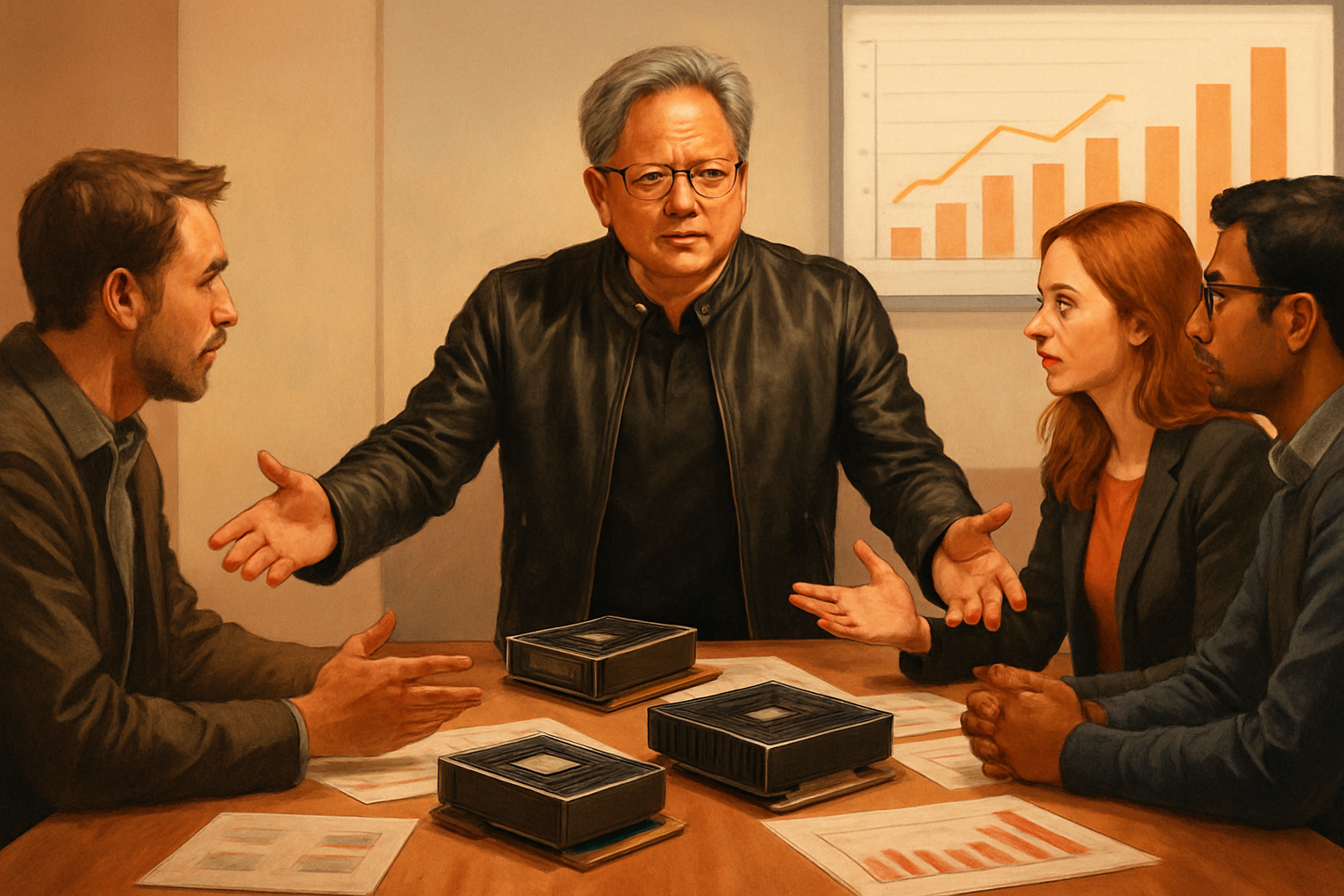
Jensen Huang, the Mediator of Internal Conflicts at Nvidia
Nvidia's CEO, Jensen Huang, plays a crucial role in managing internal tensions related to the distribution of the company's valuable AI chips. As global demand for these components continues to grow, particularly in data centers, Huang personally intervenes to arbitrate conflicts between different teams at Nvidia. These teams compete for access to the GPUs that have propelled Nvidia to the top of the global market.
According to Xinzhou Wu, head of Nvidia's automotive division, even within the company, access to GPUs for computing remains a limited resource. During an appearance on The Verge's "Decoder" podcast, Wu explained that demand for Nvidia chips is skyrocketing, especially from AI companies building massive data centers. This situation creates internal rivalries for the resources needed to train and test the AI models developed by Nvidia.
Strategic Resource Management
Wu detailed the internal process of resource prioritization, noting that he regularly collaborates with his colleagues to decide on the allocation of computing capacity. These decisions pertain to either training or testing for various projects within the company. However, there are times when Jensen Huang's intervention is necessary to make a final decision.
Le brief IA que les pros lisent chaque soir
Les 7 actus IA du jour, décryptées en 5 min. Gratuit.
Inclus dès l'inscription : notre sélection des meilleurs guides & comparatifs IA.
Choisis ton rythme
Gratuit · Pas de spam · Désabonnement en 1 clic
These revelations provide a rare glimpse into how Nvidia manages its resources in a company where GPUs have become essential to the rise of generative AI. The demand for these chips consistently exceeds supply, as giants like OpenAI, Microsoft, Meta, xAI, and Amazon seek to develop increasingly powerful AI models.
Beyond Short-Term Gains
Wu emphasized that resource allocation decisions are not solely driven by immediate revenue considerations. Nvidia aims to balance current business needs with long-term strategic opportunities. Jensen Huang often refers to the concept of a "zero trillion dollar business," indicating potential markets that could be worth trillions in the future.
One area where Nvidia is betting big is autonomous driving. Wu stated that the company is convinced that "everything that moves will be autonomous." Nvidia is therefore investing heavily in the development of chips, software, AI models, simulation tools, and safety systems for autonomous vehicles. Although the automotive sector is still modest compared to the data center division, Jensen Huang continues to view it as a priority.
The Battle for Manufacturing Capacity
Wu also mentioned that semiconductor manufacturing capacity represents another internal challenge, as demand for Nvidia chips continues to rise. Managing these critical resources is essential for maintaining Nvidia's innovation and competitiveness in the tech sector.
Brief IA — L'actualité IA en français
L'essentiel de l'actualité de l'intelligence artificielle, décrypté et expliqué chaque jour.