Nvidia, Microsoft, and Meta Defend Open AI Against Washington
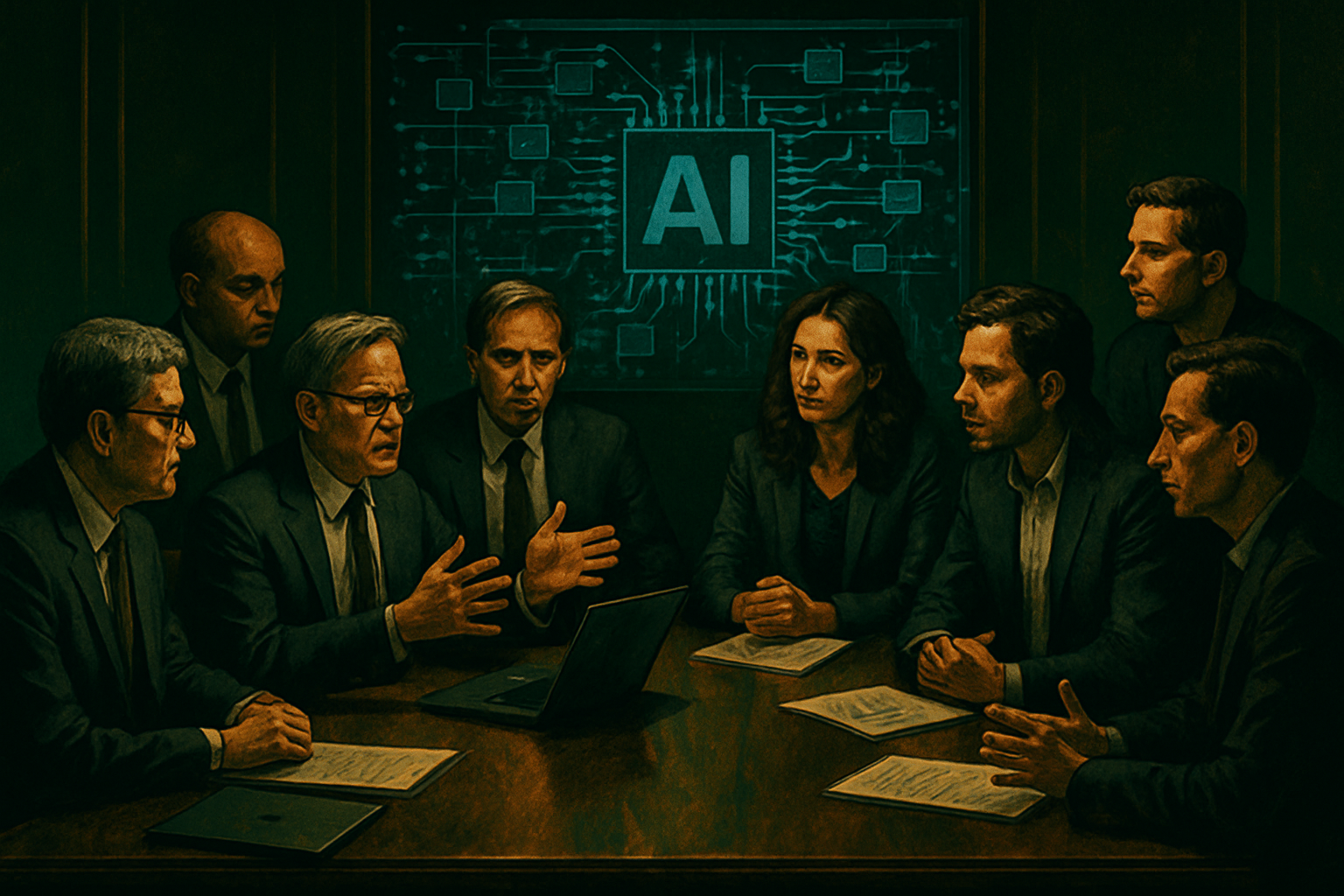
Nvidia and Its Allies Advocate for Open AI
Jensen Huang, the CEO of Nvidia, recently emphasized the importance of open-weight artificial intelligence models. This Friday, a collective of 25 companies and organizations published an open letter, including giants like Nvidia, Microsoft, Meta, and Mistral. In an inaugural message on the platform X, Huang highlighted the unity of these major tech companies in supporting the future of open AI models.
Huang stated that artificial intelligence is set to transform every sector, power all businesses, and be developed by every nation. According to him, open models are essential for enhancing security, accelerating innovation, and ensuring digital sovereignty.
A Call to Washington to Support Open AI
The open letter addressed to American policymakers urges them not to impose restrictions on open-weight AI models. This statement comes as some members of the Trump administration have hinted that they might take action against Moonshot AI, the creator of the Kimi K3 model, recognized as the most powerful open-weight AI model in the world.
The signatories of the letter expressed that true leadership in AI will not be measured by the creation of a cutting-edge model, but by the United States' ability to build an open and robust ecosystem that spans all sectors. Notably, OpenAI and Anthropic, considered leaders in the race for advanced AI models, are not among the signatories. Unlike Anthropic's Fable 5 and OpenAI's GPT-5.6-Sol, Kimi K3, as an open-source model, will soon be available for download and customization.
The Absence of Certain Tech Giants
Other major players in AI, such as SpaceXAI and Google, also did not sign the letter. Although Moonshot is not explicitly mentioned, the authors of the letter compare the development of open AI models to the revolutionary impact of open-source software in the 1980s.
The letter highlights that open-source software not only reduced costs but also created a shared knowledge base that enabled generations of American engineers and entrepreneurs to develop their institutional sovereignty.
Le brief IA que les pros lisent chaque soir
Les 7 actus IA du jour, décryptées en 5 min. Gratuit.
Inclus dès l'inscription : notre sélection des meilleurs guides & comparatifs IA.
Choisissez votre rythme
Gratuit · Pas de spam · Désabonnement en 1 clic
China Leading in Open AI Development
Currently, China dominates the development of open-weight AI models, despite the United States' reputation in the field of open-source software. Two of the biggest names in open-source, Mozilla and the Linux Foundation, have also signed the letter.
In the United States, Nvidia's Nemotron model is one of the largest open-weight models, although its performance is inferior to rivals like Kimi K3. Alexandr Wang, head of AI at Meta, stated that his team at the Meta Superintelligence Labs remains committed to open models and is working on an open version of its Muse Spark model. Reflection AI, a startup founded by former Google DeepMind researchers, is also preparing its own open model.
Controversies Surrounding Model Distillation
On Wednesday, Michael Kratsios, director of the White House Office of Science and Technology Policy, publicly accused Moonshot of developing Kimi K3 using a distillation technique from Anthropic's Fable 5 model. Distillation, which involves training a less powerful model on the outputs of a more powerful model, is a controversial but common practice in AI development. Meanwhile, companies like Anthropic have accused their Chinese competitors of abusing distillation to the point of appropriating their intellectual property.
Earlier in the week, Treasury Secretary Scott Bessent suggested that the United States could sanction companies involved in such distillation practices, which he compared to theft. The letter defends the distillation process in general while implying that companies like Nvidia, Microsoft, and Meta could support actions against those who abuse this technique.
They wrote that illegal efforts to extract value from closed models raise legitimate concerns. These concerns should be addressed through targeted legal and commercial frameworks, rather than through blanket restrictions on techniques that play an important role in AI innovation.
A Coalition of 25 Signatories
In total, 25 companies, organizations, and platforms signed the letter. Among them are American Innovators Network, Andreessen Horowitz, Arcee AI, Arena, Black Forest Labs, Box, CrowdStrike, Dell Technologies, Emergence Capital, Hugging Face, IBM, The Linux Foundation, Mariana Minerals, Meta, Microsoft, Mistral, Mozilla, Nvidia, Palantir, Perplexity, Reflection, Replit, ServiceNow, Telnyx, and Y Combinator.
Brief IA — L'actualité IA en français
L'essentiel de l'actualité de l'intelligence artificielle, décrypté et expliqué chaque jour.