Nvidia Shaken: The Huang Case Revives Risks for American AI
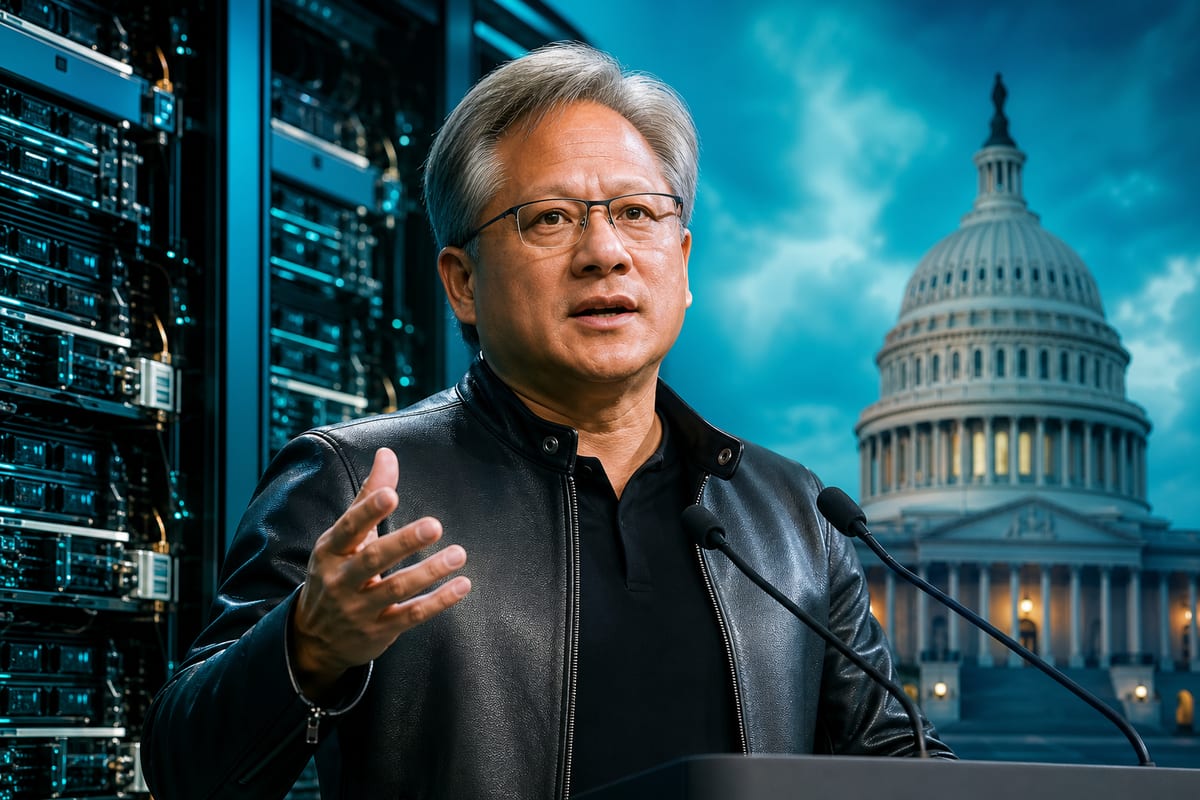
Jensen Huang's admission of a liaison comes as Nvidia tightens access to the most sought-after AI chips. Experts fear disruptions for the entire American sector, as investigations are underway and the prospect of legislative tightening grows stronger. The concrete benefits for China remain unclear, but the dependence of American labs on this hardware deepens uncertainty.
Legislative Tightening on Chips Becomes More Likely
Emily Kilcrease believes that the chances of new legislation on AI chip control being adopted in Congress have skyrocketed. Nvidia is also almost certain to face further disruptions as investigations continue, although the extent of their impact on the industry remains difficult to measure. Experts consider China to be very close to the United States, so modest delays on the American side could favor Chinese catch-up. The market has already reacted, with Nvidia's stock price declining since the revelation of the affair.
Investigations and Shortages: A Direct Risk for Nvidia's Customers
Emily Kilcrease estimates that the ongoing investigations will absorb significant internal resources at Nvidia and pose a risk of slowing down daily operations. She anticipates effects on decisions, launches, and the allocation of already scarce chips, with possible consequences for customers. She specifically mentions OpenAI and Anthropic, which may struggle to obtain the computing volumes they need, while noting that changing hardware takes time. Sunny Cheung warns that security or governance issues at Nvidia would be enough to create uncertainty throughout the entire American AI industry, given the company's central position.
What Beijing Could Gain from Access: From Silicon to Information
For Emily Kilcrease, the most immediate gain for Beijing would be obtaining more Nvidia chips, as China also has advantages in energy and open models. According to her, without the latest generations of these processors, China cannot close the gap with American capabilities, and with these chips, the U.S. lead could erode in a matter of weeks or months. Experts more broadly believe that any access to Nvidia could either accelerate Chinese development or hinder the United States. Sunny Cheung emphasizes that the value of such access could also lie in information about infrastructure expansion plans, computing needs, and American industry trends, even insights into the White House's thinking on export controls and the private opinions of Silicon Valley leaders regarding China and Taiwan. This appetite also explains the rise of a black market for restricted Nvidia chips.
Le brief IA que les pros lisent chaque soir
Les 7 actus IA du jour, décryptées en 5 min. Gratuit.
Inclus dès l'inscription : notre sélection des meilleurs guides & comparatifs IA.
Choisissez votre rythme
Gratuit · Pas de spam · Désabonnement en 1 clic
What Is Established and What Is Not Regarding Alleged Espionage
Jensen Huang has admitted to a liaison with a woman suspected of being a Chinese spy, who is reportedly known to American intelligence and President Donald Trump. However, it is unclear to what extent a spying operation would have succeeded, and there is no public evidence that the CEO helped divert restricted chips to China or transmitted sensitive information about them. Companies linked to the alleged spy Alice Huang are said to have facilitated at least $7 billion in Nvidia chip sales to China. Sunny Cheung considers it reductive to focus solely on potential theft of trade secrets and hopes that Jensen Huang did not hand over plans for next-generation chips.
Contested Priority Access: Brookings' Alert
Kyle Chan, a researcher at Brookings, raises a specific concern: the possibility that during a shortage, companies with alleged ties to China may have received priority access to the latest Nvidia GPUs. Such a situation would further complicate access for American companies that depend on these components.
Nvidia, a Pivot for Chips Amid Restrictions and Lobbying
Nvidia is one of the few players capable of designing or manufacturing cutting-edge chips, a bottleneck that the company effectively controls. To reduce this dependence, Meta, Anthropic, and OpenAI are developing their own chips and spending billions to secure more computing power. The United States has restricted the export of the most advanced chips to China to slow its progress, which is considered close to that of the U.S., while Beijing has made domestic alternatives a priority without yet reaching Nvidia's level. Jensen Huang criticizes these restrictions, and Nvidia is investing in lobbying; last year, he obtained permission to export H200 GPUs to approved customers in China and elsewhere, and he is said to have direct access to Donald Trump and other leaders. In a race where time is of the essence, experts warn of risks to national security and American technological lead. Nvidia's position is also associated with the profile of its CEO, co-founder, chairman, CEO, and director, despite a perceived limited stake, and the affair has been followed by a decline in the stock price. Finally, it is noted that Anthropic is described as the undisputed leader in advanced chips, in a context where talent, energy, capital, and data remain necessary but where the best chips remain central.
Brief IA — L'actualité IA en français
L'essentiel de l'actualité de l'intelligence artificielle, décrypté et expliqué chaque jour.