Obside Challenges AI with World Cup Bets
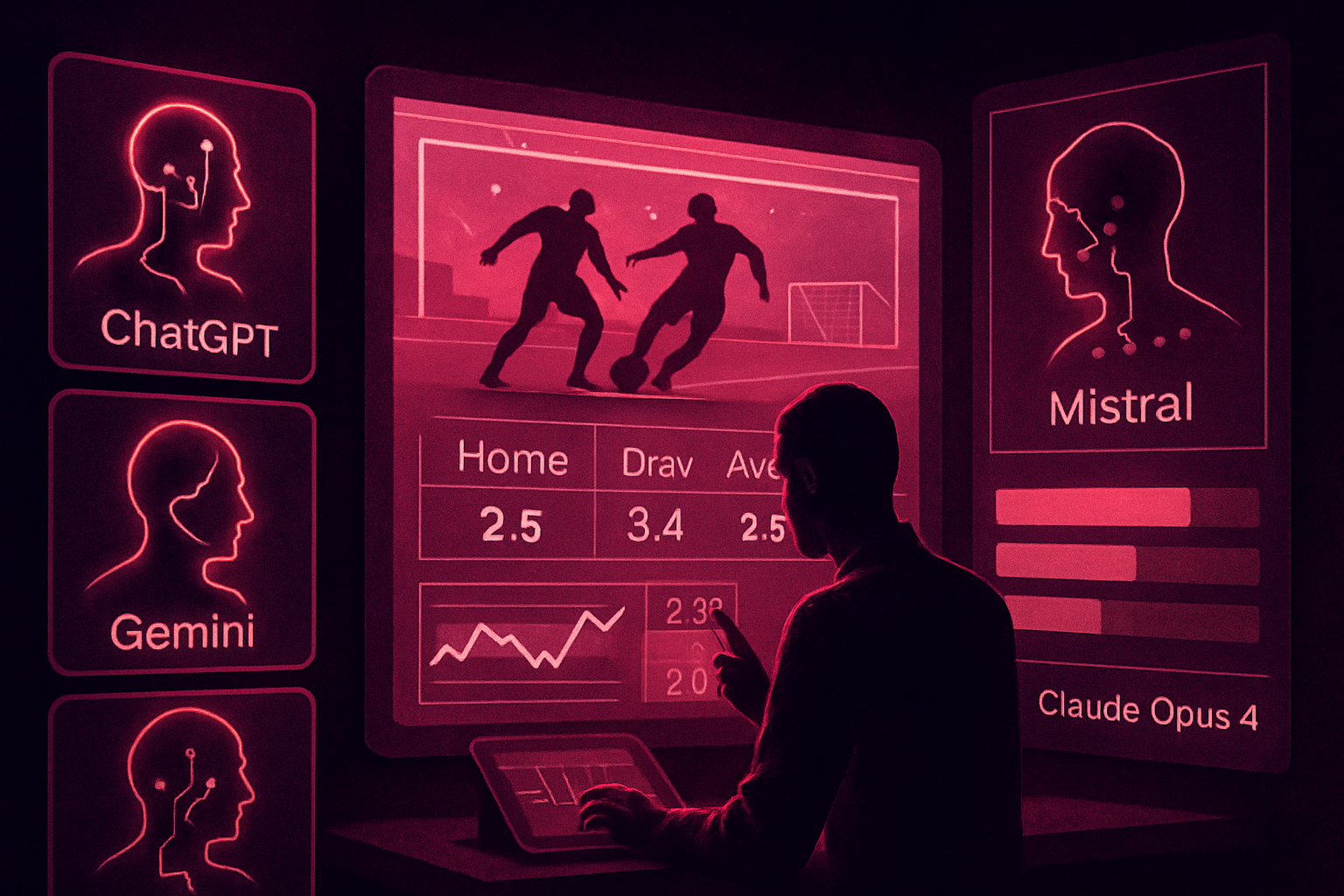
The CTO of the startup Obside recently contacted the author to share a fascinating benchmark involving several artificial intelligence models in an unconventional prediction exercise: betting on World Cup football matches. The goal was to measure their ability to effectively predict future events.
To do this, Obside selected models such as ChatGPT, Gemini, Claude, Grok, Mistral, DeepSeek, and Kimi. These AIs used live odds provided by Polymarket to place their bets. One hour before each match, the models switched to agent mode, analyzing information such as the teams involved and player injuries to decide how much to bet from a virtual bankroll of $10,000.
Le brief IA que les pros lisent chaque soir
Les 7 actus IA du jour, décryptées en 5 min. Gratuit.
Inclus dès l'inscription : notre sélection des meilleurs guides & comparatifs IA.
Choisissez votre rythme
Gratuit · Pas de spam · Désabonnement en 1 clic
The author checked the results after the semifinals on Thursday, noting that the Mistral model, developed as open-source in France, stood out by taking the lead in the rankings, closely followed by OpenAI's GPT 5.5 and DeepSeek V4. In contrast, Anthropic's Claude Opus 4.8 finished at the bottom of the rankings, being the only one to lose money, raising questions about its ethical approach to betting.
This original exercise aims to test the judgment of AIs in uncertain situations, a theme the author has previously explored. Last year, ChatGPT had already participated in a forecasting tournament organized by economists, but it did not outperform the average human participants. While betting on football is different, it remains an innovative way to assess the ability of AIs to turn online information into profitable predictions.
Brief IA — L'actualité IA en français
L'essentiel de l'actualité de l'intelligence artificielle, décrypté et expliqué chaque jour.