Omnilert: Four Young People File Complaint After False Alarm
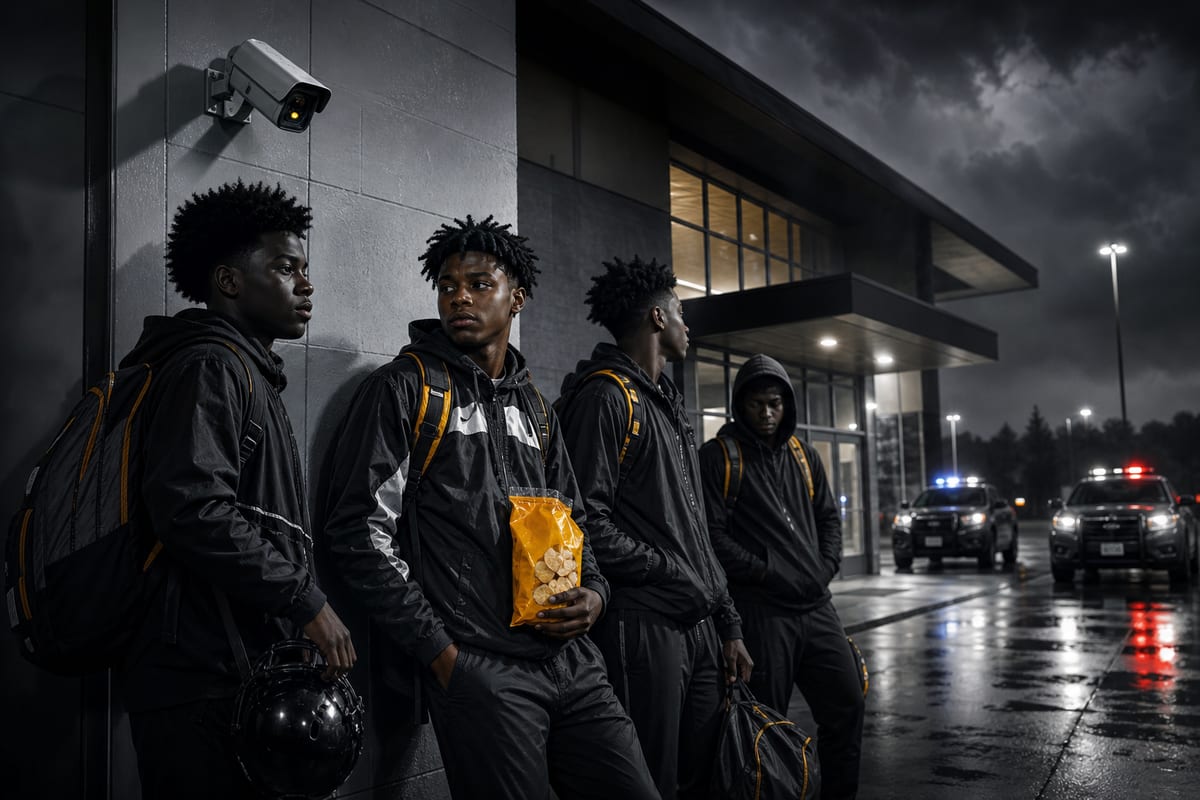
Four students or former students are suing Omnilert, the Baltimore County Public Schools, and police officers following an incident triggered by a bag of chips mistaken for a weapon in October 2025. They are seeking the suspension of the AI detection system until appropriate safeguards and training are implemented. The alert had been canceled before the officers arrived.
The principal allegedly missed the cancellation message
More than 99 percent of OGD alerts from the Baltimore County Public Schools (BCPS) were false positives that did not require police intervention, according to the Office of the Inspector General for Education (OIG). Its investigation concluded that there was no bias in Omnilert, but identified a failure in the distribution of responsibilities at Kenwood High School. Principal Kate Smith reportedly saw the alert without noticing its cancellation and then texted a police officer assigned to the school to bring in the police 15 minutes later. She had written that the object might not be a weapon and, according to the OIG, had never been trained on the system.
The OIG recommends reviewing school security procedures and limiting the recipients of alerts. These measures could, according to them, promote adherence to the notification circuit and ensure that police are fully informed about a verified threat. They warn that poorly managed transmission can expose students, staff, and officers to danger.
The agency also advocates for the use of the Omnilert app rather than checking alerts in phone messaging, as Kate Smith had done. They believe that by enlarging an image or watching the video, she could have missed the cancellation. Access to internal training was disseminated to BCPS staff immediately after the incident; the OIG now recommends biannual training.
The plaintiffs seek guarantees before any resumption
Taki Allen, Yui-Osa Ogbeide, Devon Thompson Jr., and Keith Winfield III consider these recommendations insufficient. Their action targets the provider, the responding police officers, the school administration, and several of its officials, whom they accuse of lacking procedures to prevent intervention after an alert has been canceled. The injunction they seek would condition the use of the system on effective protocols as well as adequate training for school and police personnel. The plaintiffs cite illegal searches and detentions, a violation of their constitutional rights, and deliberate indifference from BCPS, stating they want to protect other teenagers from a similar danger.
According to their complaint, BCPS was among the first users of Omnilert; their officials had presented this installation as the largest deployment of AI weapon detection to protect students. The teenagers accuse the provider of marketing a defective product and promising an almost complete absence of false positives without effectively enforcing the human verification on which that promise depends. They also believe that Kate Smith should have been aware of the frequency of errors and verified the danger before calling the police. One of them, still enrolled at the school, claims she never apologized and treated the matter lightly in exchanges with other officials, accompanied by laughing emojis.
Damon Hewitt, president and executive director of the Lawyers’ Committee for Civil Rights Under Law, a nonpartisan nonprofit representing the teenagers, denounces the combination of excessive reliance on AI and poor coordination. He calls on school and police officials to reconsider the use of this technology for public safety and children. Len Kamdang, who also represents youth within the Lawyers’ Committee, believes that humans have allowed AI to replace their judgment. According to him, the teenagers expect BCPS and Omnilert to acknowledge the unacceptability of the events.
Le brief IA que les pros lisent chaque soir
Les 7 actus IA du jour, décryptées en 5 min. Gratuit.
Inclus dès l'inscription : notre sélection des meilleurs guides & comparatifs IA.
Choisissez votre rythme
Gratuit · Pas de spam · Désabonnement en 1 clic
The police allegedly searched all the teenagers
The teenagers were sharing Cool Ranch Doritos after football, waiting for their ride, when the software flagged Taki Allen as a possible shooter. School officials recognized the bag from surveillance footage and dismissed any danger in under two minutes. The cancellation had been communicated to school recipients as well as the Baltimore County Police Department, indicating that no intervention was required. The plaintiffs attribute the subsequent events to technical and human errors: they claim that no officer present had looked at the footage before acting, and no police officer informed of the cancellation prevented the intervention.
According to their account, at least six vehicles arrived with lights flashing, and some officers drew their weapons upon exiting. The youths say they complied, standing still and terrified for their lives, without being explained the suspicions against them. They were reportedly separated, kneeling on the concrete, handcuffed, and then searched, along with their belongings. The police allegedly justified the treatment of Allen's peers by their association with him.
No weapon was found, and the teenagers say they only learned about Omnilert's role at that moment. Their complaint reports an officer insulting the AI cameras and the provider, as well as another officer expressing doubts about the reliability of the artificial intelligence. At the time of their release, one officer allegedly thanked them for not fleeing, explaining that fleeing would have posed a serious problem. Another reportedly joked about the precautions to take with their bags of chips.
Omnilert reviews the complaint
Blake Mitchell, vice president of marketing at Omnilert, states that the company is reviewing the complaint. He places the incident on October 20, 2025, and expresses regret for the fear experienced by the teenagers and their families, acknowledging their request for explanations. According to him, the system transmits objects that could be weapons to trained personnel: failing to identify a real weapon would be the worst possible outcome.
The executive recalls the OIG's conclusion regarding the absence of bias. He asserts that the designated security staff canceled the alert in about two minutes and that each recipient was notified. For him, this human verification must be followed by effective adherence to the cancellation.
BCPS declined to comment on the legal proceedings and referred to their communication sent to parents after the incident. This communication did not contain direct apologies to the teenagers. The administration promised ongoing emotional support as well as measures to prevent a similar incident from occurring.
Students trust police less
The teenagers report feeling less safe at their school and having less trust in the police. They describe pain, deep red marks on their wrists from the handcuffs, and lasting distress that includes fear, anxiety, and humiliation. They also claim that false rumors about the presence of a weapon continue to harm their reputation.
Taki Allen says he dreads waiting for a vehicle and the time spent outside after classes. He explains that he frequently pays for private transport rather than wait for relatives to arrive. Although he lives very close to the school, Keith Winfield would call his mother multiple times after practice to confirm that she was coming to pick him up, according to her.
Frieda Winfield, Keith's mother, demands changes and refuses to allow a child to be exposed to such danger while waiting for his mother outside the school. She says she has taught her son to be cautious around police officers and believes that the boys' behavior saved their lives. She describes her anger, but especially her fear for these young Black men who did not understand what was happening to them at school.
Brief IA — L'actualité IA en français
L'essentiel de l'actualité de l'intelligence artificielle, décrypté et expliqué chaque jour.