OpenAI Accepts Electric Reduction of Up to 1,000 MW
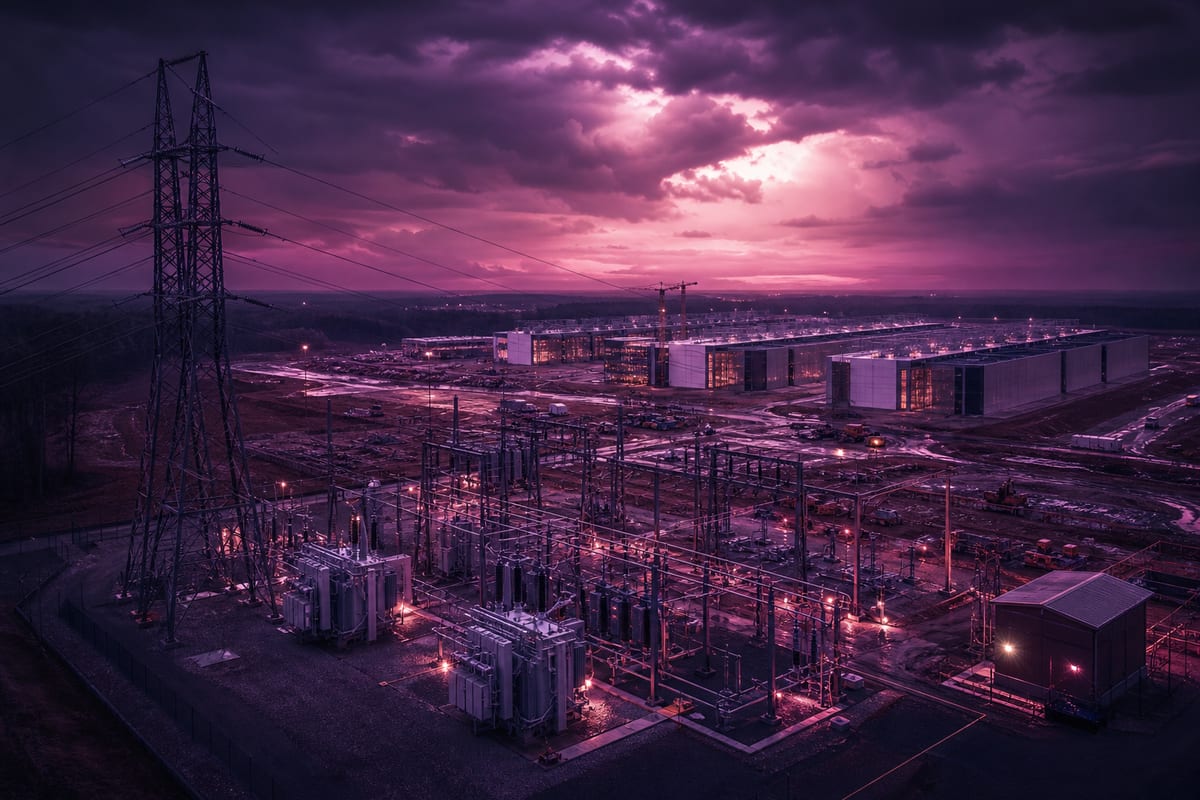
OpenAI agreed in August 2026 that Georgia Power could reduce the power supply to its future campus in Georgia by up to 1,000 MW when the grid is under stress. The detailed operational terms have not been disclosed, as local opposition and connection constraints hinder other data center projects.
Projects Stalled in the U.S. and Norway
In the United States, Data Center Watch estimated the cumulative value of at least 45 data center projects blocked or delayed by local opposition at $68 billion in the second quarter of 2026. The objections primarily concern electricity costs, water consumption, and the environmental impacts of the facilities.
In Norway, the cumulative electrical capacity of already connected centers, reservations, pending applications, and requests reached 32.1 GW, according to the government in November 2026. This figure places national electricity demand slightly above 25 GW. Therefore, this total includes distinct situations, not just operational facilities.
The Norwegian transmission system operator has frozen certain reservations for new centers as well as some technical validations while developing requirements for high computing loads. Concerns focus on how facilities respond to network incidents and sudden consumption fluctuations. Promised investments by a developer are not sufficient to determine a connection or startup timeline.
Georgia Power Will Be Able to Reduce Power Supply
The campus involved in the agreement is located in Effingham County and is still under development. Its power needs are estimated at around 3,200 megawatts. The flexibility granted to Georgia Power is part of a contractual obligation.
Le brief IA que les pros lisent chaque soir
Les 7 actus IA du jour, décryptées en 5 min. Gratuit.
Inclus dès l'inscription : notre sélection des meilleurs guides & comparatifs IA.
Choisissez votre rythme
Gratuit · Pas de spam · Désabonnement en 1 clic
OpenAI is making this agreement a model for Grid Protectors, its cooperation program with electricity suppliers. The company plans to further adapt its upcoming centers to the constraints of the electrical system. As consumption varies by time of day and season, a large user capable of reducing its power demands during critical moments can contribute to grid reliability and avoid certain investments.
The detailed operational provisions of the contract have not been disclosed. The amount of electricity that can actually be interrupted, the speed of response, and the handling of computational loads that are difficult to suspend are points to be examined.
Evolving Rules and Impacts for Cloud Customers
The International Energy Agency noted in October 2026 a recent evolution of rules: among 134 policies and regulations dedicated to integrating data centers into electrical systems, 40% had been announced or implemented in the past 12 months. Opposition to these facilities also crossed several campaigns in November for gubernatorial positions. In Texas and Ohio, new leaders have proposed restrictions aimed at protecting communities and customers of electricity suppliers.
Obligations related to utility costs, the environment, or citizen participation could further condition the continuation of projects. From a commercial standpoint, more flexible agreements may also be appealing if they simplify the permitting process, save costly delays, maintain relationships with electricity suppliers, and improve construction predictability.
The cloud capacity accessible to IT departments, its availability by region, and future service costs depend on projects with economic and operational conditions that are still subject to change. The capacities that can actually be delivered are distinct from those that are announced. The protections offered by suppliers against delays, operational limitations, and cost overruns are among the elements to be examined.
Brief IA — L'actualité IA en français
L'essentiel de l'actualité de l'intelligence artificielle, décrypté et expliqué chaque jour.