OpenAI: Altman Takes on the Mathematical Push and Spending
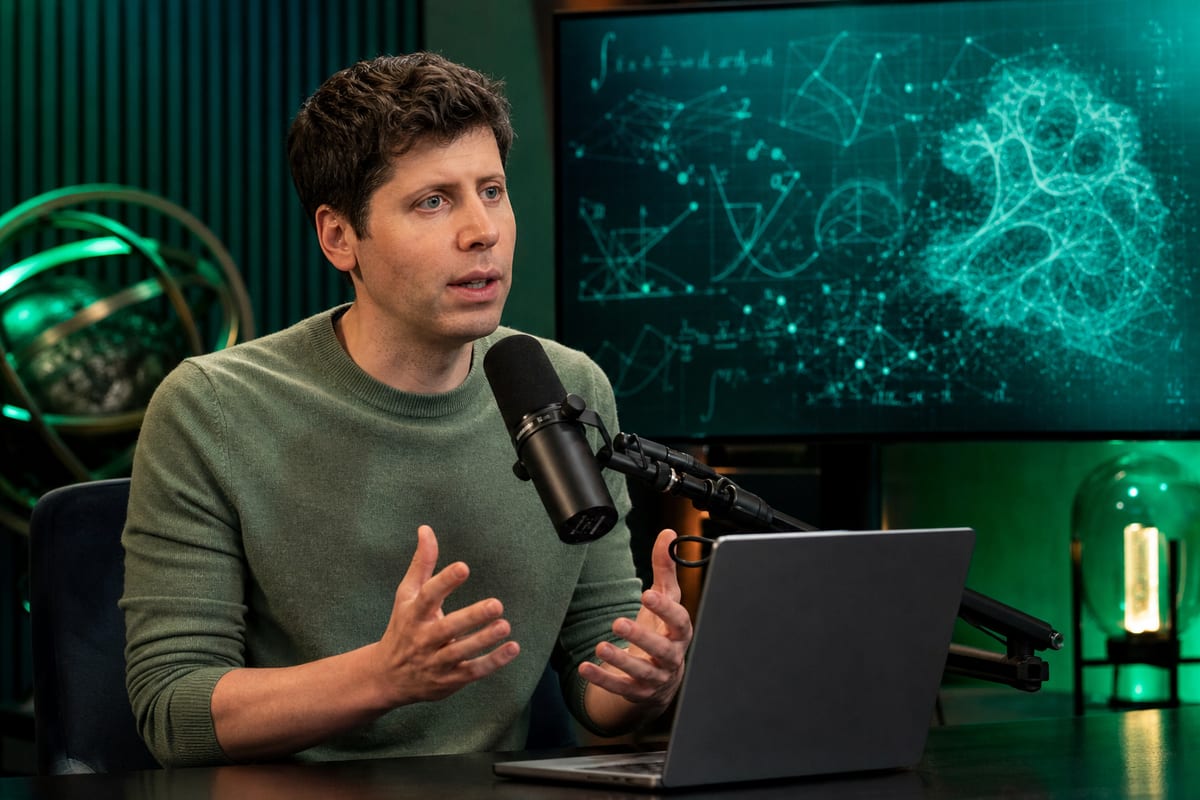
Sam Altman indicates that OpenAI does not plan to slow down on mathematical problems, while acknowledging there is progress to be made in the way it publishes. The CEO mentions expenditures of several hundred million dollars, including about 10 million for the Navier-Stokes equations, and claims to have other unpublished results. Meanwhile, researchers criticize announcements that lack sufficient sourcing and missing details, particularly regarding a result related to Yang-Mills.
Significant Resources and an Assumed "Out of Control" Exploration
Sam Altman acknowledges that OpenAI's research on mathematical problems has, at times, escaped the usual framework, while clarifying that this phase was intentional to test the limits of its models. He describes an internal Slack channel, "Model Name-Hold My Beer," where employees submitted the toughest problems to evaluate the systems. In terms of funding, he estimates that the total effort represents several hundred million dollars, with about 10 million—perhaps a bit more—dedicated to a proposed solution on the Navier-Stokes equations, one of the Millennium Prize problems.
Criticism on Opacity and Missing Details
Mathematicians criticize OpenAI for announcements lacking sufficient attribution, with little context and what they deem inadequate verification, forcing them to conduct meticulous checks. The published summaries are also pointed out for their low readability. Following the announcement of three breakthroughs in mathematics, physics, and computer science, scientists denounce what they perceive as excessive control, especially since a claimed result on Yang-Mills theory has not been detailed. OpenAI attributes this restraint to recommendations from a consulted group of experts. Meanwhile, researchers express concern about being marginalized in the face of resources committed by AI labs.
Le brief IA que les pros lisent chaque soir
Les 7 actus IA du jour, décryptées en 5 min. Gratuit.
Inclus dès l'inscription : notre sélection des meilleurs guides & comparatifs IA.
Choisissez votre rythme
Gratuit · Pas de spam · Désabonnement en 1 clic
What is Public and What Remains in Reserve
OpenAI has released hundreds of mathematical results this month. Sam Altman asserts that the company still holds many undisclosed discoveries and, when asked about the existence of work beyond the hundreds of proofs already made public, he responds affirmatively without hesitation. He suggests more broadly that the internal stock of knowledge remains substantial.
Altman's Stance: Share Knowledge, Present it Better
Sam Altman says he understands the difficulty mathematicians face with results stemming from AI, yet he does not foresee slowing down the effort. He argues that the world has the right to understand how the universe works and that humanity deserves fundamental knowledge, adding that a major scientific discovery should not be kept internal. However, he admits that OpenAI's communication of results needs to improve.
Brief IA — L'actualité IA en français
L'essentiel de l'actualité de l'intelligence artificielle, décrypté et expliqué chaque jour.