OpenAI Announces Binding Signatures for 35 Proteins
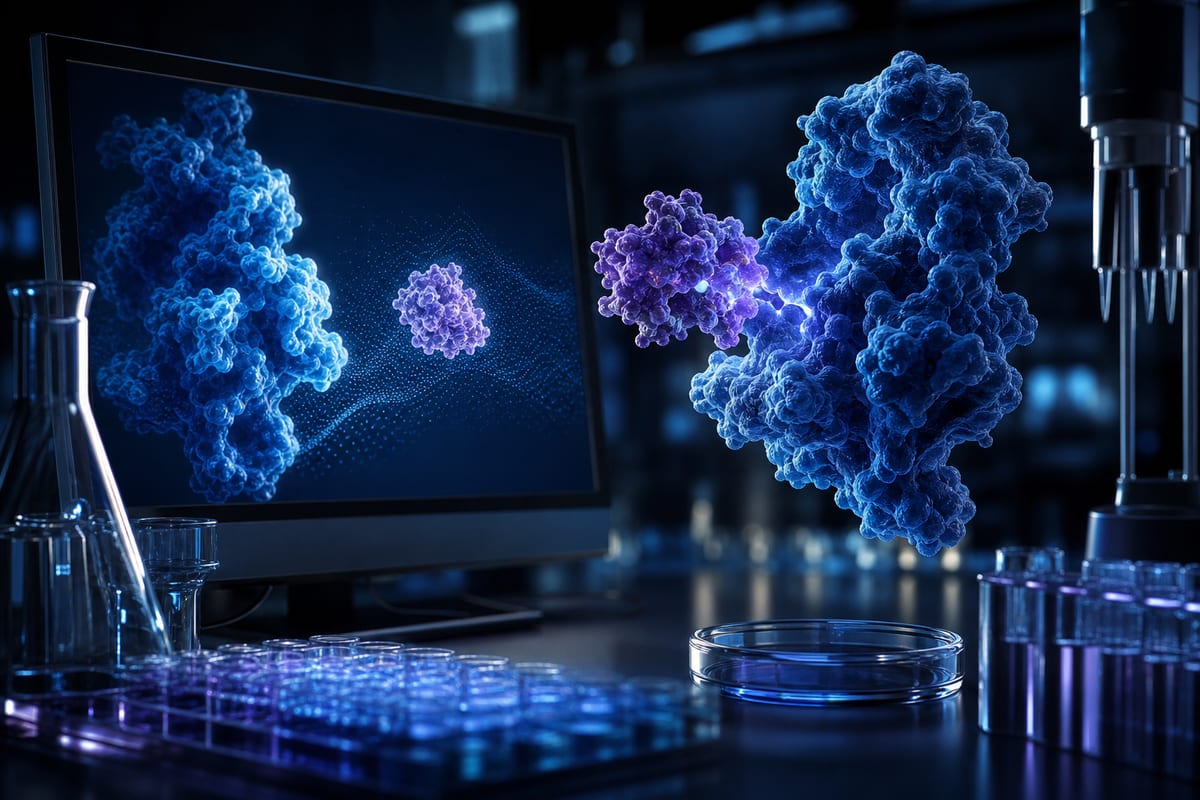
OpenAI announced on November 24 that 35 small proteins out of 322 candidates designed with the help of a preliminary version of GPT-6.2 showed signs of binding to their target in the lab. These results, obtained in collaboration with its research partner Onava, do not guarantee a biological effect and do not measure the performance of the version offered to subscribers.
Biological and Practical Limitations
A protein can bind to its target without producing the expected biological action. The time that a team could save with the accessible version of GPT-6.2 is not clearly established.
To assess the value of an additional subscription, a team can compare the time spent on a task they are already tracking: preparing input data, transferring files between software, and verifying results. Cost comparisons may also include specialized tools and laboratory work. If delays primarily stem from laboratory expectations, accelerating computational work may not significantly change the final timeline.
Before submitting new data, teams can check the version included in their subscription, the workspace allowed by their organization, the rights for opening and sharing projects, as well as the duration of file retention.
Specialized Tools Contribute to Design
In the setup described by OpenAI, the generalist model first proposed protein shapes. Specialized systems then produced the amino acid sequences and participated in selecting candidates for testing. The reported binding rate of 10.9% pertains solely to this selection: results varied across the five targets, but each had at least one protein showing signs of binding.
The AI brief the pros read every evening
The 7 best AI stories, the essentials in 5 min. Free.
Included when you join: our pick of the best AI guides & comparisons.
Choose your rhythm
Free · No spam · Unsubscribe in 1 click
According to OpenAI, GPT-6.2 performed less effectively than a specialized model when it came to deducing a complete protein structure from a sequence, which is a distinct task from proposing a new shape. Other tools still address different needs: AlphaGenome 2, from Google DeepMind, predicts the effects of changes in DNA.
OpenAI made a version of GPT-6.2 available to ChatGPT Plus and Pro subscribers on November 23. Since the trials utilized a preliminary version, the performance of the distributed version on the same tasks remains unknown.
Trials on Sequences and Molecules
Another experiment involved existing small proteins, for which GPT-6.2 proposed modified sequences. The initial screenings sought to maintain binding with the original target. OpenAI reports a better result of 75 positive candidates out of 88, followed by 26 out of 42 for other targets, and 8 out of 59.
OpenAI also evaluated the prediction of the location of small molecules on proteins, as well as their orientation. On the PoseBusters testing platform, the company states that 93% of the evaluated predictions were close to the experimentally observed positions and orientations. This percentage comes from a separate computational assessment, not from laboratory binding tests.
Brief AI — AI news in French
The essentials of artificial intelligence news, decoded and explained every day.