OpenAI Establishes Independent Council for AI and Mathematics
Le brief IA que les pros lisent chaque soir
Les 7 actus IA du jour, décryptées en 5 min. Gratuit.
Inclus dès l'inscription : notre sélection des meilleurs guides & comparatifs IA.
Choisis ton rythme
Gratuit · Pas de spam · Désabonnement en 1 clic
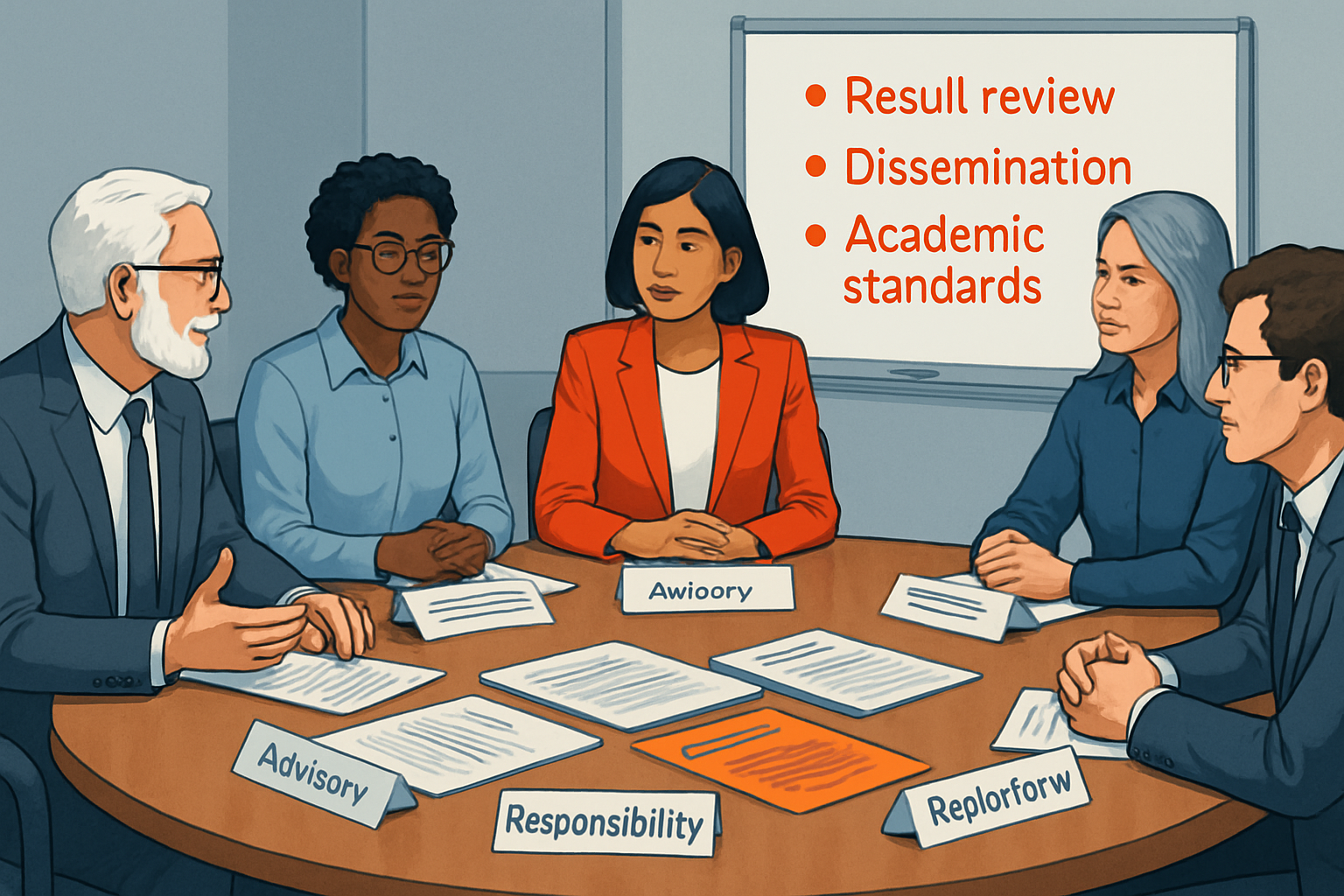
OpenAI supports the creation of an independent advisory group tasked with framing the communication of its results in mathematics and the use of its tools. The members, who will not be compensated, will have the freedom to publish their opinions. This initiative comes as the company claims rapid breakthroughs and as mathematicians have expressed their concerns in an open letter.
An independent, public, and unpaid framework
The group will operate independently of OpenAI. It will be able to provide unsolicited advice, comment on OpenAI's impact on mathematics, and make its opinions public. Its members will not be compensated by OpenAI, and the collective will be able to adjust its composition as it sees fit. The group will not be tasked with advising OpenAI on the pace of its internal progress in mathematics. OpenAI presents this collaboration as a first step in addressing difficult questions regarding AI's contribution to mathematical understanding and the dissemination of benefits. The company hopes that mathematicians will play a leading role in defining the responses.
Nine initial members from major institutions
The group includes François Charles (ENS-PSL), Camillo De Lellis (IAS, GSSI), Timothy Gowers (Collège de France, Cambridge), Martin Hairer (EPFL, Imperial College London), Nikhil Srivastava (Berkeley, Simons Institute), Ulrike Tillmann (Oxford, INI), Ravi Vakil (Stanford), Edward Witten (IAS), and Melanie Matchett Wood (Harvard).
Claimed performances and advisory missions
OpenAI indicates that it began training a new model on August 28. The company claims that this model has solved the Navier–Stokes Millennium Prize problem and over 100 open problems, a pace of progress that has reportedly surprised its mathematicians and sparked internal discussions on the best way to inform the community. In a recent open letter, mathematicians warned about the potential negative effects of using open problems as references for new AI systems and called for thoughtful engagement from companies. In response, OpenAI is collaborating with mathematicians who have established an independent advisory group to serve as a bridge between the community and the general public. Its announced missions include reviewing and communicating emerging results, assessing their impact, coordinating their dissemination, and providing advice on academic and professional standards. The group will also guide the use of OpenAI's tools for research and learning, as the company states its intention to provide effective tools for researchers. OpenAI emphasizes its view of mathematics as a fundamental science, with discoveries that have broad potential applications, and asserts that it is working towards a responsible deployment of these capabilities.
Brief IA — L'actualité IA en français
L'essentiel de l'actualité de l'intelligence artificielle, décrypté et expliqué chaque jour.