OpenAI Creates a Panel of Nine Mathematicians Hosted by the IAS
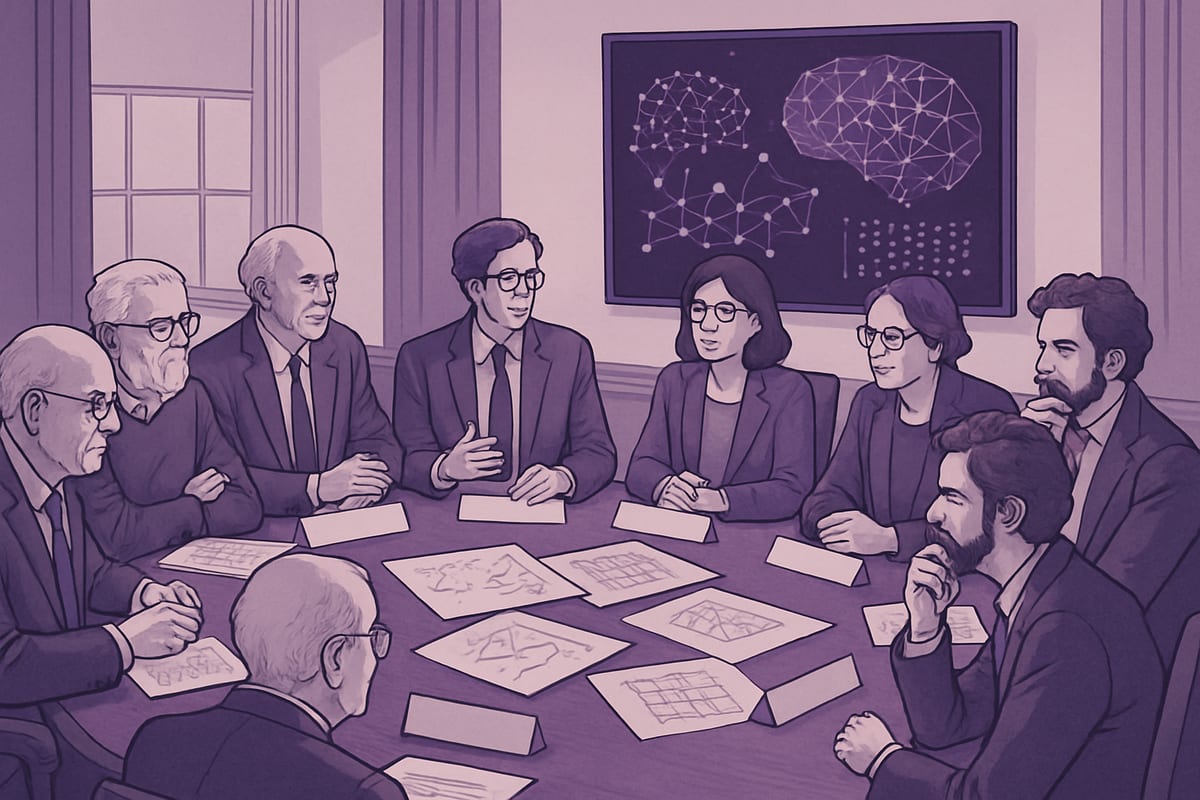
OpenAI establishes an advisory group of nine mathematicians, hosted by the Institute for Advanced Study in Princeton. The company states that it aims to oversee the review and dissemination of mathematical results, while claiming that its internal model has solved over 100 open problems. The scope, influence, and representativeness of this panel are already raising concerns.
OpenAI claims to have solved over 100 open problems with its model
OpenAI asserts that its new model has resolved more than 100 long-standing open problems across most areas of mathematics. The company links this announcement to the same model it claims has solved the Navier–Stokes Millennium Prize problem and indicates that it has already stated it is on track to solve another problem from the same list. In light of this volume of reported results, the advisory group indicates that its top priority is to advise OpenAI on coordinating the publication of a large number of mathematical results produced by its internal model.
A setup created after controversies over announcements and credits
OpenAI has recently faced accusations of plagiarism from researchers, failing to credit the human work underlying its models, and theft from users. These controversies have led many mathematicians to doubt the company's understanding and respect for the discipline. Martin Hairer believes that AI labs will seek to steer the group's statements for communication purposes, but he considers it hypocritical not to engage when OpenAI appears to be making an effort after numerous criticisms. At this stage, the panel has not yet decided on the advice it intends to provide, although Hairer identifies a recurring issue: highly publicized mathematical results whose publication and dissemination fall well short of accepted practices in the discipline.
Announced mandate: review, coordinate, and publish public advice
According to OpenAI, the group will advise on the review of emerging results, their significance, and the coordination of their dissemination, as well as on academic and professional standards in mathematical research. It will also evaluate how OpenAI's tools can support research and learning in mathematics. The company claims that the group will operate independently, can provide unsolicited opinions, and make its advice public, without specifying the concrete modalities of publication. The group is expected to have early access to OpenAI's research to fulfill its mission.
Le brief IA que les pros lisent chaque soir
Les 7 actus IA du jour, décryptées en 5 min. Gratuit.
Inclus dès l'inscription : notre sélection des meilleurs guides & comparatifs IA.
Choisissez votre rythme
Gratuit · Pas de spam · Désabonnement en 1 clic
Stated independence, lack of remuneration, and support from the IAS
The panel is hosted by the Institute for Advanced Study in Princeton. OpenAI states that its members will not be compensated and that the composition may evolve freely. The company asserts that the value of the setup relies on the members' ability to exercise their judgment and challenge its positions. Martin Hairer argues that the organization is genuinely independent from OpenAI and other so-called leading AI labs. He specifies that, aside from confidentiality requirements, no restrictive commitment limits the public speech of the members, who rely on the IAS for technical support.
Contested selection and limited representativeness of a group of 9
The group comprises nine high-level academics from institutions such as Stanford, Harvard, Oxford, and Cambridge, with several being Fields Medalists or MacArthur Fellows. Its small size raises questions about its ability to cover topics requiring highly specialized expertise. Simon Machado from ETH Zurich criticizes the selection process as opaque, while the group's website indicates that it was formed after OpenAI approached certain members, then expanded through invitations to create an independent collective. Martin Hairer, a professor at Imperial College London and EPFL, defends the panel's independence and its goal of representing the interests of the community, while acknowledging that it is not a representative sample. Francesco Fournier-Facio expresses ambivalence, believing that engagement with mathematicians can only improve the situation, but describes a group that resembles an ivory tower. Machado doubts that these figures can address the more political concerns of the community, arguing that their reality differs from that of many mathematicians. Kevin Buzzard questions the need for an elite body to relay a request that, in his view, should stem from a better understanding of the subject rather than evidence of difficult theorems. The panel gathers feedback through exchanges with colleagues, a public form, and the blog Proofs and Prompts.
Brief IA — L'actualité IA en français
L'essentiel de l'actualité de l'intelligence artificielle, décrypté et expliqué chaque jour.