OpenAI Challenges Anthropic with the Launch of GPT-5.6
Le brief IA que les pros lisent chaque soir
Les 7 actus IA du jour, décryptées en 5 min. Gratuit.
Inclus dès l'inscription : notre sélection des meilleurs guides & comparatifs IA.
Choisis ton rythme
Gratuit · Pas de spam · Désabonnement en 1 clic
OpenAI Unveils GPT-5.6 to Dominate the AI Market
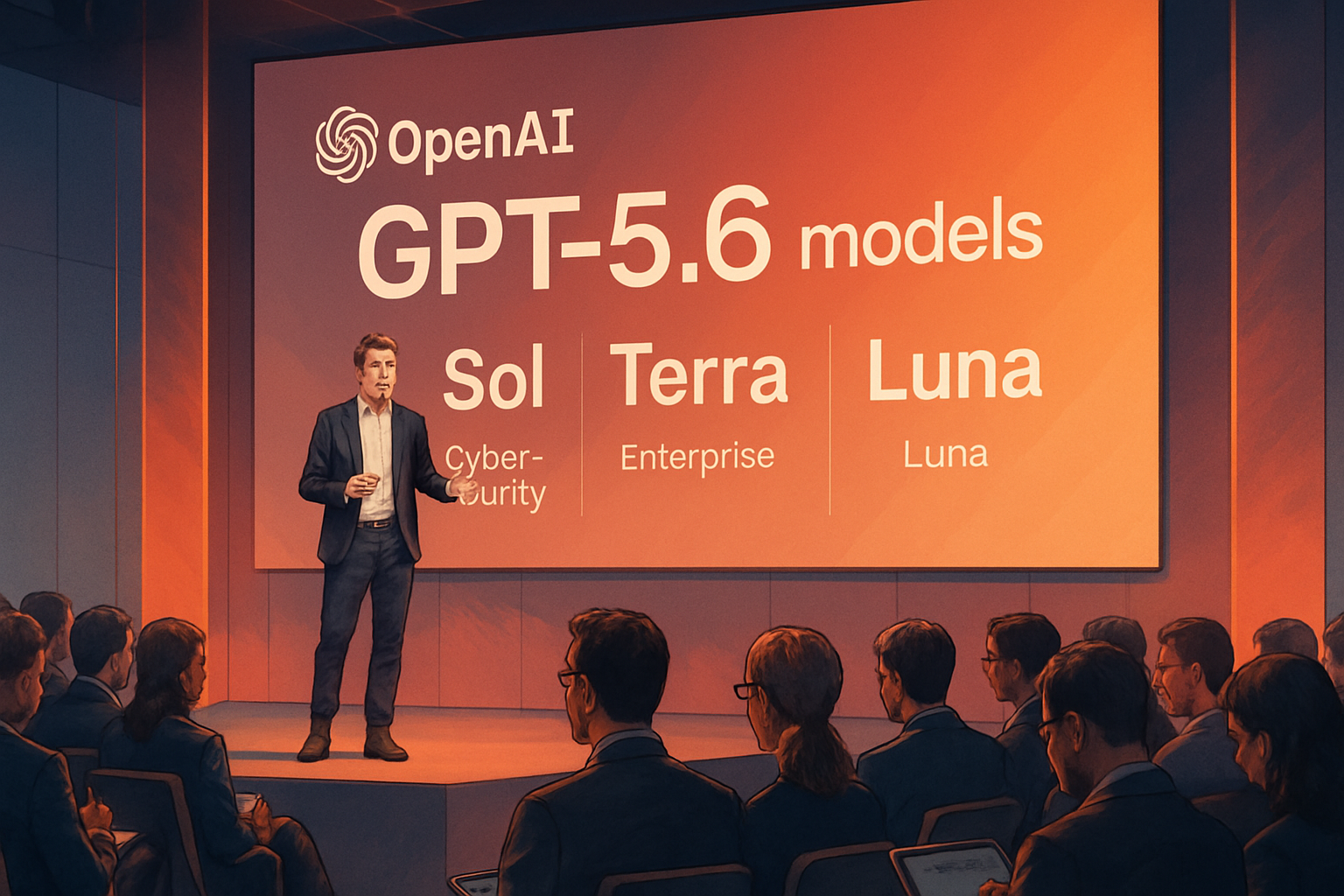
OpenAI has recently revealed its latest advancement in the field of artificial intelligence with the launch of the GPT-5.6 model series. This announcement marks a significant milestone in a sector where competition is intensifying, with several players vying to establish themselves as leaders. The new lineup consists of three distinct models: Sol, Terra, and Luna, each designed to meet specific needs ranging from professional applications to scientific research.
Three Models for Varied Needs
The GPT-5.6 series is available in three versions: Sol, Terra, and Luna. Sol is presented as the flagship model, ideal for complex tasks, while Terra offers a balanced intermediate solution. Luna, on the other hand, positions itself as a budget-friendly option, allowing for greater accessibility for users with tighter budgets. OpenAI emphasizes the capabilities of these models to transform business work, programming, and scientific research, promising unparalleled performance.
Enhanced Performance and Unmatched Efficiency
Sam Altman, CEO of OpenAI, highlighted that the new models outperform previous versions in terms of efficiency and cost-effectiveness. Sol, for example, is 54% more efficient for coding tasks, a significant improvement that could transform how businesses approach software development. This increased efficiency translates into optimized token usage, thereby reducing the costs and time required to complete complex tasks.
A Cutting-Edge Cybersecurity Model
GPT-5.6 is also praised for its capabilities in cybersecurity, an area where OpenAI claims to have achieved top-tier performance. Described by the company as its most powerful cybersecurity model to date, it is capable of handling tasks such as threat modeling, code review and patching, as well as blue teaming, which involves simulating attacks to identify vulnerabilities before they can be exploited by hackers. These advancements have sparked interest but also concerns, particularly from the Trump administration, which had considered limiting its deployment due to fears of potential misuse.
ChatGPT Work: A New Tool for Businesses
Alongside the launch of GPT-5.6, OpenAI introduced ChatGPT Work, a tool designed to assist corporate teams in their daily tasks. Available on desktop, web, and mobile, this tool aims to facilitate document writing, spreadsheet management, and presentation creation, thereby enhancing team efficiency in their administrative work.
Fierce Competition with Anthropic
The launch of GPT-5.6 occurs in a context of intense competition with other AI giants, such as SpaceXAI and Meta, which also unveiled new products this week. However, OpenAI appears to be particularly targeting Anthropic, a competitor that has distinguished itself by focusing on enterprise clients. In response, OpenAI highlights the Artificial Analysis Coding Agent Index to demonstrate the superiority of its models compared to those of Anthropic.
Sol, Terra, and Luna: Superior Performance at Lower Cost
OpenAI claims that Sol, its most advanced coding model, surpasses Fable, the recently launched model by Anthropic, by establishing a new state-of-the-art with a score of 80 on the Coding Agent Index, which is 2.8 points above Fable 5. Sol uses fewer tokens, reduces processing time, and costs about one-third less than Fable 5. Terra and Luna, the other models in the series, also show superior performance compared to competing offerings, with Luna outperforming Opus 4.8, further solidifying OpenAI's position in the market.
Availability and Pricing
The models in the GPT-5.6 series are now integrated into ChatGPT, Codex, and the OpenAI API. Pricing varies depending on the chosen model: Sol is offered at $5 per million tokens for input and $30 for output, Terra at $2.50 for input and $15 for output, and Luna at $1 for input and $6 for output. These competitive prices aim to make these advanced technologies accessible to a wide range of users.
Brief IA — L'actualité IA en français
L'essentiel de l'actualité de l'intelligence artificielle, décrypté et expliqué chaque jour.