OpenAI Challenges Apple with Evidence in the Secrets Case
Le brief IA que les pros lisent chaque soir
Les 7 actus IA du jour, décryptées en 5 min. Gratuit.
Inclus dès l'inscription : notre sélection des meilleurs guides & comparatifs IA.
Choisis ton rythme
Gratuit · Pas de spam · Désabonnement en 1 clic
OpenAI Challenges Apple with Evidence in Trade Secrets Case
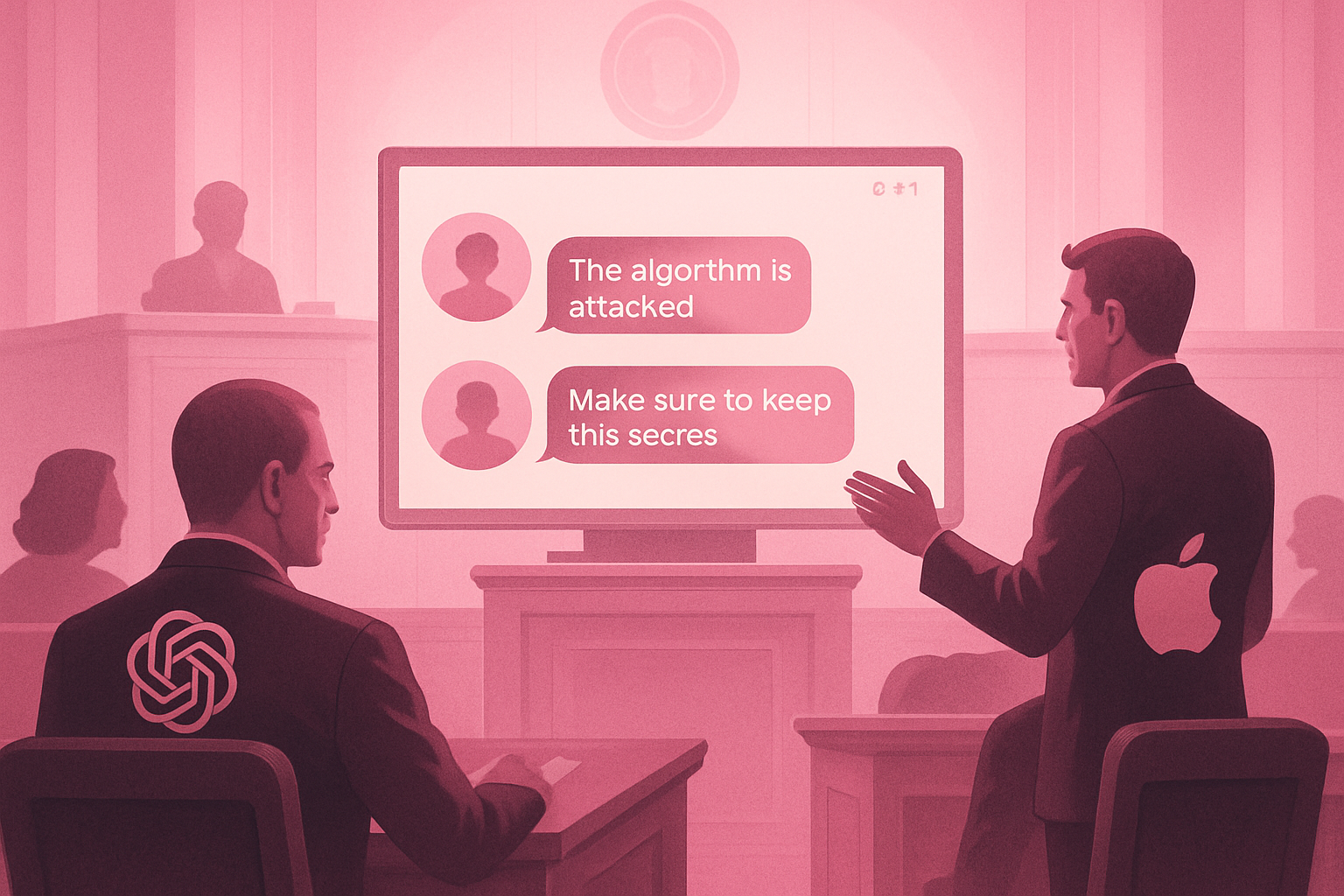
OpenAI is responding to Apple's trade secrets lawsuit by publishing chat messages that show Apple employees continued to reach out to their former colleague Chang Liu for technical information.
In a blog post, OpenAI accused the iPhone maker of taking a disorganized and unnecessarily aggressive approach. Apple has sued OpenAI in a federal court in California for what it calls the systematic theft of trade secrets, alleging that former Apple engineer Chang Liu improperly accessed confidential information after joining OpenAI. Apple also accuses OpenAI of actively encouraging departing employees to steal files and specifications during their notice periods.
Apple Employees Continued to Contact Their Former Colleague
According to the published messages, Liu's last day at Apple was January 22, 2026. On that same day and in the weeks that followed, Apple employees contacted him multiple times to ask technical questions and seek his help in locating internal files.
-
A message from January 27, 2026 shows an Apple employee asking Liu for a technical assessment, writing: "Of course, I could ask several people, but you are the best. Even though you no longer work here." Liu responded with details about internal decisions at Apple.
-
On February 14, 2026, the same employee requested schematics. On March 5, Liu was added to a chat group with several Apple employees, where he directed them to internal folders and contacts. Liu ended the conversation himself by writing: "Hi, this is very irregular, please remove me from this thread." OpenAI argues that "residual access," meaning continued access to systems after an employee's departure, is a well-known issue at Apple due to poor access management.
Liu is just part of a much larger case. According to the complaint, over 400 former Apple employees now work at OpenAI, and the lawsuit is linked to OpenAI's growing ambitions in hardware around the startup io Products, co-founded by Jony Ive, Apple's former iconic designer.
OpenAI also rejects the allegations against Tang Tan, who spent more than 24 years at Apple and was considered one of the company's most innovative leaders. According to OpenAI, Tan consistently told his team that proprietary information from other companies was neither welcome nor to be used.
Apple Lawyers Confused Asian Last Names
Apple also made mistakes in contacting OpenAI, according to the published emails. Apple claimed to have reached out to OpenAI as early as February without receiving a response. In reality, an external lawyer hired by Apple wrote to the wrong person because he confused two Asian last names. He also claimed to have spoken to OpenAI's legal counsel by phone, which OpenAI states never occurred.
Apple only acknowledged these two errors after OpenAI pointed them out. The specific allegations that later appeared in the lawsuit had never been raised in that prior correspondence. Instead, the Apple lawyer stated that the company was working to "resolve the issues." Five months of silence followed before Apple filed its complaint.
While the chat messages and email errors are captivating, they do not refute Apple's fundamental accusations. Liu's iMessage threads may show that Apple had its own access management issues, but they do not address the broader claim that OpenAI encouraged new hires to bring proprietary information with them.
Brief IA — L'actualité IA en français
L'essentiel de l'actualité de l'intelligence artificielle, décrypté et expliqué chaque jour.