OpenAI Challenges Apple by Exposing Damning Evidence to the Public
Le brief IA que les pros lisent chaque soir
Les 7 actus IA du jour, décryptées en 5 min. Gratuit.
Inclus dès l'inscription : notre sélection des meilleurs guides & comparatifs IA.
Choisis ton rythme
Gratuit · Pas de spam · Désabonnement en 1 clic
OpenAI Challenges Apple by Exposing Damning Evidence to the Public
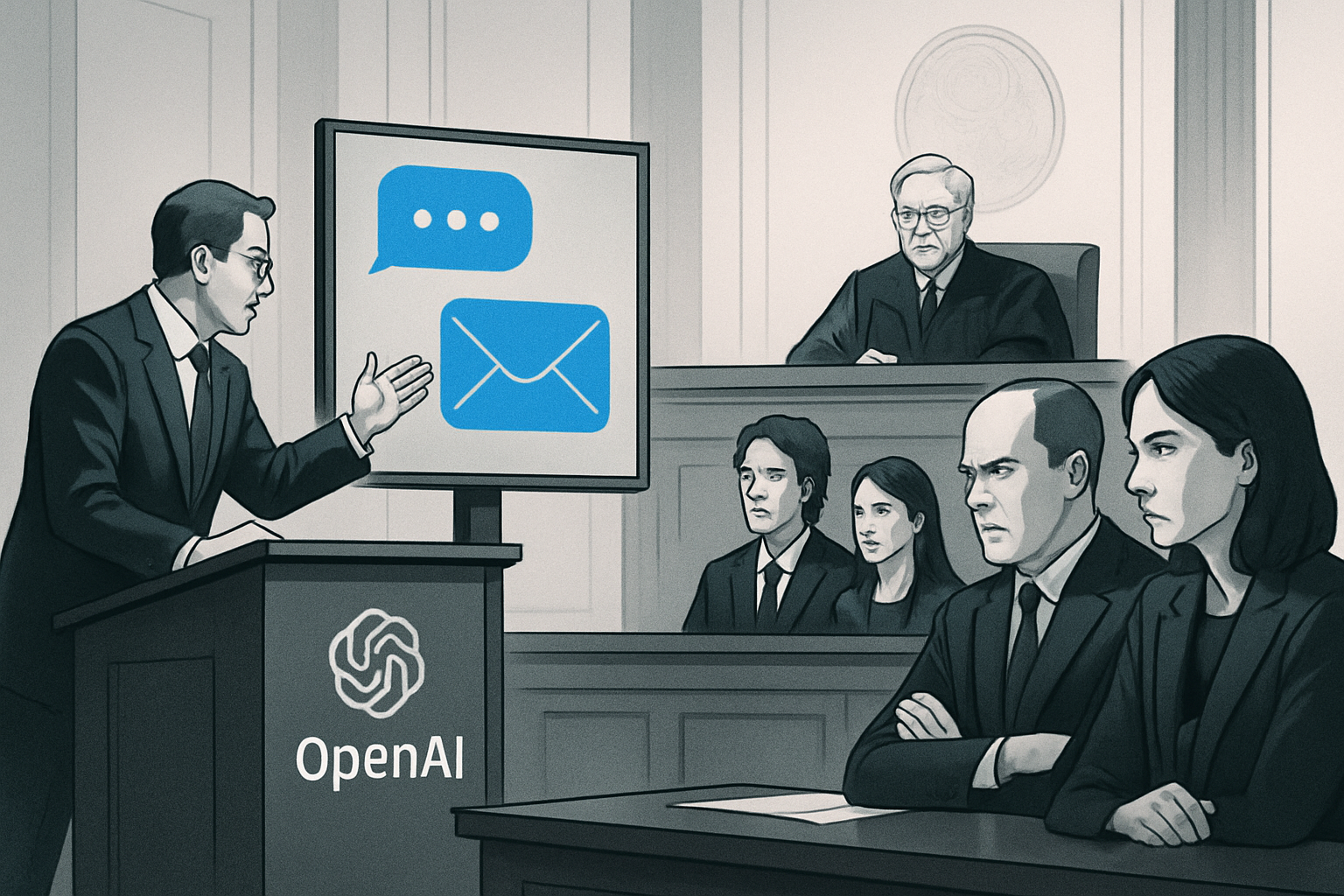
OpenAI has recently made public exchanges of messages to counter the narrative presented by Apple in their legal battle. In a blog post titled “Apple is Wrong,” OpenAI described Apple's lawsuit, which accuses it of stealing trade secrets, as “reckless, aggressive, and oddly personal.” The company shared iMessage exchanges and emails to contest the central allegations of the case.
This is not a legal response from OpenAI, but an attempt to influence public opinion by highlighting contradictions in Apple's case using carefully selected communications.
The lawsuit filed by Apple last month primarily concerns two former Apple employees, Chang Liu and Tang Tan, who have since joined OpenAI. Liu, a former iPhone engineer, is now part of OpenAI's technical team, while Tan worked at Apple for 25 years, previously overseeing the design of the iPhone and Apple Watch before becoming hardware director at OpenAI. Apple alleges that they took “secret and confidential information regarding our unpublished technologies, processes, and products” to advance OpenAI's hardware projects. Reuters reports that Apple requested a preliminary injunction on Monday to prevent Liu, Tan, and OpenAI from accessing, acquiring, using, or disclosing alleged confidential information while the lawsuit continues.
OpenAI stated in its blog post: “Apple's request for a preliminary injunction is based on false information and completely unnecessary because we do not have, and do not want, their trade secrets.” The company added: “We are much more interested in creating innovative products and technologies that push boundaries.”
Apple's lawsuit also alleges that Liu did not return a company-owned computer and used an authentication vulnerability to access Apple's cloud-based network storage weeks after his departure. Liu is also accused of downloading confidential files from Apple's storage system and advising another Apple colleague on how to proceed without getting caught by the company's security team before joining OpenAI.
OpenAI's response presents the facts from a different angle:
-
“Apple accuses Chang Liu of accessing confidential Apple information after leaving the company, but only now admits that Apple employees contacted him and asked for his help in locating that information.”
-
“Apple is now trying to shift the blame to a ‘residual access’ issue, but does not reveal that this is a common problem at Apple, caused by their inability to properly manage access to systems when employees leave. What this means in practice is that former employees who try to do the right thing when leaving still have access to Apple files, despite not wanting to or even being aware of it.”
In its lawsuit, Apple also alleges that Tan requested confidential information from Apple during interviews with Apple employees for positions at OpenAI and asked candidates to present certain Apple components they had worked on. In response, OpenAI asserts that Tan “has always been clear with the team that we do not want, and must not use, confidential information from other companies.”
OpenAI also refuted allegations that it had not responded to initial requests from Apple, stating that Apple “now admits that its outside lawyers emailed the wrong person after confusing two Asian surnames,” and acknowledged that there had been no discussion with OpenAI's legal counsel. The company published emails of interactions between the lawyers of both companies, as well as iMessages exchanged between Liu and an Apple employee.
Brief IA — L'actualité IA en français
L'essentiel de l'actualité de l'intelligence artificielle, décrypté et expliqué chaque jour.