OpenAI Challenges Apple: Silicon Valley in Turmoil
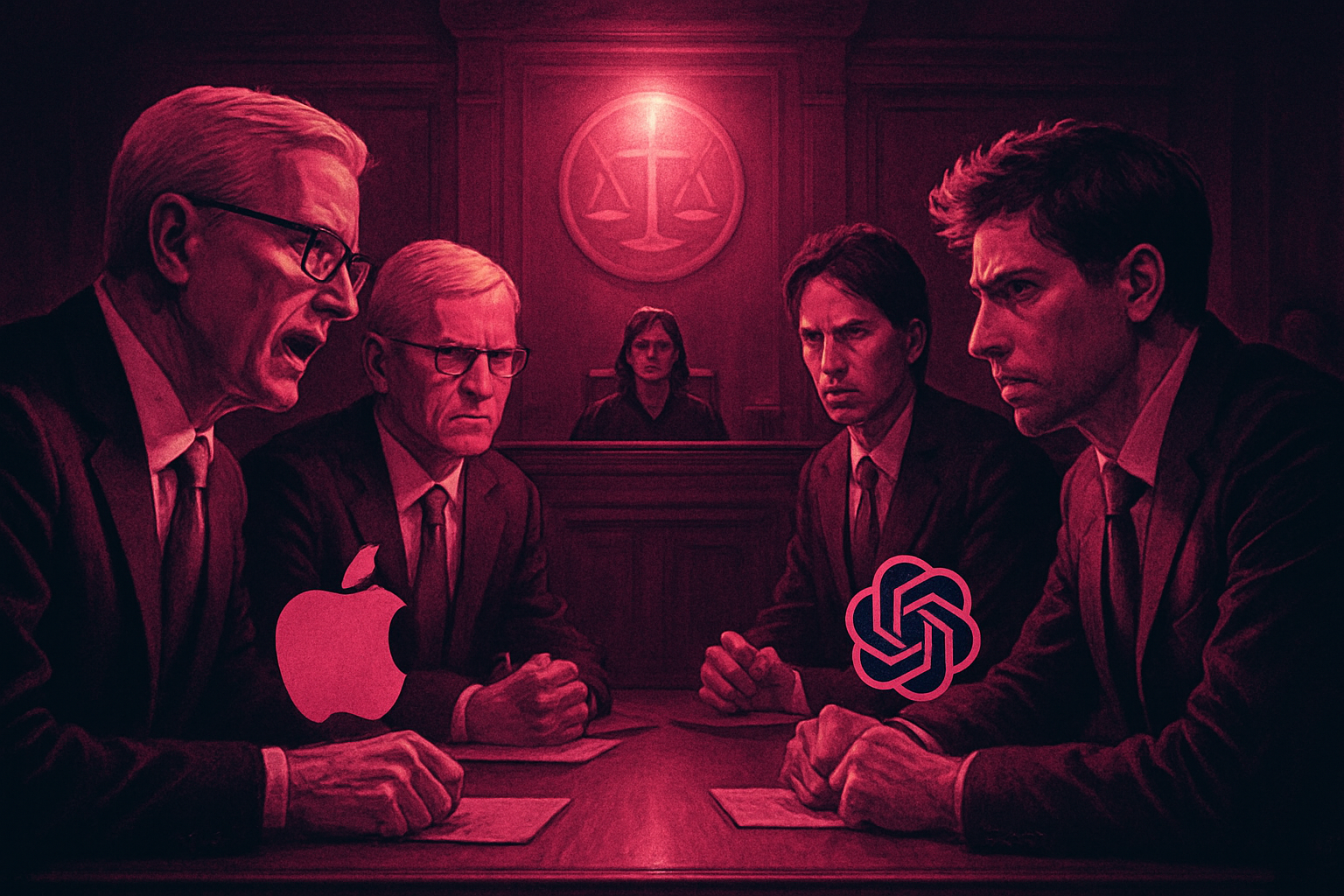
OpenAI Challenges Silicon Valley Conventions
OpenAI, the artificial intelligence startup, refuses to conform to the unspoken norms that have long governed Silicon Valley. This stance has provoked a fierce backlash from Apple, which recently filed a high-profile lawsuit against OpenAI. This case highlights the growing tension between innovative startups and established tech giants.
For decades, Silicon Valley has operated under a well-established model. Talented engineers develop new technologies within large companies, and then sometimes leave these structures to launch their own startups. These young companies often focus on specific technical problems that giants like Apple, Google, Nvidia, or Amazon have yet to tackle. While many fail, those that succeed typically end up becoming partners or acquisition targets, thereby reinforcing the positions of the larger firms.
A Beneficial Model for Giants
This model is particularly advantageous for large tech companies. They allow others to take the initial financial and technical risks, then integrate innovations once they have proven themselves. Sometimes this results in the acquisition of a struggling startup, other times in a multi-billion dollar buyout after a resounding success. In any case, the founders of these startups often end up reintegrating into the larger companies, perpetuating the cycle of controlled innovation.
Concrete examples illustrate this pattern. A neighbor of Silicon Valley developed an innovative semiconductor component in a startup before it was acquired by Apple. He then worked for four years in Cupertino, contributing to the development of the AirPods. Similarly, Kiva Systems was acquired by Amazon, which integrated its robotic technology to optimize its warehouses. Google also followed this approach with Noam Shazeer, who founded Character.ai before returning to Google.
Le brief IA que les pros lisent chaque soir
Les 7 actus IA du jour, décryptées en 5 min. Gratuit.
Inclus dès l'inscription : notre sélection des meilleurs guides & comparatifs IA.
Choisis ton rythme
Gratuit · Pas de spam · Désabonnement en 1 clic
OpenAI, a Disruptive Player
OpenAI, on the other hand, does not follow this traditional model. Its behavior challenges established rules, deeply unsettling large tech companies, including those it has collaborated with, such as Microsoft and Apple. Indeed, Silicon Valley champions disruption, but it hardly accepts it when it becomes the target.
Facebook, a Precedent
A notable precedent is Facebook, which, like OpenAI, defied industry conventions. In the 2000s, several tech giants, including Apple, Google, Intel, Pixar, Adobe, and Intuit, had entered into a secret pact not to poach each other's employees. Facebook, under Sheryl Sandberg's leadership, refused to comply, aggressively recruiting from Google and inciting its ire.
OpenAI Breaks Boundaries
The question now is whether OpenAI will follow in Facebook's footsteps or ultimately fail. What is certain is that the startup refuses to confine itself to its original talent domain. The number of departures from Apple to OpenAI is striking. According to Apple's lawsuit, more than 400 of its former employees now work for OpenAI. These are not just ordinary engineers, but high-level talents like Jony Ive, the renowned iPhone designer, and Tang Tan, who oversaw the design of the iPhone, Apple Watch, and iPod.
A Direct Threat to Apple
OpenAI is not merely addressing a minor technical issue that Apple may have overlooked. The startup aims to directly compete with the iPhone, even potentially replacing it as the flagship product of the AI era. In its response to Apple's accusations, OpenAI clearly stated that it is not interested in the trade secrets of other companies but rather aims to innovate independently.
This ambition poses a significant threat to Apple. As Thompson pointed out, Apple must now seriously consider the possibility that AI represents a paradigm shift capable of threatening the iPhone. OpenAI, with its colossal funding, is shielded from an easy acquisition. The startup has raised over $100 billion, making its buyout extremely costly, even for a company the size of Apple.
Ultimately, this situation explains the intensity of Apple's lawsuit against OpenAI. In Silicon Valley, a small, overly ambitious startup can usually be crushed or absorbed. But OpenAI is too large, too well-funded, and too ambitious to be easily sidelined or integrated.
Brief IA — L'actualité IA en français
L'essentiel de l'actualité de l'intelligence artificielle, décrypté et expliqué chaque jour.