OpenAI Unveils GPT-5.6: Sol, Terra, and Luna Redefine AI
Le brief IA que les pros lisent chaque soir
Les 7 actus IA du jour, décryptées en 5 min. Gratuit.
Inclus dès l'inscription : notre sélection des meilleurs guides & comparatifs IA.
Choisis ton rythme
Gratuit · Pas de spam · Désabonnement en 1 clic
OpenAI Set to Revolutionize AI with GPT-5.6
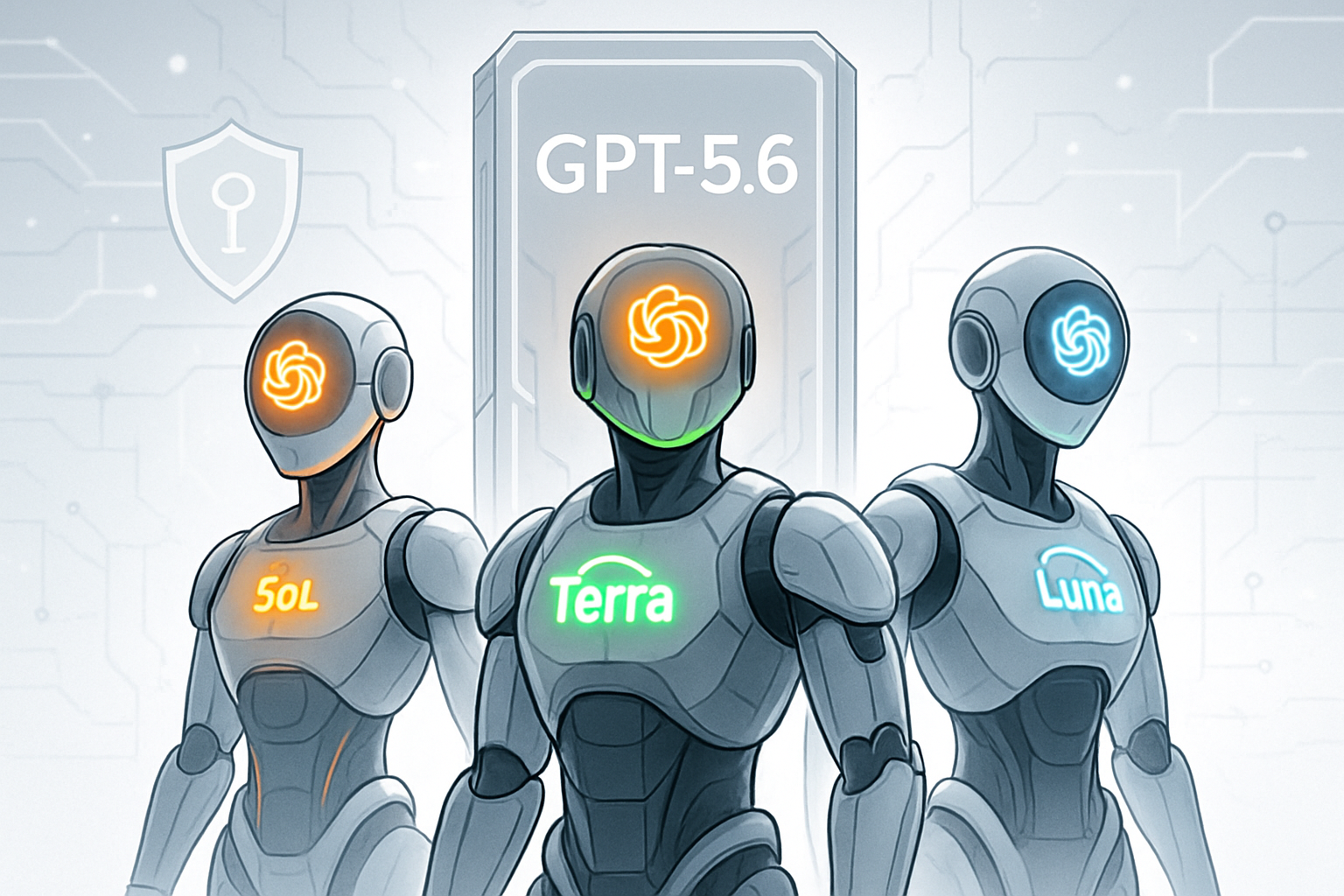
OpenAI, one of the leading companies in the field of artificial intelligence, is poised to make a significant leap forward with the launch of its new series of AI models, GPT-5.6. This announcement was confirmed by Sam Altman, the company's CEO, in a message posted Wednesday on X, formerly known as Twitter. The series will include three distinct models: Sol, Terra, and Luna, each with unique features and capabilities. The main model, Sol, is designed to excel in deep reasoning tasks and the management of intelligent agents. Terra, on the other hand, offers a balance between performance and cost, while Luna stands out for its speed and reduced cost.
Advances in Cybersecurity and Accuracy
The new models in the GPT-5.6 series not only enhance the overall performance of AI but also incorporate notable advancements in cybersecurity, an increasingly crucial area as AI integrates into various sectors. During the presentation of these models in June, OpenAI emphasized that Sol, in particular, is designed to reduce factual errors, often referred to as "hallucinations," which may have affected previous versions of their models. Furthermore, these models are equipped with advanced safety guardrails, thereby enhancing the reliability of AI systems in sensitive applications.
Availability Still Unclear
Although the launch of the models is scheduled for Thursday, details regarding their exact availability remain unclear. OpenAI has not yet specified how and when these models will be accessible to the public or businesses. CNET attempted to contact OpenAI for more information but did not receive an immediate response. It is worth noting that Ziff Davis, the parent company of CNET, filed a lawsuit against OpenAI in 2025, alleging copyright infringement in the training of its AI systems.
Launch Delayed for Caution
Since the initial announcement of GPT-5.6 on June 26, OpenAI has deliberately slowed its launch. This caution is attributed to the complexity and technological advancement of the new models, comparable to Claude Mythos 5 from Anthropic. AI companies, aware of the implications of these technologies, are hesitant to make them immediately available to the general public.
A New Era of Government Regulation
For the first time, the U.S. government is imposing a pre-review of AI models before their release. On June 2, former President Donald Trump signed an executive order directing the Department of Defense to establish a system allowing AI developers to share their new models with the government for thorough examination. Authorities have 30 days to evaluate these technologies and identify potential issues. This initiative is part of a legal framework distinct from that which led to the suspension and subsequent reintroduction of Claude Fable 5.
Early Access for Government and Partners
OpenAI has voluntarily granted early access to its models to the U.S. government as well as certain "trusted partners." However, details regarding the identity of these partners and their expertise remain unclear. OpenAI declined to comment further on this matter in June, deferring questions to its official announcement.
A Shift in U.S. Administration's Approach
A White House representative clarified that the U.S. government had not explicitly authorized the launch of GPT-5.6. However, such authorization is not necessary for public release under the executive order. All commitments made by OpenAI are voluntary. This shift marks a significant evolution in U.S. policy regarding AI. While the Trump administration long argued that regulation would stifle innovation and cause the U.S. to lose the global AI race to China, this new approach could redefine the pace of development and the U.S. position on the global AI stage.
Brief IA — L'actualité IA en français
L'essentiel de l'actualité de l'intelligence artificielle, décrypté et expliqué chaque jour.