OpenAI: Dispute Over Navier-Stokes and Warning on Open Science
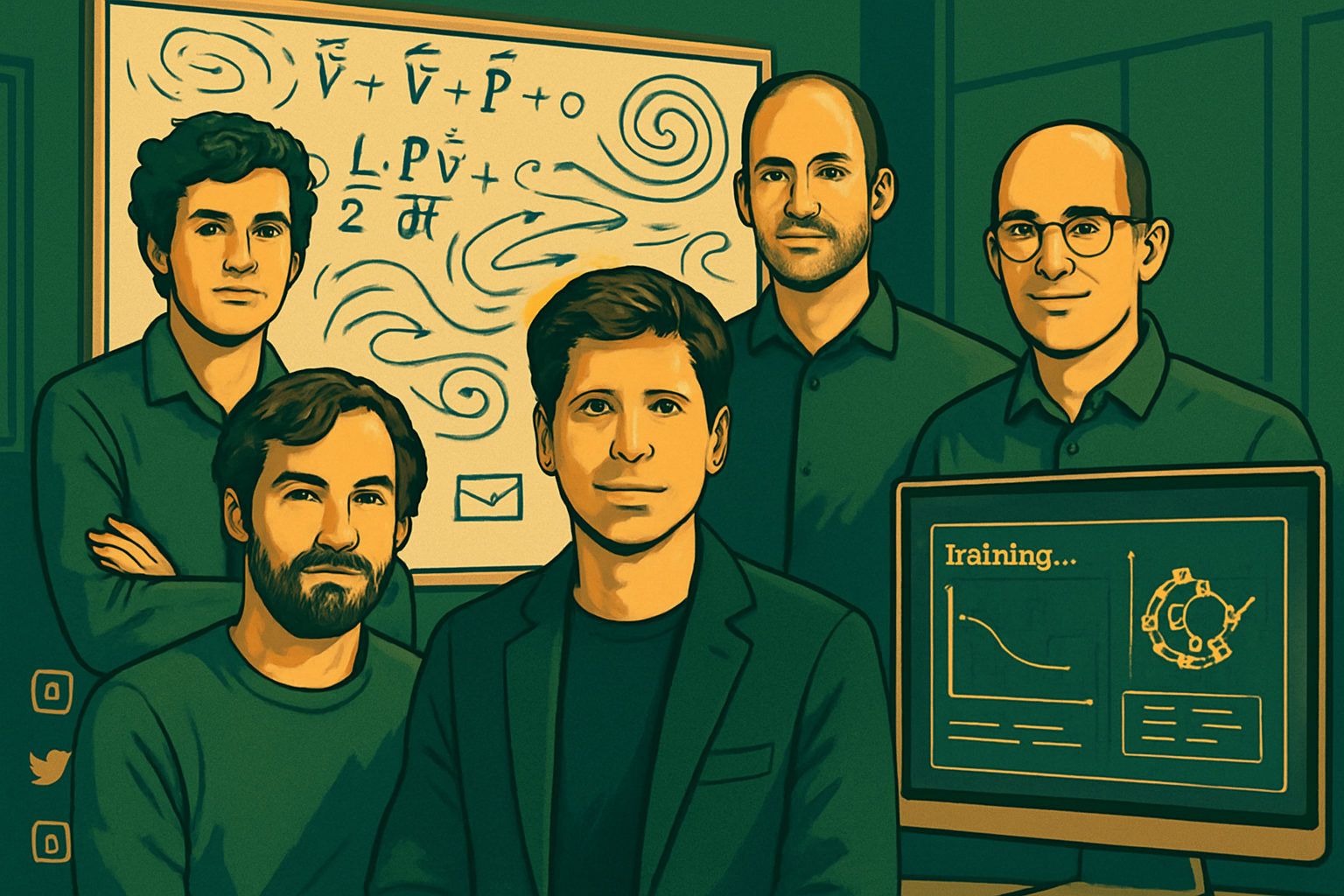
OpenAI claims a result on Navier–Stokes, a million-dollar problem, after redirecting its efforts following rumors of a breakthrough by Anthropic. The parties involved present conflicting narratives, and the company cannot rule out that data from its products may have aided its models. The case reignites concerns about open science, even prompting warnings from Terence Tao.
Rumors, Massive Efforts, and Warnings from Terence Tao
Rumors were enough to prompt OpenAI to quickly mobilize significant resources on a research problem. It is not excluded that data introduced into OpenAI's products may have contributed to the improvement of its models. The incident raises questions about how AI labs interact with the scientific community and reignites debates about open science. Terence Tao warns of the risk that tech companies may deploy vast resources based on mere rumors to get ahead of ongoing research. On Mastodon, he emphasizes that even the rumor of a project can trigger an AI-driven effort before the initial project comes to fruition, and that incentives may now discourage sharing promising leads, to the detriment of longstanding traditions and the future of the field.
What is Acknowledged and What Diverges Around the Claimed Result
All parties have publicly commented on the result claimed by OpenAI regarding the Navier–Stokes equations, one of the Clay Millennium Problems with a prize of $1 million. OpenAI states that it heard online rumors suggesting that Anthropic had solved a millennium problem, which motivated the concentration of its resources on this subject. Beyond this point, the accounts diverge. Tristan Buckmaster and Levent Alpöge contest that OpenAI's approach significantly differs from theirs and claim to have introduced a similar method into OpenAI's systems, which Buckmaster believes may have ended up in the training data. However, OpenAI employees consider it unlikely that the model was trained on these solutions, especially if the option to exclude training was activated, which is not publicly documented. In an official post, OpenAI clarifies that, while unlikely, a contribution of de-identified data from its products cannot be completely ruled out.
Le brief IA que les pros lisent chaque soir
Les 7 actus IA du jour, décryptées en 5 min. Gratuit.
Inclus dès l'inscription : notre sélection des meilleurs guides & comparatifs IA.
Choisissez votre rythme
Gratuit · Pas de spam · Désabonnement en 1 clic
Buckmaster's Grievances and Alpöge's Position on Collaboration
Tristan Buckmaster accuses OpenAI of exploiting his drafts, pressuring him, and removing Levent Alpöge from the authorship list. He indicates that information about his research may have leaked before these discussions, that the desire to remove Alpöge is linked to his position at Anthropic, and that he has faced threats regarding his career. There are also suspicions about possible training of OpenAI's models on drafts submitted to Codex. For his part, Levent Alpöge states that he would have liked to collaborate with OpenAI, that the authorship issue did not matter to him, and that he is in favor of cooperation between labs for scientific progress. Alpöge works at Anthropic.
OpenAI's Defense and Statements from Its Leaders
Sébastien Bubeck and Sam Altman reject the plagiarism accusations while acknowledging that they trained their model after rumors of a breakthrough emerged. Boaz Barak, an OpenAI employee, contests that the model needed external help, claiming it began by proving a stronger assertion than that of the two researchers. On X, Sam Altman asserts that the team acted with integrity and generosity, mentions that it was suggested Buckmaster and Alpöge receive the prize, and describes the plagiarism accusations as unfounded. He also specifies that it was difficult to extend the same offer to Levent Alpöge, whom he deemed unwilling to engage or coordinate.
Brief IA — L'actualité IA en français
L'essentiel de l'actualité de l'intelligence artificielle, décrypté et expliqué chaque jour.