OpenAI Struggles Against Apple in the AI Wearables Battle
OpenAI Facing a Legal and Strategic Storm
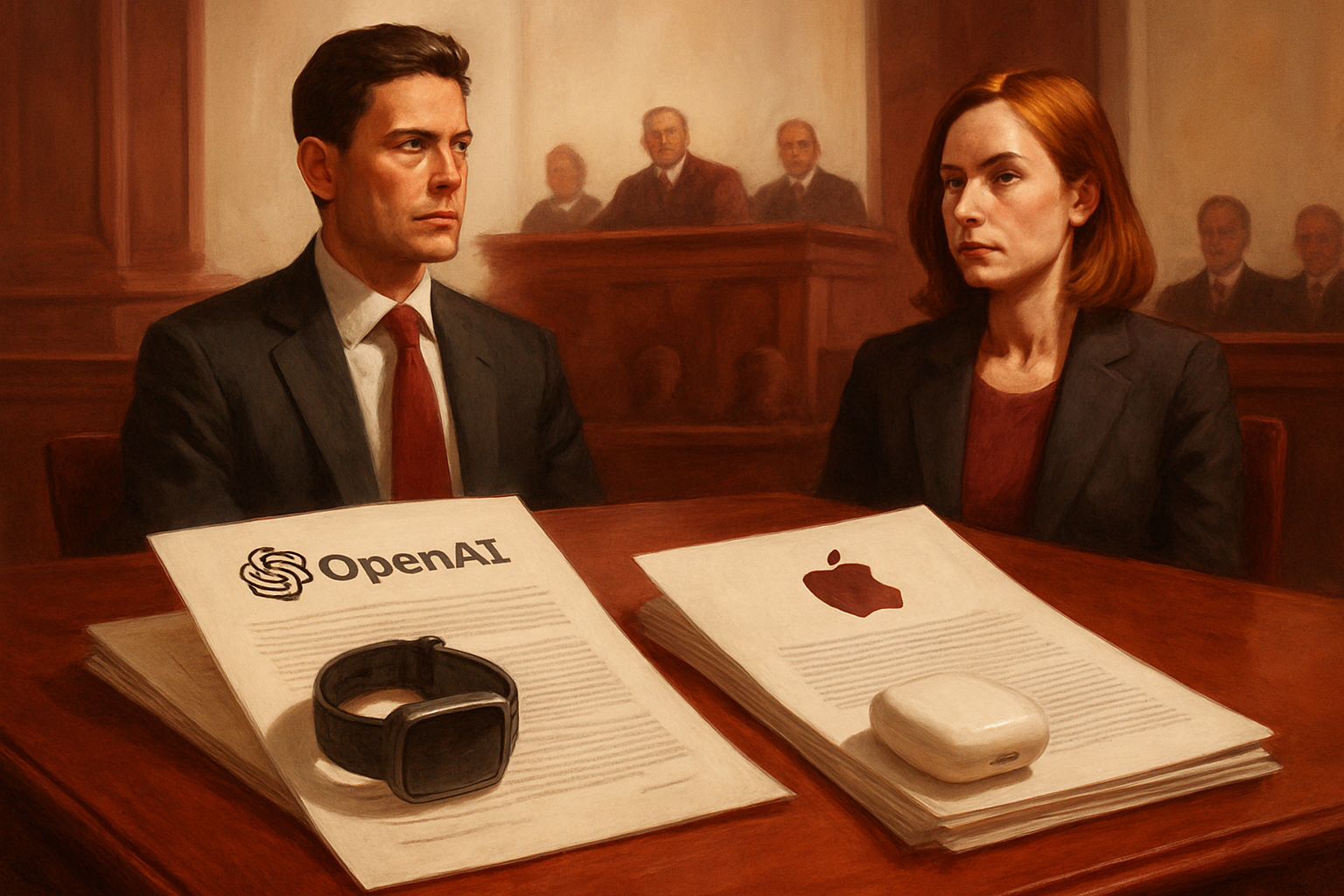
As the AI wearables industry prepares for major expansion by 2027, OpenAI finds itself in a precarious situation. The company, which hoped to establish itself in this booming sector, must now confront significant legal and reputational hurdles. A lawsuit filed by Apple could jeopardize its ambitions. The accusations from the Cupertino giant highlight alleged practices by OpenAI that could tarnish its already fragile reputation and hinder its ability to forge crucial partnerships.
The last 24 hours have been particularly tumultuous for OpenAI. An executive unexpectedly left the company, citing health reasons. Additionally, the firm had to shut down a navigation tool, Atlas, after just nine months of existence, marking another failure in its product portfolio. Apple has also initiated lawsuits for commercial theft, accusing OpenAI of selling products to China in violation of international sanctions. Finally, Johannes Heidecke, head of security systems, has also departed the company.
Redefining Technological Ambitions
In light of these challenges, OpenAI may be forced to reassess its plans for its AI devices. This recalibration would require considerable resources in terms of time and money. Meanwhile, its competitors, notably Apple, are making significant strides with their own AI glasses and other devices, set to launch in 2027. The lawsuit filed by Apple accuses OpenAI of orchestrating a systematic theft of trade secrets, which could seriously delay the development of its products. In May 2025, OpenAI had grandly announced the acquisition of the company io for $6.5 billion. However, the accumulated delays and legal complications could cause OpenAI to miss the strategic window of 2027.
Le brief IA que les pros lisent chaque soir
Les 7 actus IA du jour, décryptées en 5 min. Gratuit.
Inclus dès l'inscription : notre sélection des meilleurs guides & comparatifs IA.
Choisis ton rythme
Gratuit · Pas de spam · Désabonnement en 1 clic
The Stakes for OpenAI
OpenAI is under pressure to catch up with competitors like Anthropic. Recent product failures, project delays, and legal issues highlight flaws in the company's strategy. These difficulties arise at a critical moment, as OpenAI considers a major initial public offering next year. However, the company's momentum seems to be slowing, especially compared to giants like Meta and Google, which continue to advance.
OpenAI's ambitions in the realm of AI devices appear increasingly unrealistic. Reports from the supply chain indicate that OpenAI has tasked its partner Foxconn with producing up to five distinct AI devices by the end of 2028. This effort represents a colossal investment of at least $10 billion.
An Uncertain Future
The collaboration between Jony Ive, former head of design at Apple, and OpenAI, initiated in 2023, has yet to bear fruit. Nearly four years later, no product has been announced, and a complete redesign seems necessary. The year 2027 is crucial for OpenAI to compete with Apple, Meta, Google, and others in the AI device space. For OpenAI, which is not yet profitable and consumes enormous financial resources each quarter, time is a critical factor.
Brief IA — L'actualité IA en français
L'essentiel de l'actualité de l'intelligence artificielle, décrypté et expliqué chaque jour.