OpenAI and APA: Protecting Young People's Mental Health
Le brief IA que les pros lisent chaque soir
Les 7 actus IA du jour, décryptées en 5 min. Gratuit.
Inclus dès l'inscription : notre sélection des meilleurs guides & comparatifs IA.
Choisis ton rythme
Gratuit · Pas de spam · Désabonnement en 1 clic
A Collaboration for Responsible AI Use Among Youth
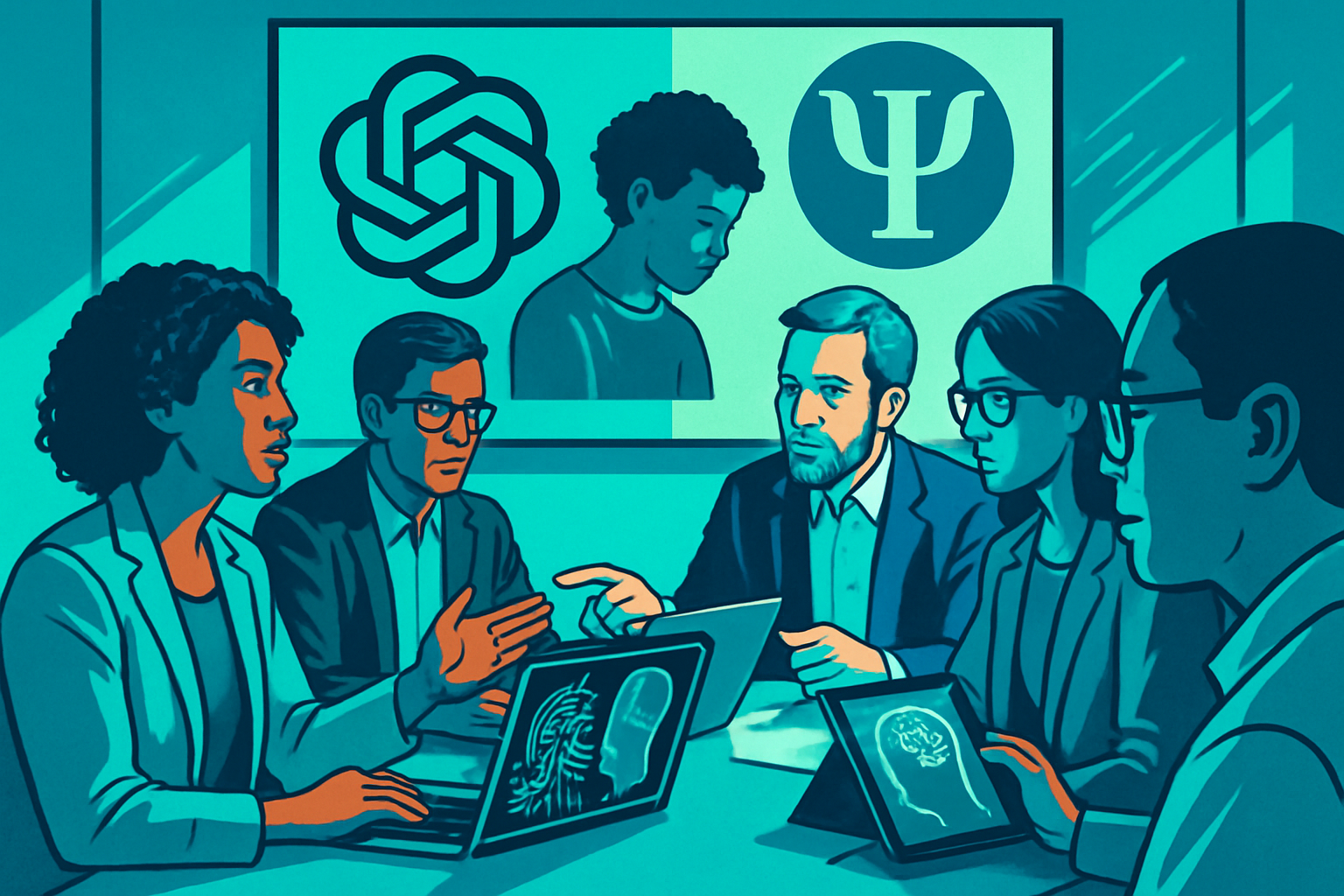
The use of artificial intelligence by young people is rapidly expanding, whether for learning, creating, or seeking advice. In light of this trend, it is crucial for families, schools, clinicians, and communities to have clear evidence and adequate resources to guide this usage. It is in this context that OpenAI has decided to collaborate with the American Psychological Association (APA) to integrate psychological science into the development and responsible use of AI among youth. The APA, as the leading scientific and professional organization in psychology in the United States, will bring its expertise to clarify what is known and what remains uncertain, while defining the contours of responsible AI as technology evolves.
Arthur C. Evans, Jr., PhD, CEO of the APA, emphasizes that young people interact with AI during crucial periods of their development. The APA contributes its expertise in development and clinical practice to define responsible design and protect the well-being of youth. The goal is to ensure that knowledge reaches those who build these systems.
Dr. Sara Johansen, head of product policy on mental health and well-being at OpenAI, states that technology is now integrated into the lives of adolescents. It is therefore their responsibility to offer safe and age-appropriate experiences, designed with families in mind. AI should enhance, not replace, the real relationships and care that young people rely on. This partnership builds on ongoing work with experts to ground OpenAI's approach in evidence and develop practical protections that prioritize the well-being of adolescents.
Priority Areas of Intervention
Earlier this year, OpenAI co-hosted a meeting with the APA, bringing together leaders from mental health organizations, researchers, clinicians, educators, and youth representatives. The aim was to discuss the support gaps that young people face today and how AI can help bridge these gaps responsibly.
The discussions identified several areas of intervention, including how AI can support youth in distress, how it can be designed to be more developmentally appropriate, and how parents, caregivers, and clinicians can be better equipped to guide youth in their use of AI. This work will be grounded in the science of human behavior and the lived experiences of parents, caregivers, teachers, and the youth themselves. Over time, these efforts could inform stronger protections and evidence-based approaches regarding the integration of AI into young people's lives.
Supporting Parents and Caregivers
One of the initial areas of focus is to provide parents and caregivers with practical tools to navigate the use of AI at home, especially as adolescents begin to use these tools. In collaboration with the APA, OpenAI plans to develop resources for families to help parents and caregivers support healthy usage, recognize when adult intervention may be appropriate, and reinforce AI as a tool, not a replacement for people or care. The goal is to make this guidance widely accessible within school communities.
Supporting Practitioners and the Broader Field
OpenAI is also working with the APA to support practitioners who are increasingly receiving questions about AI. Planned efforts include resources for clinicians and school psychologists focused on promoting healthy AI use, recognizing excessive dependence, and intervening in unhealthy usage patterns. OpenAI will continue to bring together leaders from health, education, research, policy, technology, and youth advocacy sectors to translate emerging lessons into practical guidance for the broader field.
Listening to Youth and Understanding System Gaps
It is essential that these efforts are grounded and shaped by those with lived experience, rather than based on assumptions. OpenAI will work with the APA to gather adolescents, families, clinicians, school psychologists, and others to better understand how young people use AI, how AI-related issues manifest in schools, therapy, and family contexts, where current systems fail, and where AI can help responsibly in terms of access, education, or navigation.
Our Broader Safety Work
This work is part of OpenAI's efforts to improve how ChatGPT responds in sensitive moments and supports young users. OpenAI collaborates with over 260 mental health experts to help ChatGPT better recognize signs of distress, respond with care, and direct people to real support. Access to localized crisis resources and one-click helplines has been expanded, reminders to take breaks have been added, and additional protections for young users, including parental controls and notifications to parents in case of safety concerns, have been introduced. Principles for those under 18 in OpenAI's Specific Model and an age prediction model that helps apply the right experience and protections have also been implemented.
Our Long-Term Commitment
AI can help people find information and navigate systems earlier, but the well-being of youth depends on strong human relationships and trusted support. OpenAI is pleased to collaborate with the APA, alongside the many researchers, clinicians, and educators from whom they continue to learn, as they work to ensure that AI truly supports young people and those who guide, support, and accompany them.
Brief IA — L'actualité IA en français
L'essentiel de l'actualité de l'intelligence artificielle, décrypté et expliqué chaque jour.