OpenAI and Broadcom: Towards In-House AI Chips by 2026
Le brief IA que les pros lisent chaque soir
Les 7 actus IA du jour, décryptées en 5 min. Gratuit.
Inclus dès l'inscription : notre sélection des meilleurs guides & comparatifs IA.
Choisis ton rythme
Gratuit · Pas de spam · Désabonnement en 1 clic
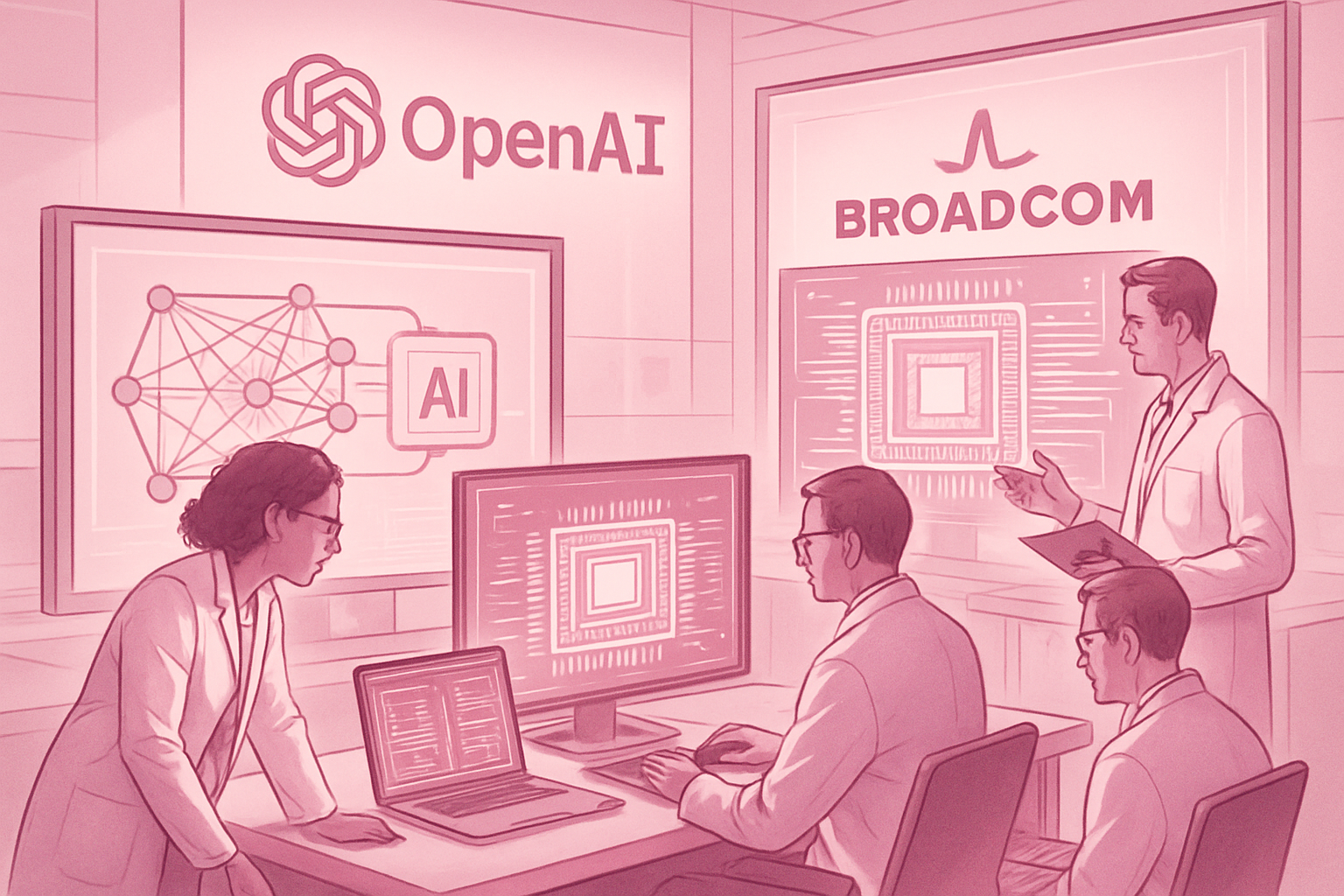
OpenAI, one of the most prominent companies in the field of artificial intelligence, is set to take a major step in its technological development. In collaboration with Broadcom, the semiconductor giant, OpenAI plans to design in-house AI chips that are expected to be delivered by 2026. This initiative, revealed by anonymous sources, marks a significant turning point in how OpenAI envisions its technological future.
Technical Details or Key Figures
The new AI chips will be specifically designed for training and inference, two crucial processes in the development of artificial intelligence models. Training involves using vast datasets to teach models how to perform specific tasks, while inference consists of applying these models to new data to generate results. By developing these chips in-house, OpenAI aims to optimize these processes, which could lead to significant performance gains. Technical details regarding the architecture of these chips remain unclear, but it is likely that they will incorporate advancements in parallel processing and energy efficiency, essential criteria in the AI field.
Impact / Consequences for the Sector
This initiative could have considerable repercussions for the AI sector. By producing its own chips, OpenAI reduces its reliance on external suppliers, allowing it to better control its costs and production timelines. This could also encourage other technology companies to follow suit, creating a trend towards technological autonomy in the sector. Furthermore, this move could strengthen OpenAI's position against competitors like Google and NVIDIA, who currently dominate the AI chip market. By developing tailored solutions, OpenAI could not only enhance its own products but also redefine performance standards in the field.
Reactions or Perspectives
Reactions to this announcement are varied. Some experts emphasize that this strategy could enable OpenAI to accelerate its innovations and respond more quickly to the growing demands for computing power. Others, however, caution against the technical and financial challenges associated with developing in-house chips. The design of semiconductors is a complex and costly process, and it remains to be seen whether OpenAI can overcome these obstacles. Additionally, this initiative raises questions about regulation and competition in the sector, particularly regarding data protection and technology security.
In conclusion, the initiative by OpenAI and Broadcom to develop in-house AI chips by 2026 represents a major stake in the future of artificial intelligence. By strengthening its technological autonomy, OpenAI could not only enhance its own capabilities but also influence the entire sector. It will be crucial to monitor the evolution of this project, both in technical terms and regarding its economic and regulatory implications. The impact of this decision could redefine the contours of competition in the field of AI and technology in general.
Brief IA — L'actualité IA en français
L'essentiel de l'actualité de l'intelligence artificielle, décrypté et expliqué chaque jour.