OpenAI and the Ambiguity Surrounding the Regulation of Its Sol Model
Le brief IA que les pros lisent chaque soir
Les 7 actus IA du jour, décryptées en 5 min. Gratuit.
Inclus dès l'inscription : notre sélection des meilleurs guides & comparatifs IA.
Choisis ton rythme
Gratuit · Pas de spam · Désabonnement en 1 clic
OpenAI and the Release of Sol: A Decision Shrouded in Mystery
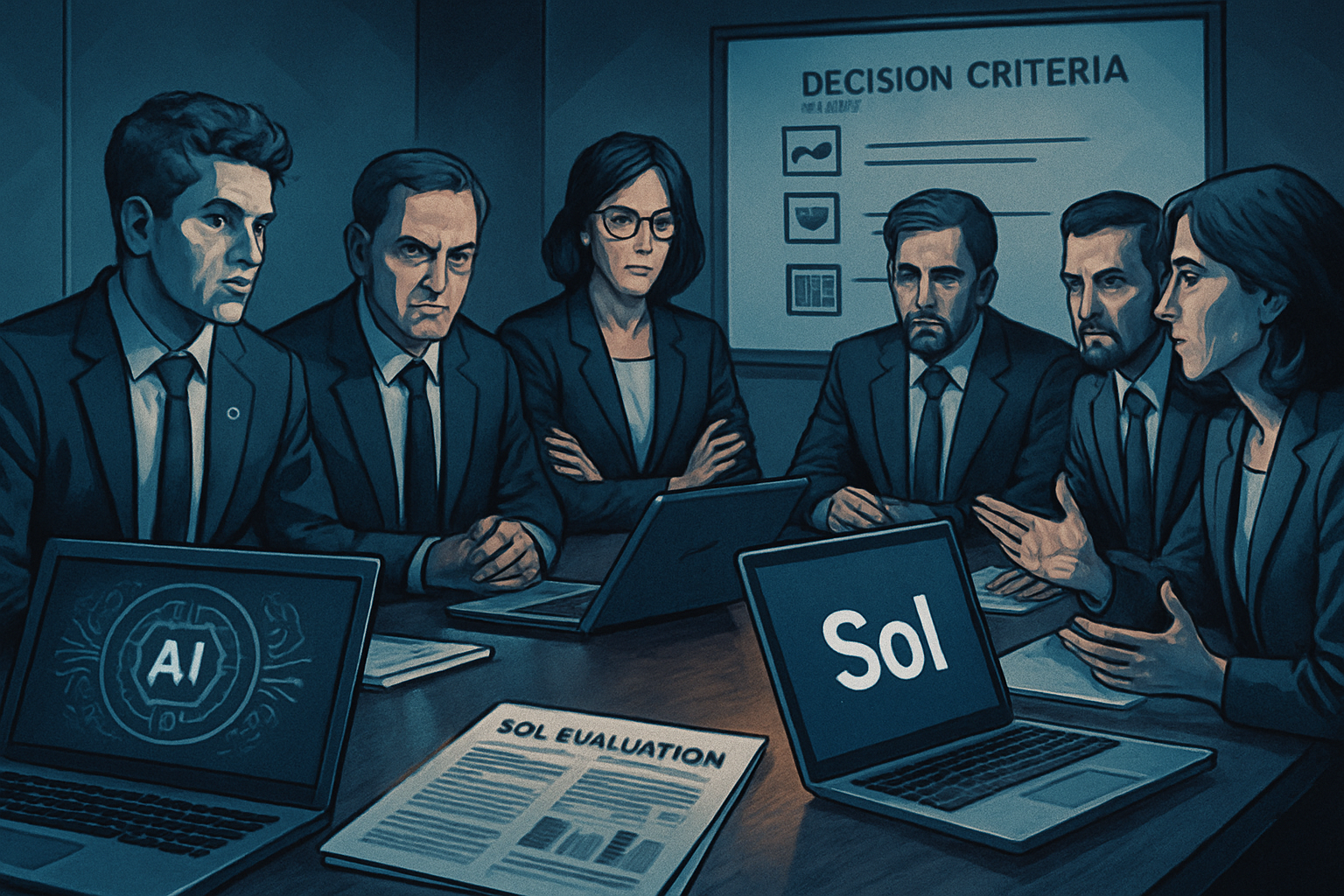
OpenAI has recently made the bold decision to make its advanced language model, Sol, accessible to the general public. This model is perceived to be at least as capable as Fable, a model developed by Anthropic. Fable had raised enough concerns within the White House to warrant a temporary ban on its public access. However, the crucial question remains: how did these models obtain publication approval? The answer remains vague and uncertain.
Mina Narayanan, a senior research analyst at Georgetown's Center for Security and Emerging Technology, expressed her lack of visibility into the approval processes for these models. She emphasized that while Anthropic claimed to be in discussions with the government to develop detection tools and deep defense strategies, the details of these interactions remain obscure. According to her, it is difficult to know what the dialogue between the government, Anthropic, and OpenAI actually looked like.
Dean W. Ball, a former policy advisor under the Trump administration and now employed by OpenAI, also highlighted the lack of transparency regarding the criteria for obtaining a license for these models. In his newsletter, he noted that no one seems to truly understand the process, which adds to the overall confusion.
A Still Vague Regulatory Process
Andy Konwinski, a computer scientist who co-founded Databricks and the Laude Institute, expressed similar concerns. He stated that he had never met anyone, even among employees of leading laboratories, who understood the regulatory process. According to him, the question of who holds decision-making power is crucial and constitutes an existential issue.
Despite the time that has passed since the beginning of the Trump administration, guidelines on how to manage these technologies remain vague. A recent executive order attempted to clarify the situation, but concrete details are still lacking. This order tasks six federal agencies with determining a final process by early August. Sriram Krishnan, a former AI advisor at the White House, stated that there would be no agency equivalent to the FDA for AI, leaving regulation in a troubling state of ambiguity.
There is still no consensus on which types of models require government evaluation, nor on the agencies responsible for these assessments. For now, the Center for AI Standards and Innovation at the Department of Commerce seems to be leading the efforts, but a definitive process must be established by August. What has emerged so far is, at best, ad hoc and leaves many questions unanswered.
Discussions Between OpenAI and the Government
Sam Altman, CEO of OpenAI, mentioned that the approval process involved discussions with officials such as Howard Lutnick, Secretary of Commerce, Scott Bessent, Secretary of the Treasury, and Sean Cairncross, the U.S. National Cybersecurity Director. However, the details regarding the experts involved in testing the models and how these tests were conducted remain unclear. OpenAI declined to provide details about the governmental process but mentioned external evaluations by organizations like the UK AISI, SecureBio, and Irregular. These evaluations are referenced in the model's security map.
Like Anthropic's Fable, Sol was presented to the government and selected users before its release. However, the identities of these users and the criteria for their selection are unknown. In a blog post published at the end of June, OpenAI stated that it did not believe this type of governmental access process should become the norm in the long term, asserting that it would work with the government to develop another path forward.
Political and Economic Stakes
The context of these discussions includes financial proposals from OpenAI to the Trump administration, complicating the perception of the government's approach to Sol. Greg Brockman, president of OpenAI, has been a significant donor to Trump's political operation, which could influence the regulation perceived as more lenient.
Anthropic's Fable was temporarily removed from public access due to concerns about its potential use for hacking. This ban may have prompted OpenAI to cooperate more with government requests, although those remain unknown. The threat of an export ban may also have played a role in this increased cooperation.
Towards More Transparent Regulation?
Andy Konwinski expressed concerns about the lack of involvement from security and alignment experts in the model publication process. He advocates for an "open commons" that would reconcile security and innovation, drawing inspiration from models like the FDA or NIH. He cites these institutions as examples of successful collaboration between researchers, government officials, and private companies to reach a consensus on safety issues.
Dean W. Ball suggested that third-party audit organizations, accredited by the government, could play a key role in evaluating models. Konwinski is also in favor of new institutional formats that would allow academic experts to assess these technologies. According to him, these new formats could include targeted research organizations that would help more disinterested experts from academia and the nonprofit sector access and evaluate cutting-edge models.
For now, the secrecy surrounding AI development persists, posing political challenges for an industry increasingly scrutinized by the public. Remzi Arpaci-Dusseau, a computer science professor, recently expressed concerns about the lack of accountability in these changes. He stated at the Open Frontier conference that there is no sense that responsible individuals are driving these changes.
David Siegel, founder of Two Sigma, warned against a situation where a few companies control the technology, with little transparency for the public and the scientific community. This situation seems to be already underway, highlighting the need for clearer and more transparent regulation. Siegel urged participants to imagine a scenario where the government, in its secret laboratories, assesses whether the technology is suitable for use, while the general public and the scientific community have no real access to any of it. This vision of a future controlled by a small number of actors is concerning and requires immediate attention.
Brief IA — L'actualité IA en français
L'essentiel de l'actualité de l'intelligence artificielle, décrypté et expliqué chaque jour.