OpenAI and Chinese Models: The Battle of Open Weights
Open Weight Models: A Threat to the American AI Industry?
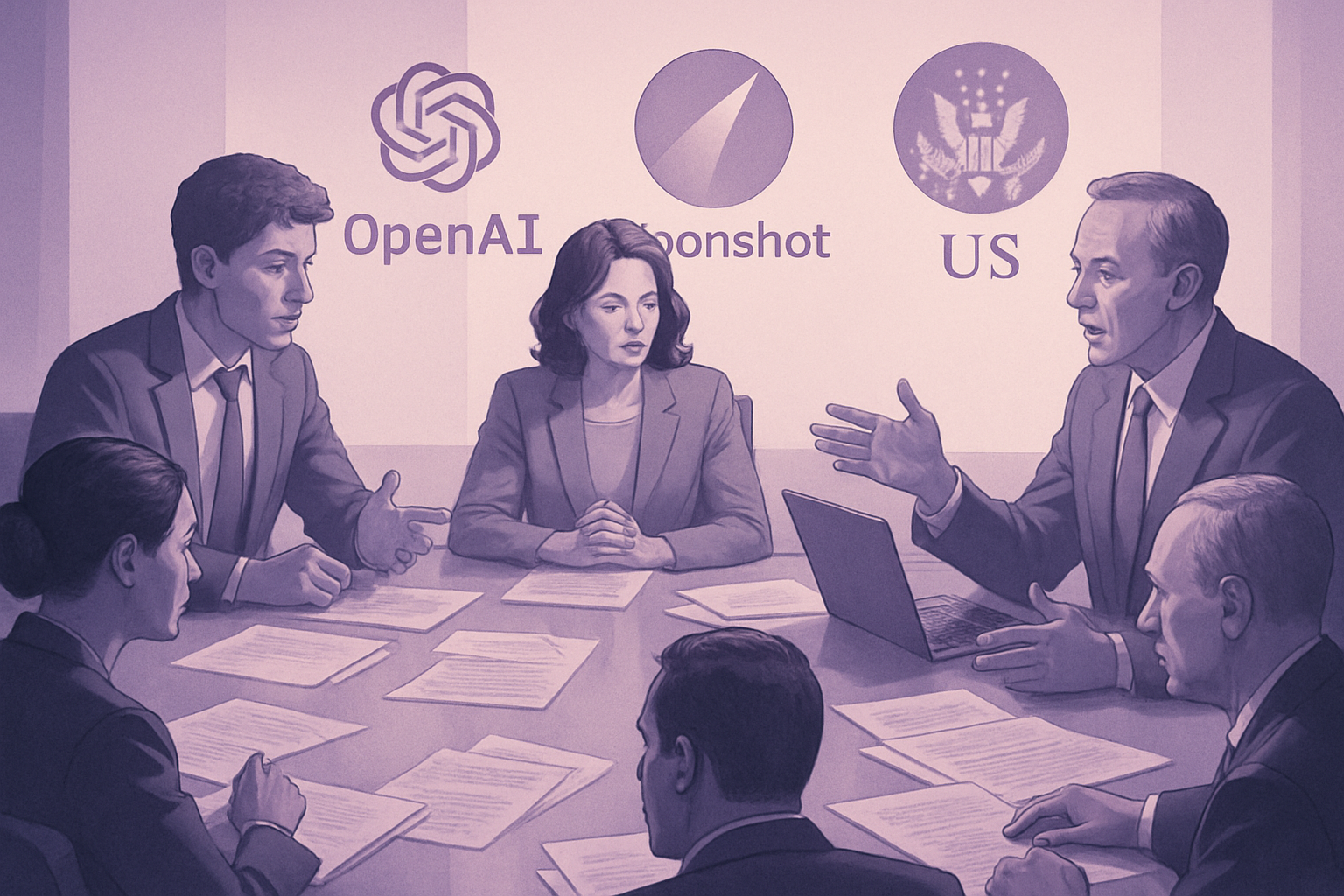
The Kimi K3 language model, developed by the Chinese lab Moonshot, has recently caught the attention of the global tech sector. This open weight model has sparked an intense debate, pitting the economic perspectives of American artificial intelligence (AI) giants against the future of large language models (LLMs) as a technology. This situation raises questions about how the United States should respond to these advancements.
Dean W. Ball, head of strategic futures at OpenAI, expressed concerns about the potential impact of open weight models on the industry. He suggested that the U.S. government should consider creating a climate of fear and regulatory distrust around these new models. According to him, this could deter capital investment in cutting-edge labs, thereby protecting the economic interests of American companies.
Reactions and Controversies Surrounding OpenAI's Statements
Ball's remarks prompted strong reactions within the tech sector. Influential figures like Yann LeCun and Martin Casado defended open-source software, arguing that it can stimulate innovation while coexisting with proprietary projects. In response to these criticisms, Ball quickly retracted his statements, admitting that regulatory crackdowns were not the best strategy for the White House.
However, reports from Axios indicate that the Trump administration was considering restricting access to K3 and other advanced Chinese models, under pressure from American labs. Another report from Politico clarified that the Department of Commerce does not seem ready to take such measures immediately.
Economic Stakes of Open Weight Models
Open weight models present a clear economic advantage for large AI companies. They allow for the development of artificial intelligence at a lower cost, outside the infrastructures of closed labs like Anthropic or OpenAI. This could lead to a decrease in return on investment for these companies, which have heavily invested in training their models.
Braden Hancock, co-founder of Snorkel AI, emphasized that high-quality open-source models could reduce profit margins for leading companies. However, he believes this would not lead to a decline in AI usage; quite the opposite.
Concerns Related to Chinese Models
Concerns regarding Chinese models manifest in several forms. One of the main worries is the protection of American data from the Chinese government. The U.S. has already banned certain Chinese products, such as electric vehicles, due to data collection fears. However, experts believe that open weight models hosted on American servers are unlikely to transmit data to China.
Le brief IA que les pros lisent chaque soir
Les 7 actus IA du jour, décryptées en 5 min. Gratuit.
Inclus dès l'inscription : notre sélection des meilleurs guides & comparatifs IA.
Choisissez votre rythme
Gratuit · Pas de spam · Désabonnement en 1 clic
Another fear is that these models could implicitly favor the People's Republic of China, although the impact of this bias on specific tasks, such as coding, remains unclear. David Sacks, a venture capitalist and Trump advisor, shared instances of American companies turning to Chinese LLMs to fill security gaps when American models refuse to perform certain tasks.
The Race for Innovation: U.S. vs. China
The fear that China could surpass the U.S. in AI is a major motivation for considering restrictions. Sam Bresnick, a researcher at Georgetown's Center for Security and Emerging Technologies, highlights the growing importance of AI in U.S. military operations, justifying support for investments in cutting-edge labs.
However, Bresnick questions the necessity of protecting American companies from foreign competitors, emphasizing that innovation should not be limited to a few dominant players.
The Impact of Open Source Models on Innovation
Advocates for open AI, like Clem Delangue from Hugging Face, argue that restricting open models would not make AI safer. On the contrary, it would concentrate power in the hands of a few companies, making it harder for diverse players to contribute to AI improvement.
Bresnick proposes an alternative: strengthening export controls on chips, particularly by limiting the sale of advanced processors like the Nvidia H200 to China. This could help maintain American leadership without entering the complex debate over banning open-source technologies.
Economic Challenges of AI
Economic uncertainty surrounding AI is a major issue. Business models, whether open or proprietary, are not yet well-defined. AI companies struggle to monetize their tools, especially with the continuously rising costs of training.
In China, AI companies face similar challenges, struggling to generate revenue and access computing power. The Chinese government encourages open publications, but companies find it difficult to profit from them.
Towards a Future with American Open Models
Some American companies, like Thinking Machines Lab and Nvidia, are exploring the possibility of developing open models. Hancock notes that Nvidia would benefit from a diverse ecosystem of companies developing AI, rather than a few giants capable of manufacturing their own chips.
American graduate programs primarily rely on open weight models from China, and Hancock claims that half of the articles students study come from Chinese institutions, with American cutting-edge labs becoming increasingly reluctant to share their work widely.
Bresnick concludes that the U.S. would benefit from developing its own capable and cost-effective open models. This could conflict with the current strategy of cutting-edge labs but would offer a viable alternative to maintain American innovation and competitiveness.
Brief IA — L'actualité IA en français
L'essentiel de l'actualité de l'intelligence artificielle, décrypté et expliqué chaque jour.