OpenAI and Nvidia Divided on Chinese AI: Washington Hesitates
Le brief IA que les pros lisent chaque soir
Les 7 actus IA du jour, décryptées en 5 min. Gratuit.
Inclus dès l'inscription : notre sélection des meilleurs guides & comparatifs IA.
Choisis ton rythme
Gratuit · Pas de spam · Désabonnement en 1 clic
OpenAI and Nvidia Divided on Chinese AI: Washington Hesitates
The U.S. government has considered severe sanctions against Chinese open-source AI models like Kimi K3, accused of stealing American technology, according to media reports.
AI developers such as OpenAI and Anthropic have advocated for these bans, while tech giants like Nvidia, Meta, Microsoft, and Google have firmly opposed them.
After strong resistance from the industry, the administration has decided to backtrack for now and focus on the competitiveness of American models.
The Trump administration had considered sanctions and trade bans targeting Chinese open-source AI models, according to the New York Times. Following reactions from Silicon Valley, it decided to reverse course for the time being.
According to the New York Times, White House Chief of Staff Susie Wiles, Treasury Secretary Scott Bessent, and Commerce Secretary Howard Lutnick have spent the past few weeks debating the need for more aggressive government intervention in the open-source AI market. The newspaper cites more than half a dozen current and former government and industry officials.
Five of these sources stated that the options being considered included:
- Sanctions
- A trade blacklist targeting Chinese manufacturers of open models
- A ban on U.S. cloud companies doing business with these firms
Officials also discussed which models federal agencies should be allowed to use and whether the Department of Commerce should impose new rules. After an outcry from Silicon Valley, the administration changed course and is now focusing on the competitiveness of American models, according to the NYT.
This push came after a wave of powerful Chinese models, led by Kimi K3 from Moonshot AI, which competes with the best American models in several areas. Michael Kratsios, head of the White House Office of Science and Technology Policy, accused the company on X of distilling Fable, an Anthropic model, calling the theft of American technology "unacceptable." Bessent mentioned sanctions on the same day.
A Trade Fight Disguised as National Security
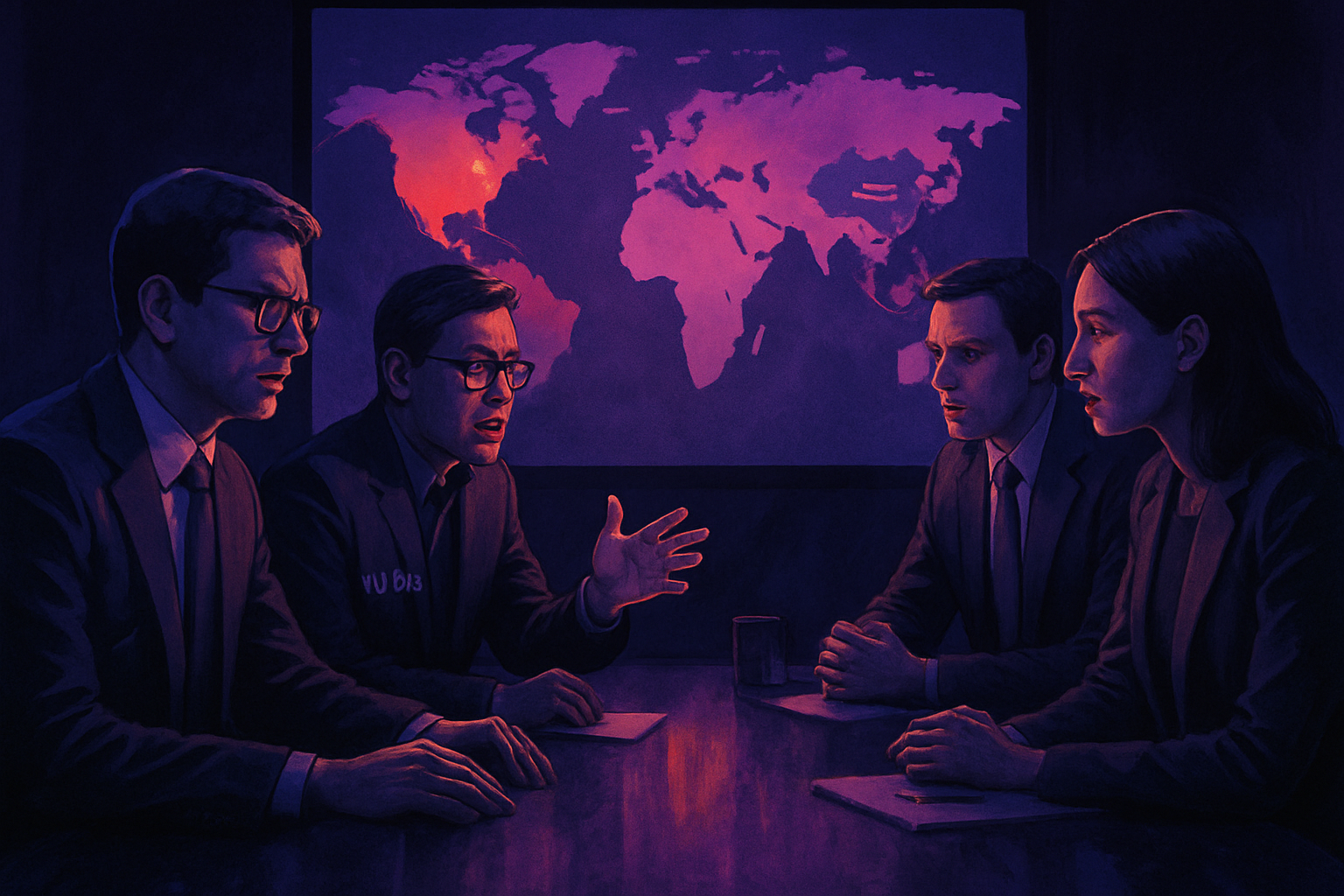
OpenAI and Anthropic, which keep their models closed, have argued for restrictions on Chinese rivals citing national security concerns, according to the report. At Nvidia, Microsoft, Google, and Meta, executives worried that these two AI companies, both preparing for IPOs, could convince the White House and lock in their market position. Through private messages, phone calls, and video conferences, the tech giants built a counter-argument, according to the NYT. Open models accelerate innovation and cyber defense.
Nvidia CEO Jensen Huang has become the face of this resistance. On July 24, he wrote his first post on X to defend open models. Nvidia also launched an alliance for open security tools that has grown from a handful of members to over 230. Christopher Padilla, a former Commerce Department official, described the dispute in the NYT report as a "cage fight for the future of the AI industry," asserting that it is primarily about money and market power, with the security angle added. Industry officials do not expect concrete measures before Xi Jinping's visit in September.
OpenAI told the newspaper that both open and closed models have a role to play. The company argued that the advancements of Chinese open-weight models are not an argument against openness, but rather a reason to create a national framework. Anthropic declined to comment, although its CEO Dario Amodei has previously outlined his position on open source in a prior post. The NYT has an ongoing copyright infringement lawsuit against OpenAI and Microsoft.
Brief IA — L'actualité IA en français
L'essentiel de l'actualité de l'intelligence artificielle, décrypté et expliqué chaque jour.