OpenAI Confronts ChatGPT's Advertising Challenges
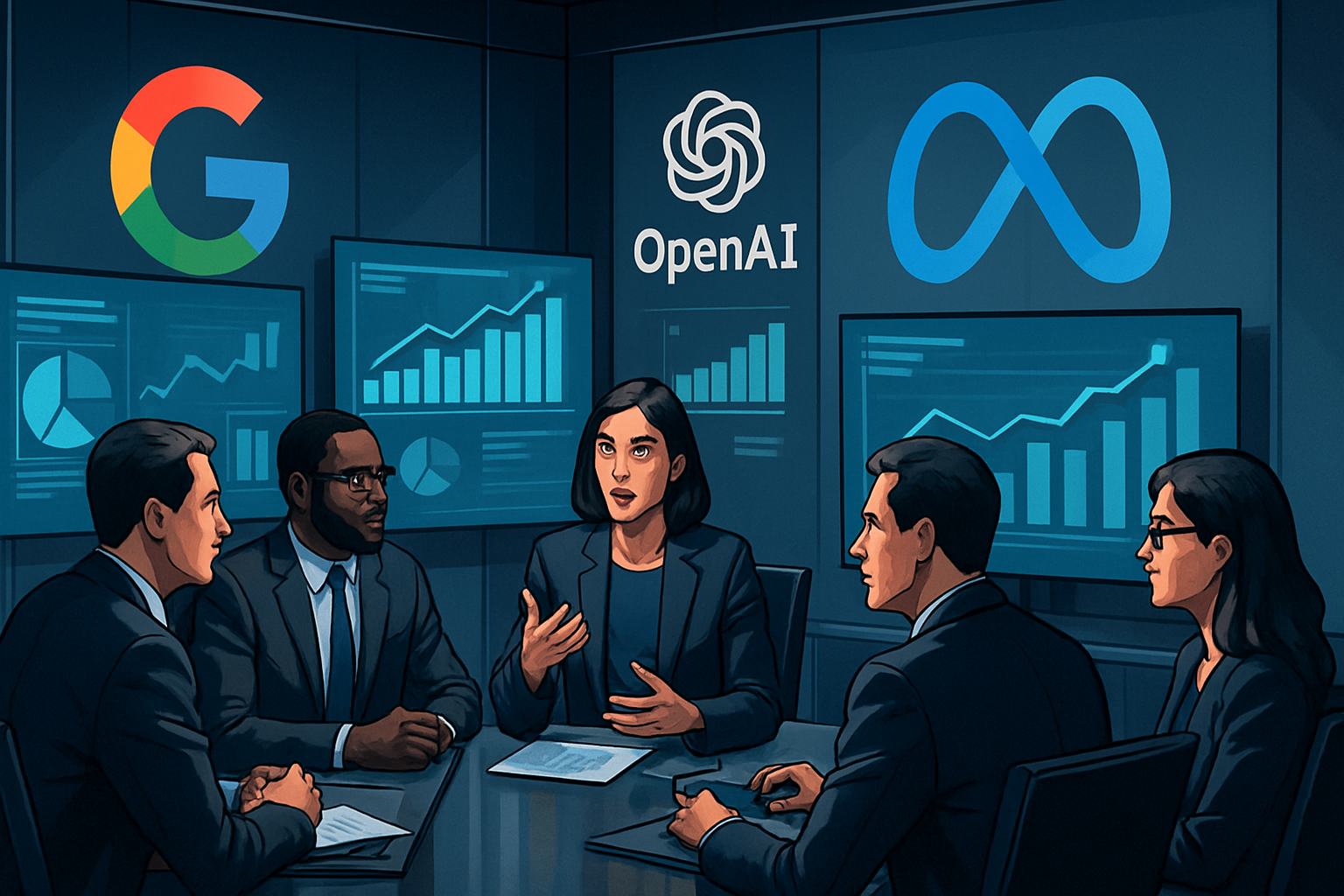
OpenAI Aims to Revolutionize Advertising with ChatGPT
OpenAI has grand ambitions for the advertising sector through ChatGPT, seeking to monetize its successful application. However, advertisers believe the product is still in a preliminary stage, despite weekly developments.
OpenAI's advertising revenue forecasts are seen as unrealistic by a Business Insider analyst. OpenAI aspires to compete with the advertising empires of Google and Meta, but the road ahead is still long. Since February, the startup has begun selling ads on ChatGPT, with geographic expansions and new features. However, ChatGPT's advertising sector still has a long way to go before reaching the revenue projections set by OpenAI, and clients using ChatGPT for advertising still find it rudimentary.
Immense Potential but Challenges to Overcome
Advertising represents a major opportunity for OpenAI. ChatGPT has around one billion monthly users. If OpenAI manages to become an advertising player the size of Google or Meta, it could generate billions of dollars, thereby reducing its reliance on commercial agreements, unlike its competitor Anthropic. This will require considerable effort and the ability to overcome many questions.
In March, OpenAI announced that its advertising business had reached $100 million in annual recurring revenue. In April, reports from The Information and Axios indicated that OpenAI was targeting around $2.4 billion in advertising revenue by 2026 and approximately $100 billion by 2030.
Forecasts Considered Too Optimistic
Nate Elliott, an analyst at EMARKETER, expressed skepticism about OpenAI's ability to achieve these goals. To do so, OpenAI would need to significantly increase its user base, surpass Google in the consumer AI market, offer aggressive advertising rates, and saturate ChatGPT with ads, which could be unbearable for users, according to Elliott.
EMARKETER predicts that the entire chatbot advertising market will generate less than $1 billion this year. By comparison, Google generated over $294 billion in advertising revenue in 2025.
Advertisers Slowly Adapting
While advertisers are excited about OpenAI's offering, they are still adapting to the lack of tools for campaign creation, measurement, and reporting. Google's and Meta's advertising tools offer more features for metrics, testing, and videos.
A spokesperson for OpenAI told Business Insider that the company continues to learn from advertisers and expand the platform's capabilities, although they did not respond to EMARKETER's analysis. They added that ChatGPT ads are still in their early stages and currently only appear in seven countries.
Le brief IA que les pros lisent chaque soir
Les 7 actus IA du jour, décryptées en 5 min. Gratuit.
Inclus dès l'inscription : notre sélection des meilleurs guides & comparatifs IA.
Choisissez votre rythme
Gratuit · Pas de spam · Désabonnement en 1 clic
OpenAI and Caution in Ad Integration
Initially, OpenAI chose to keep ChatGPT ad-free. CEO Sam Altman had described the combination of AI and ads as a "last resort" for 2024. However, financial concerns took precedence, and under the leadership of former app CEO Fidji Simo, discussions began about possible forms of advertising.
An initial round of advertising began in February, with major companies ready to invest hundreds of thousands of dollars. In Cannes, Dave Dugan, head of advertising at OpenAI, explained to Business Insider that the company started cautiously to focus on user experience.
In May, OpenAI launched a tool allowing other companies to create and manage their own ads. This tool is simple, lacking many of the features that Google and Meta have added to their advertising products over the years. It wasn't until July that marketers could target ChatGPT ads to a specific geographic area in the U.S., rather than the entire country.
Mixed but Promising Results
When the marketing startup Launch10 tested ChatGPT's advertising tool, its campaign achieved a click-through rate significantly lower than that of Google ads, said CEO Greg Hockenbrocht. He hoped the tool would offer more features for generating ad copy and testing variations.
However, Hockenbrocht noted that the recent addition of geographic targeting is a sign of improvement. During a month-long advertising campaign, he observed a significant increase in impressions and clicks over time. "I commend the OpenAI team," he said. "They are moving quickly, which is good. I think they will need to keep doing that."
Advertisers Need to Adjust Their Expectations
Unlike Google's keyword bidding or Meta's audience targeting, ChatGPT ads appear based on a multi-step conversation.
This new format is ideal for some advertisers. The AI voice synthesis startup Speechify has been advertising with OpenAI since the early pilots. Its Chief Commercial Officer, Rohan Pavuluri, told Business Insider that since developers ask ChatGPT for advice and Speechify's ads appear under comparisons of voice synthesis tools, the startup has seen a steady flow of new customers.
Kevin Roy, CEO of the advertising agency GreenBanana SEO, told Business Insider that while his clients are excited about the prospect of reaching ChatGPT's broad audience, they need to rethink their ads to focus on the questions a user might ask in their ChatGPT prompt. They must also be prepared to accept seeing less data on their ads, for now.
"There are very few levers we can pull in Chat ads, compared to the dozens and dozens of levers in Google Ads," Roy said.
Dugan highlighted OpenAI's speed and the use of AI as a means to catch up in advertising when he spoke to Business Insider in June. "Our engineers use our own products like Codex to develop the entire suite of products, and that means the pace of our launches, often on a weekly basis, is much faster than anything I've experienced before," Dugan said.
Since launching its advertising product, OpenAI has added essential elements of digital advertising such as cost-per-click bidding and conversion tracking tools.
Pavuluri from Speechify also had another request for the team. He expressed excitement about the advertising offering on ChatGPT so far. He would also like to see his company's ads placed in Codex.
Brief IA — L'actualité IA en français
L'essentiel de l'actualité de l'intelligence artificielle, décrypté et expliqué chaque jour.