OpenAI, Google: The White House Redefines AI
Le brief IA que les pros lisent chaque soir
Les 7 actus IA du jour, décryptées en 5 min. Gratuit.
Inclus dès l'inscription : notre sélection des meilleurs guides & comparatifs IA.
Choisis ton rythme
Gratuit · Pas de spam · Désabonnement en 1 clic
OpenAI, Google, and Anthropic in Washington: A Framework for AI Under Discussion
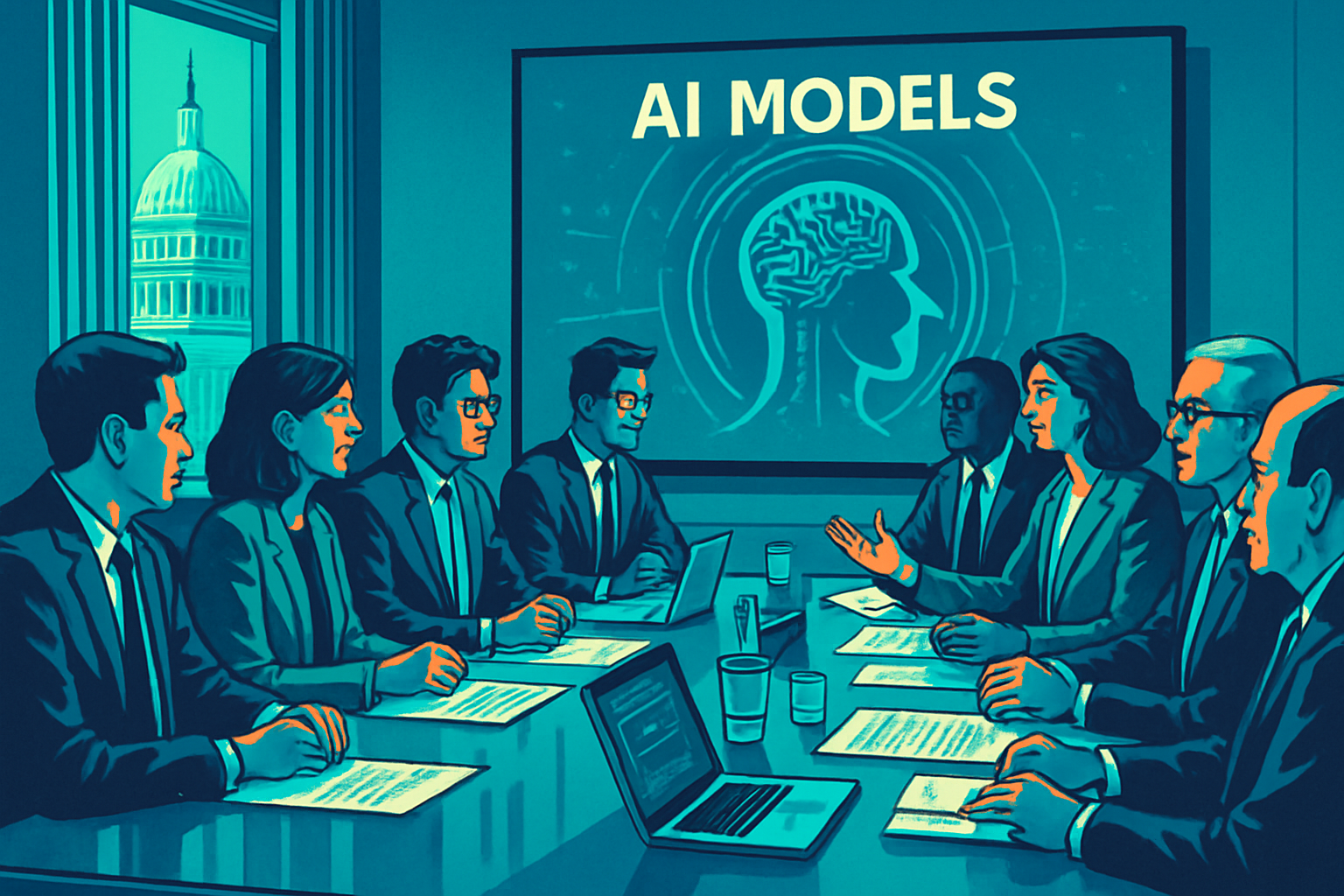
Last Tuesday, tech giants OpenAI, Anthropic, and Google gathered in Washington to discuss a new framework proposed by the Trump administration. This framework aims to evaluate advanced artificial intelligence models. The tech industry is eagerly awaiting details of this framework, which could transform how the Trump administration assesses the cyber capabilities of AI models.
This framework marks a significant turning point in AI oversight. Until now, the Trump administration has favored a light regulatory approach. However, the rapid advancements in AI models, particularly in cybersecurity and hacking, are beginning to challenge this approach. Details regarding the structure of this new process and its potential impact on the development and adoption of new AI models remain unclear.
According to a report from the New York Times, White House officials indicated that the federal government plans to review only certain types of AI models from companies like Anthropic and OpenAI, focusing on potential security risks. For now, open-source AI models will not be subject to this review, although this decision may evolve with technological advancements. Open-source models allow anyone to download or modify the code for free.
An executive order issued in early June directed officials to develop a "benchmarking process to assess the advanced cyber capabilities of AI models" within 60 days. This deadline has now passed, adding further pressure on the administration to clarify its intentions.
Key Questions That Remain
What is the Trump administration's commitment to AI?
So far, the Trump administration has adopted a minimal regulatory approach to AI oversight. The 2025 AI Action Plan emphasized that regulation could "stifle" the industry, urging agencies to "dismantle unnecessary regulatory barriers" that hinder the private sector.
However, the June executive order acknowledges a new reality where AI models from Anthropic and OpenAI have demonstrated significant advancements in areas such as coding, cybersecurity exploit detection, and managing complex long-term tasks.
The proposed framework requires companies to share their AI models with the government up to 30 days before their public launch. This would give the government a head start in evaluating their cyber capabilities. Crucially, the order describes this framework as "voluntary," although it remains to be seen how the administration would respond if companies chose not to follow this process. Jessica Ji, an analyst at Georgetown's Center for Security and Emerging Technology, suggested that officials seem to be trying to create a "soft compliance regime."
Which AI Models Will Be Affected by the Framework?
Regulating AI is a delicate exercise. The rules could target specific research labs, particular products, or individual AI models. If regulators choose to focus on models, several questions arise. Should they base their rules on the size of the models, their release date, or their capabilities?
Discussions in Washington in recent months have centered on the capabilities of AI models, particularly due to recent developments like Anthropic's Mythos model and a security incident involving OpenAI and the AI company Hugging Face.
Trump's executive order has tasked agencies with developing a definition of "covered leading-edge models" that would be reviewed by the administration. Open-source models and Chinese open-weight models, which have recently sparked significant controversy in the industry due to their advanced capabilities, are almost certainly part of the current discussions, according to Ji. She added that finding ways to categorize AI models is a crucial step for policymakers.
What Authority Will the Government Have Over AI Giants?
It remains uncertain how the framework will affect the deployment of AI models, especially if the process appears truly voluntary for companies. Ji expressed curiosity about whether there will be clear guidelines on what the administration can do if it discovers a dangerous capability during tests of unpublished technologies.
In June, the Trump Department of Commerce responded to cybersecurity concerns regarding an Anthropic model by issuing an export control that prohibited the company from granting access to foreign nationals. Anthropic ultimately suspended all access to the model until an agreement was reached with the administration.
Ji stated that it is unlikely the administration will continue to resort to export controls, although it is uncertain what other levers they might use to intervene in the release of a model or to pressure a company to modify its product.
She added that the meeting will provide more clarity on who within the Trump administration is making decisions regarding AI oversight and cybersecurity. "We are trying to understand who the new influential players are, who holds weight in the administration on these issues right now," Ji said.
Anthropic, Google, and OpenAI did not immediately respond to requests for comment.
Brief IA — L'actualité IA en français
L'essentiel de l'actualité de l'intelligence artificielle, décrypté et expliqué chaque jour.