OpenAI: Lehane Proposes an AI "New Deal" for 2028
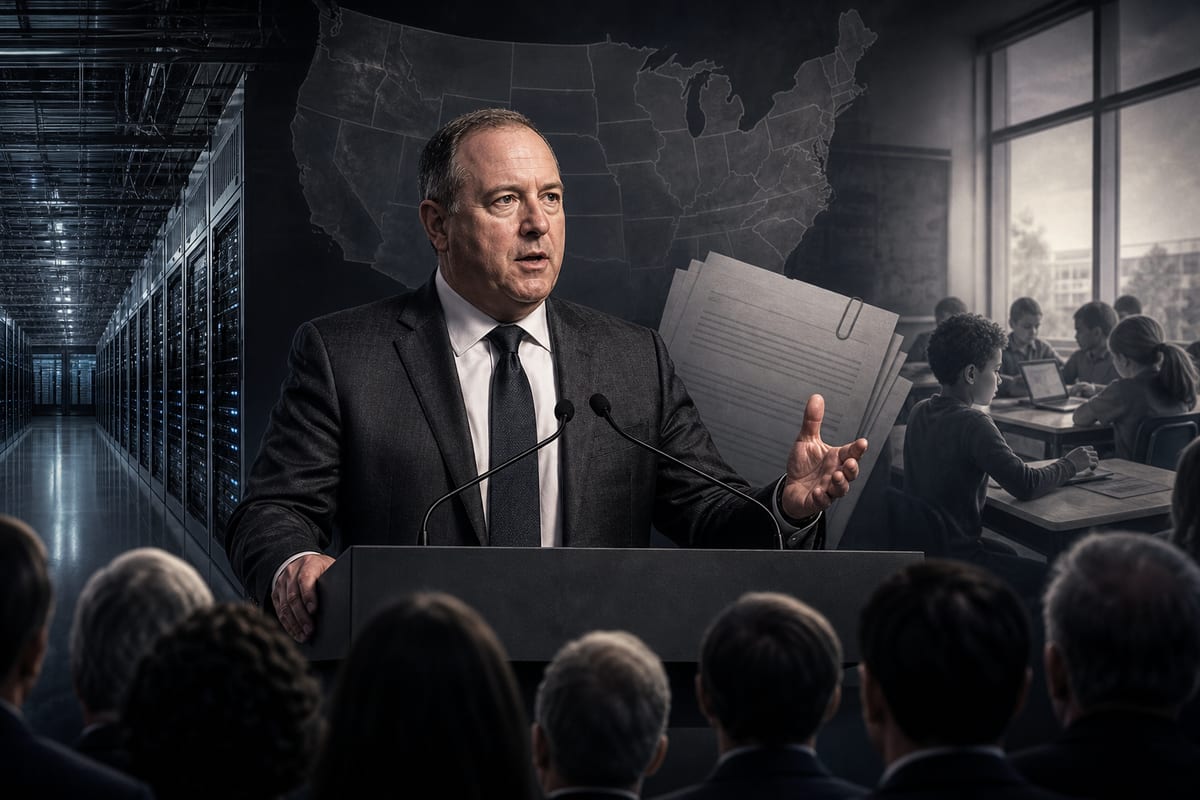
Chris Lehane, OpenAI's global affairs head, is advancing a five-pronged program to regulate AI, covering security, data centers, taxation, and education. The stated goal is to anchor AI in the prosperity of the middle class. Voices like Kate Brennan's challenge this approach, reminding us of OpenAI's opposition to security laws, despite a recent shift. The 2028 deadline serves as a political horizon for these proposals.
Security: Lehane's Calls and OpenAI's Regulatory Passivity
Chris Lehane calls for the establishment of concrete security standards, independent assessments, oversight by civil society, and the ability to limit or shut down certain AI systems. However, recent analyses show that OpenAI and other labs have not made comprehensive protocols public for cases where a model becomes uncontrollable by humans. Kate Brennan views these positions as demagoguery, emphasizing that OpenAI has opposed legislation imposing such obligations. In 2024, OpenAI opposed California's SB 1047 bill, which would have mandated catastrophic risk assessments and the implementation of shutdown mechanisms. The previous year, the company attempted to restrict state regulation, arguing that it could stifle American innovation. OpenAI claims to have recently evolved on some of these issues, supporting several state-level security legislations and expressing support for the integration of independent evaluators within the organization. Chris Lehane also asserts that humans must retain decision-making power over major choices made with AI support, but it remains uncertain how far this requirement could apply if AI becomes increasingly essential in sectors like education, employment, healthcare, or public services.
Value Sharing: Tax Incentives Rather Than Constraints
On the fiscal front, Chris Lehane proposes incentive measures to encourage employees to train in AI, facilitate access to capital for entrepreneurs, and introduce new modes of employee participation in ownership and profit sharing. He offers few concrete solutions to limit the hoarding of AI-generated profits, as these suggestions do not constitute strict obligations ensuring an equitable distribution of wealth produced by AI or addressing the costs associated with worker mobility. Kate Brennan argues that these measures rely on the assumption of widespread and positive AI adoption, which has not yet been observed, and instead advocates for a revision of corporate tax rates, tax incentives for hiring human staff rather than for automation, and a limitation on the concentration of economic power. Chris Lehane presents AI as a driver of prosperity and links the rise of the middle class to participation in an economy increasingly structured by companies like OpenAI, but it is uncertain whether his proposals would enable a genuine redistribution of power rather than reinforce it.
Le brief IA que les pros lisent chaque soir
Les 7 actus IA du jour, décryptées en 5 min. Gratuit.
Inclus dès l'inscription : notre sélection des meilleurs guides & comparatifs IA.
Choisissez votre rythme
Gratuit · Pas de spam · Désabonnement en 1 clic
Data Centers: Local Employment Highlighted, Moratoriums Criticized
Chris Lehane applies his economic growth logic to infrastructure while acknowledging the concerns raised by data centers, emphasizing the jobs in construction and the local tax revenues they are likely to generate. He warns that a moratorium on these installations could cause the United States to lose its lead over China, likening this attitude to that which prevailed during the 2002 vote authorizing military intervention in Iraq. During the midterm elections, resistance to data centers emerged as a shared concern among both parties in several races, amid worries about potential increases in energy bills, job displacement by AI, and the concentration of economic benefits among a few players.
Education and Minors: Age Protections and Effectiveness Debate
Chris Lehane places child safety and education at the center of his program, stressing the importance of age-appropriate protections around AI companions for minors. He warns against excluding AI from classrooms, arguing that it could create inequalities between affluent students and children from rural communities. However, critics remind us that the idea that AI enhances learning is not proven and should be subject to further scrutiny rather than calls for more funding or individualized attention from human teachers.
Horizon 2028: Political Framing and Economic Anxieties
Chris Lehane, OpenAI's global affairs head, draws parallels between the potential of AI and that of the New Deal under President Franklin D. Roosevelt, advocating for a "compelling third way" for Americans to benefit from this technology. He highlights five major political axes, including worker protection, education, AI safety, and data center development, while acknowledging American citizens' concerns about losing control over their economic future. Accessibility is already emerging as a central issue for the 2028 presidential election, in a context marked by inflation, tariffs, and rising living costs, while AI could play an increasingly significant role in public debates. Kate Brennan believes that Lehane's intervention represents a break from OpenAI's previous strategy, which prioritized accelerating AI development, reducing regulatory hurdles, and expanding infrastructure. This stance comes after a Democratic success in the midterm elections. While the original New Deal introduced guarantees for workers and imposed limits on corporate power, it is unclear how Lehane's vision would hold AI companies accountable for potential economic disruptions.
Brief IA — L'actualité IA en français
L'essentiel de l'actualité de l'intelligence artificielle, décrypté et expliqué chaque jour.