OpenAI Launches Public API for Deploying Codex Agents
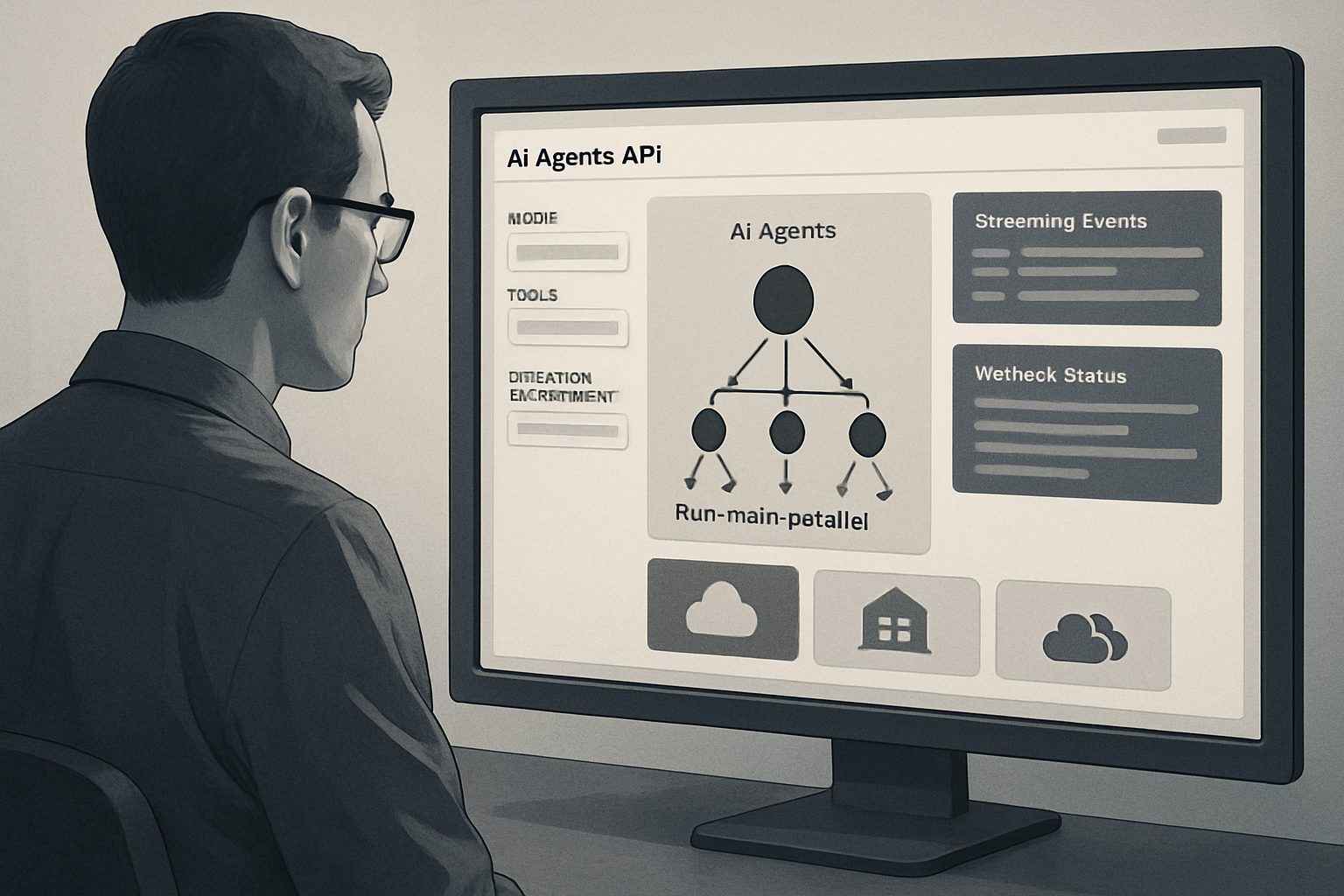
OpenAI is publicly beta testing a managed API that exposes the harness used for Codex and ChatGPT for Work. The service, billed at standard token and tool rates, promises durable, multi-agent, and orchestrated agents that can be deployed in a sandbox, with partners, or on client infrastructure.
OpenAI Separates the Codex Harness for Developers
OpenAI is transforming the harness, which has primarily been integrated into its coding tools, into a distinct product that developers can use for their own agents. This separation helps avoid creating a specific orchestration layer. According to OpenAI, the experience gained from Codex and ChatGPT for Work has enabled mastery in context management, efficient tool usage, and coordination of sub-agents for long-duration agents. The company states that its infrastructure can run an agent for several days. The API Agents is based on an open-source version of Codex, with the code available for review. OpenAI plans to adjust the service based on beta feedback before general availability.
Immediate Access and No Additional API Charges
The API Agents is accessible in public beta from the announcement on September 10, 2026, and is open to all developers. OpenAI does not charge for access to the API itself; only the tokens consumed and the tools used are billed at the platform's standard rates.
Flexible Execution and Tool Orchestration
Developers can choose to run their agents in a sandbox managed by OpenAI, on their own infrastructure, or with partner providers. This choice determines the computing power, memory, and storage available for the agent. OpenAI continuously evolves the harness. The API Agents controls the harness, relays tool calls to the chosen environment, and returns the results. The programmatic tool call allows for executing calls in parallel, chaining them, or filtering results in the code, only reinjecting useful data into the model's context.
Le brief IA que les pros lisent chaque soir
Les 7 actus IA du jour, décryptées en 5 min. Gratuit.
Inclus dès l'inscription : notre sélection des meilleurs guides & comparatifs IA.
Choisissez votre rythme
Gratuit · Pas de spam · Désabonnement en 1 clic
Session Memory, Multi-Agents, and Context Optimization
The API Agents automatically compresses context, synthesizing previous exchanges as the session approaches its limit, allowing for the use of multiple context windows without special adaptation on the developer's side. When a tool search is performed, only definitions relevant to the current task are loaded, which helps limit token consumption and preserves the model's cache. The service is compatible with multi-agent architectures: a main agent can assign sub-tasks to sub-agents operating in parallel, each with its own context. The session retains its state from turn to turn, avoiding the need to reconstruct the conversation for each new task.
Session Flow: From Creation to Ongoing Management
Launched on September 10, 2026, the API Agents provides access to the infrastructure and harness behind Codex and ChatGPT for Work. A single API call is sufficient to create an agent by defining the task, model, tools, and execution environment. A session begins with the configuration of the agent and the selection of an environment, which OpenAI provisions. Once the environment is operational, sending a task initiates a work turn. Progress can be tracked via continuous event streaming or through webhooks, which notify of task completion or the need for intervention. A new task can be sent to the same session to extend the activity, or the agent can be redirected while still processing the current task.
Brief IA — L'actualité IA en français
L'essentiel de l'actualité de l'intelligence artificielle, décrypté et expliqué chaque jour.