OpenAI Claims Navier-Stokes, Doubts About the Data
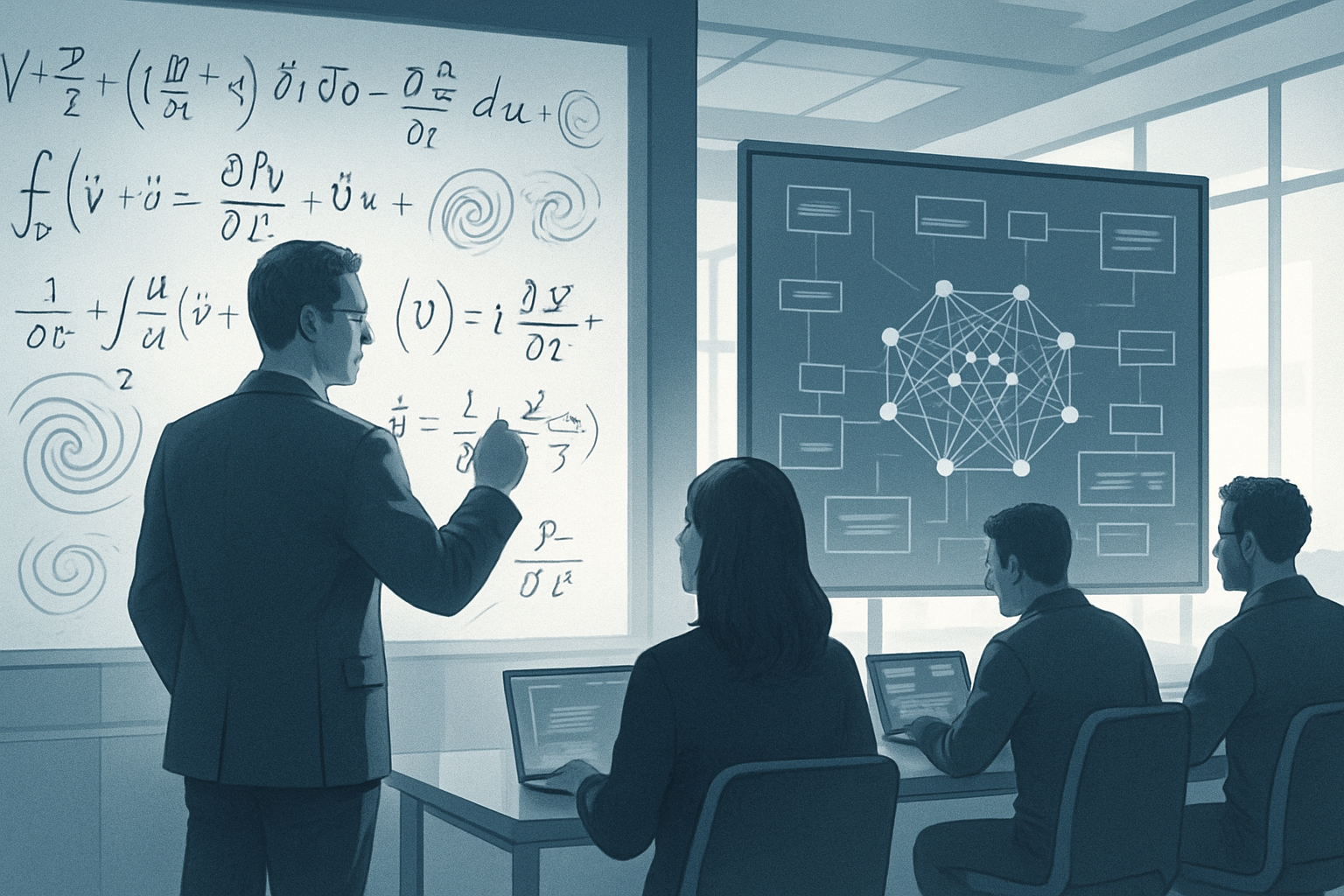
OpenAI claims to have found a solution to the Navier-Stokes problem using an internal model supported by 10,000 agents. The company denies any access to user data, while admitting that it cannot rule out a contribution from de-identified data, and states that it does not intend to claim the associated prize.
OpenAI denies any access to specific user data and dismisses the prize
OpenAI asserts that no specific user data was used to solve Navier-Stokes, while clarifying that it is unlikely but not impossible that de-identified data from the use of its products may have contributed to improving its models. When asked, the company directed to a statement on X reiterating these points. Sebastien Bubeck, a technical staff member at OpenAI, claims he had not seen the work of Tristan Buckmaster and Levent Alpöge before its public release and states that the proof presented by OpenAI differs significantly, including on the specific results. On Mastodon, Buckmaster claims that OpenAI admits to having used training data from a period after their result. OpenAI also indicates that it does not plan to claim the one million dollar prize associated with the Millennium Prize Problems.
Researchers Buckmaster and Alpöge question the source of the data
The day before OpenAI's announcement, Tristan Buckmaster (New York University) and Levent Alpöge (Anthropic) published results on a similar topic. Buckmaster states that he contacted OpenAI after discovering that the company was aware of their progress. He explains that he learned OpenAI had generated a demonstration for Navier-Stokes based on a method developed by himself and Alpöge, using OpenAI's Codex tools and Anthropic's Claude. He wonders if OpenAI could have accessed their Codex data. Buckmaster reports having asked whether the model was trained on, or had access to, their Codex sessions containing their project drafts. According to him, he was told that the model did not consult user data, and he indicates that he did not receive a response when he followed up on the training question.
Le brief IA que les pros lisent chaque soir
Les 7 actus IA du jour, décryptées en 5 min. Gratuit.
Inclus dès l'inscription : notre sélection des meilleurs guides & comparatifs IA.
Choisissez votre rythme
Gratuit · Pas de spam · Désabonnement en 1 clic
OpenAI's claim: an internal model and 10,000 agents
OpenAI announces that it has solved a mathematical problem that has remained unsolved for nearly 90 years and specifies in a statement released on Tuesday that it is the Navier-Stokes problem, which deals with the flow of liquids and gases. The company states that the method relies on an internal AI model considered to be more powerful than the recently unveiled GPT-6 Astra and involves 10,000 agents working in parallel. OpenAI notes that it began training this model on August 28 and claims to have observed unprecedented results during its evaluations, particularly in the field of mathematics. The Navier-Stokes problem is among the seven Millennium Prize Problems, each with a one million dollar reward for its resolution.
Brief IA — L'actualité IA en français
L'essentiel de l'actualité de l'intelligence artificielle, décrypté et expliqué chaque jour.