OpenAI: Ted Sanders Explains the Choice Between Astra, Sol, Terra, and Luna
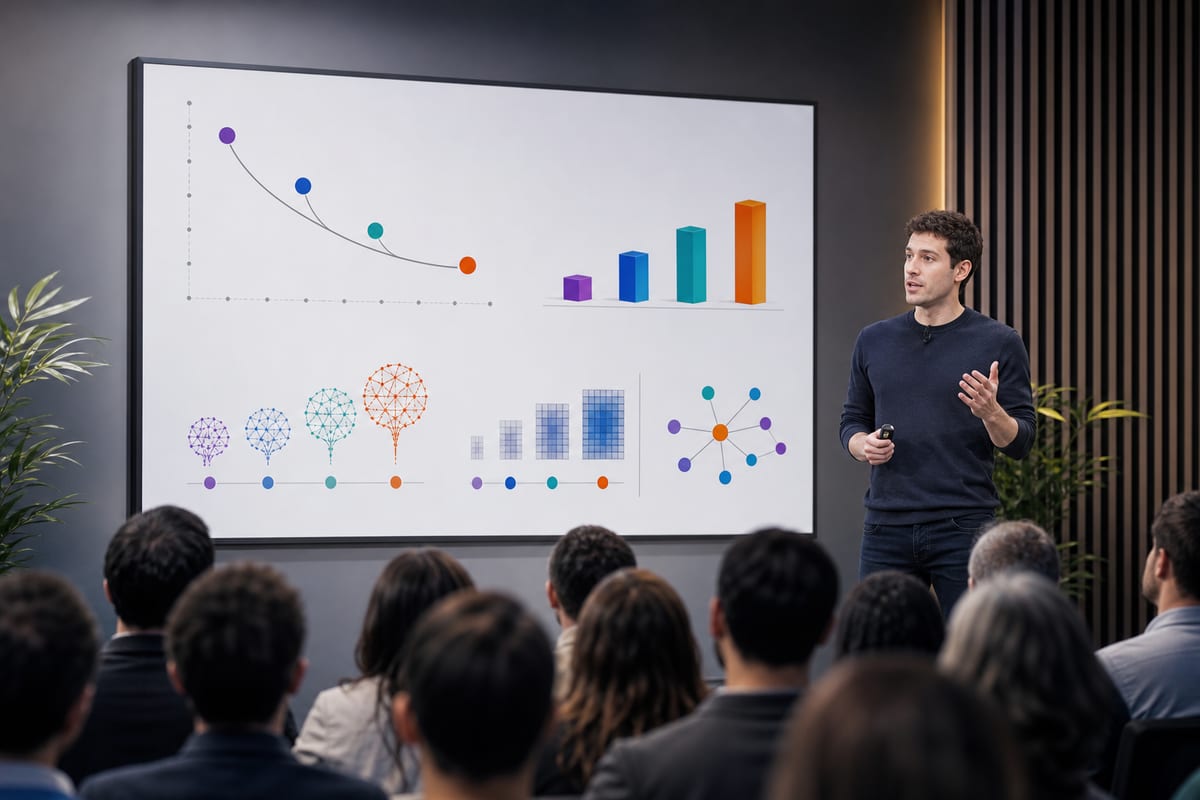
Ted Sanders from OpenAI explains how to choose between the Astra, Sol, Terra, and Luna models based on budget and needs. He presents GPT-6.1 Terra as a less expensive option that can sometimes compete with Astra, while emphasizing that performance depends on several criteria and that model size is not the only factor.
Sanders recommends Astra, Sol, Terra, or Luna based on budget
For those prioritizing quality, Ted Sanders recommends choosing Astra. If price is an important but not decisive factor, he suggests Sol. For users who are very cost-sensitive, he advises Terra or Luna. Sanders notes that GPT-6.1 Terra likely outperforms Astra in technical communication and reaches a similar level in image processing and computing usage, all while being offered at a significantly lower price. However, Terra lags behind in most other areas. Astra is also described as a larger model than Terra.
Le brief IA que les pros lisent chaque soir
Les 7 actus IA du jour, décryptées en 5 min. Gratuit.
Inclus dès l'inscription : notre sélection des meilleurs guides & comparatifs IA.
Choisissez votre rythme
Gratuit · Pas de spam · Désabonnement en 1 clic
Performance varies by use; size matters but is not enough
Ted Sanders emphasizes that a model's performance is multidimensional: a model that excels in mathematics may not necessarily be effective in humor. According to him, model size accounts for most of the performance differences, but other parameters also come into play. More compact and newer models can outperform larger and older models, benefiting from superior training datasets or optimized architectures.
OpenAI details distinct dimensions and rejects a single score
Ted Sanders indicates that simplifying the nomenclature of OpenAI's models is complex because several independent axes are considered, such as size, reasoning ability, or the presence of multi-agent systems. He believes that reducing these various characteristics to a simple "IQ score" would overlook essential elements. In this context, he categorized GPT-6.1 Terra and detailed the naming logic adopted by the company.
Brief IA — L'actualité IA en français
L'essentiel de l'actualité de l'intelligence artificielle, décrypté et expliqué chaque jour.