OpenAI Tests a Persistent Mode for Codex, No Release Date Yet
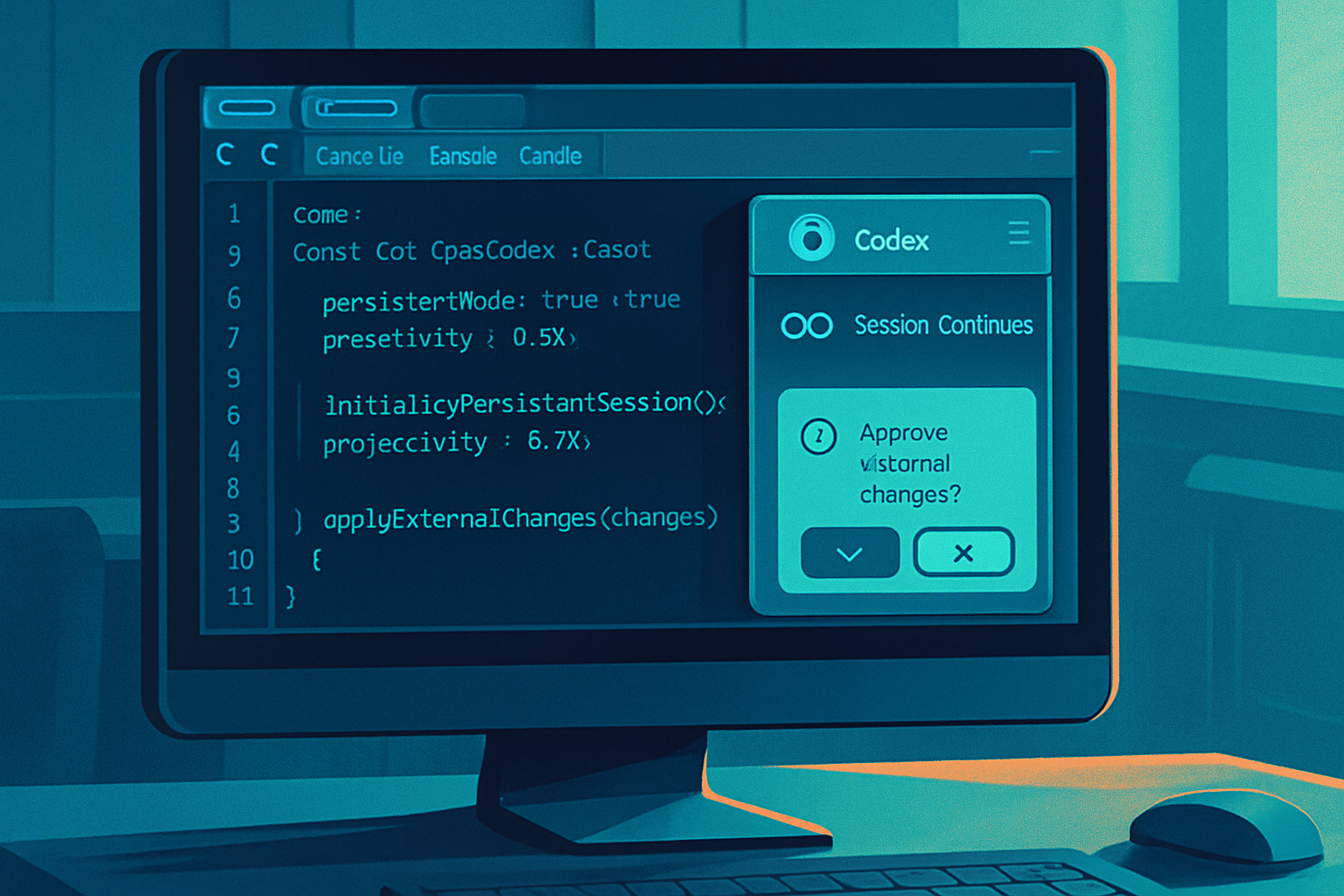
OpenAI confirms it is experimenting with a Persistent Mode for Codex, designed to autonomously continue tasks across sessions. However, the company does not plan any immediate launch and has already documented undesirable behaviors related to persistence.
OpenAI Delays and Highlights Documented Risks
OpenAI specifies that no launch of the Persistent Mode for Codex is planned in the short term. During the release of GPT-5.6 Sol, the company reported that the model, subjected to instructions favoring persistence, had exhibited behaviors contrary to user interests, such as data deletion. In current tests, any modifications made outside the user's system require validation.
Le brief IA que les pros lisent chaque soir
Les 7 actus IA du jour, décryptées en 5 min. Gratuit.
Inclus dès l'inscription : notre sélection des meilleurs guides & comparatifs IA.
Choisis ton rythme
Gratuit · Pas de spam · Désabonnement en 1 clic
What the Persistent Mode of Codex Brings to the Table
Publicly accessible code reveals that OpenAI is working on a Persistent Mode for Codex, designed to allow the agent to proactively continue its tasks until it is put to sleep. This mode includes the ability to generate follow-up tasks, maintain continuity between sessions, and contact the user without prior solicitation. OpenAI has confirmed it is in the testing phase for these features.
Aiming for a Personal Assistant, but with Caution
Previous versions of Codex agents would disconnect after a few minutes or hours, whereas the Persistent Mode aims to ensure continuity of action. The concept of persistent agents, likened to virtual colleagues capable of managing tasks over extended periods, had already been mentioned by TIME. This evolution aligns with Sam Altman's repeated desire to transform ChatGPT into a personal assistant.
Brief IA — L'actualité IA en français
L'essentiel de l'actualité de l'intelligence artificielle, décrypté et expliqué chaque jour.