OpenClaw Revolutionizes Deposit Management on GitHub
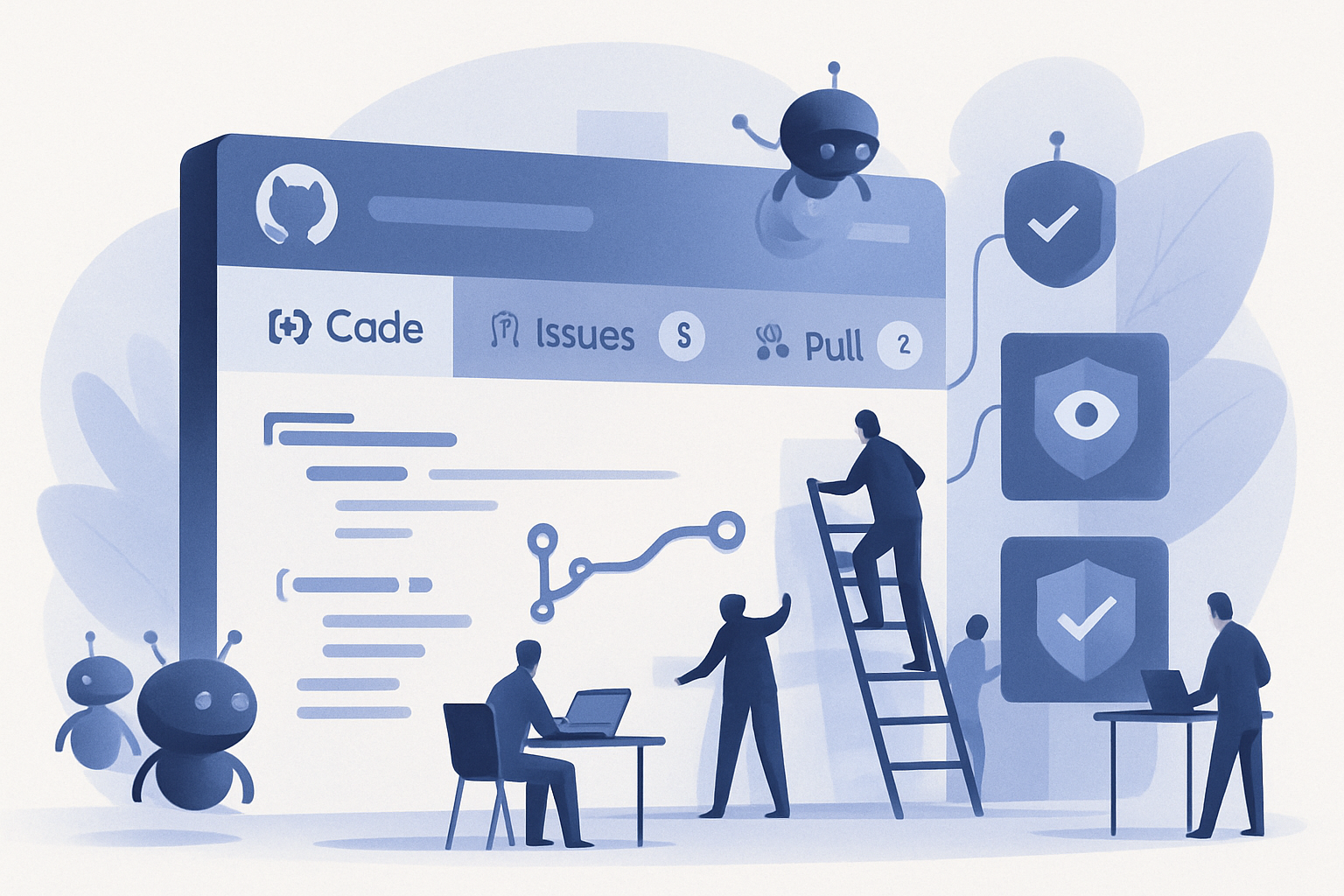
An Overview of OpenClaw Tools
In this article, we delve into the world of tools that power OpenClaw, one of the largest and fastest repositories hosted on GitHub. OpenClaw stands out with a series of innovative components that facilitate its management. Among them is a triage bot that reviews issues and pull requests every week, optimizing the workflow. A remote execution plan is also in place, allowing for efficient task management. The relay plays a crucial role in aggregating GitHub rate limits, which is essential for a team working collaboratively. A visual verification layer ensures the accuracy of changes. Finally, a review loop self-invokes until a change is validated, and crawlers provide local and queryable context to the agents.
Agent Maintenance Architecture
The article details an agent maintenance architecture designed for large GitHub repositories, where automation is not only possible but secure. The agents, while unable to observe results as a human would, benefit from systems that compensate for this limitation. For example, end-to-end vision-based verification ensures that changes are correct. A triage bot proposes changes without applying them immediately, allowing for prior validation. A regular cadence is established to re-examine items until corrections are confirmed, thus ensuring a continuous feedback loop.
Le brief IA que les pros lisent chaque soir
Les 7 actus IA du jour, décryptées en 5 min. Gratuit.
Inclus dès l'inscription : notre sélection des meilleurs guides & comparatifs IA.
Choisissez votre rythme
Gratuit · Pas de spam · Désabonnement en 1 clic
Supporting Elements
The article then discusses the supporting elements that reinforce this architecture. Repository contract files, such as vision.md and AGENTS.md, clearly define the scope and invariants of the repository. The crawlers play an essential role in reflecting external discussions in queryable local databases, thus facilitating access to relevant information. Additionally, dashboards and various small tools are implemented to minimize friction in the workflow. The aggregation of rate limits allows agents to operate in parallel in a scalable manner, thereby optimizing overall efficiency.
Recursive Review and Adaptation
Finally, the article describes the recursive review process, known as AutoReview, and the adaptation for large-scale repositories, dubbed Clawpatch. These tools are designed to reduce human bottlenecks by transforming each obstacle into a verifiable closed loop that agents can manage autonomously. Practical considerations of distribution and enterprise are also addressed, highlighting the importance of these innovations in improving the efficiency and reliability of large-scale GitHub repositories.
Brief IA — L'actualité IA en français
L'essentiel de l'actualité de l'intelligence artificielle, décrypté et expliqué chaque jour.