Opera Launches WebAI for Local AI in the Browser
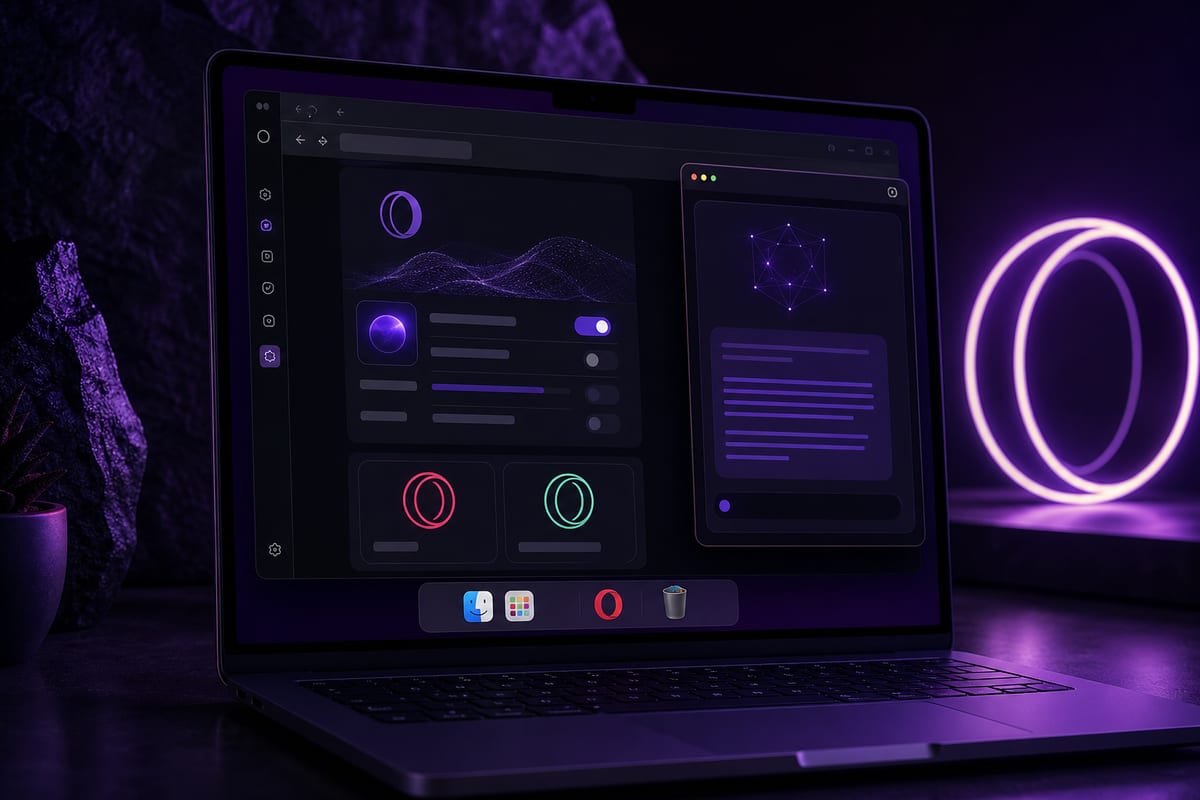
Opera introduces WebAI, a standard designed to run AI models directly in the browser. The company emphasizes privacy and announces a preview in Opera One, while warning that performance will vary depending on hardware.
Local Processing: More Control, Variable Performance
Running AI models locally increases the demand on the computer and can impact execution speed. Opera clarifies that performance will depend on the hardware used. This processing mode, which occurs on the user's device rather than on remote servers, serves as an alternative for those looking to limit the circulation of their personal data. While this choice does not eliminate all privacy risks, it does allow users to retain greater control over their information, especially as AI assistants access sensitive data and large amounts of information are often shared with chatbots.
Preview Available in Opera One, Expected Arrival on GX and Neon
The new AI features are being previewed in the Opera One browser. Activating WebAI requires a voluntary action from the user. Opera also plans to extend these capabilities to Opera GX, aimed at gamers and streamers, as well as to Opera Neon, its experimental browser utilizing AI agents.
Le brief IA que les pros lisent chaque soir
Les 7 actus IA du jour, décryptées en 5 min. Gratuit.
Inclus dès l'inscription : notre sélection des meilleurs guides & comparatifs IA.
Choisissez votre rythme
Gratuit · Pas de spam · Désabonnement en 1 clic
WebAI Works with Gemma and Apple’s On-Device Model
WebAI, Opera's new standard, is designed to be compatible with various AI models and is not limited to a specific one. Opera cites Google's open-weight model Gemma as an example and specifies that on Mac, WebAI supports Apple's on-device base model. This standard continues Opera's efforts to integrate local models into its browsers. WebAI enables text generation, content classification, and analysis of information links directly within the browser.
Open Weights: Frequent Free Access, Customization, and Restrictions
Open-weight models are generally downloadable and usable for free, with their weights publicly accessible, allowing developers to adapt them to their needs, although some restrictions remain compared to full open source. Opera highlights the ability to use AI functions without transmitting personal information to servers or subscribing to a cloud service. According to the company, developers can integrate AI without managing dedicated infrastructure or paying per request, while locally processed data remains on the device, allowing users to maintain control over the processing.
Brief IA — L'actualité IA en français
L'essentiel de l'actualité de l'intelligence artificielle, décrypté et expliqué chaque jour.