Opik Automates Supervised Correction of AI Agents
Comet proposes a four-step repair circuit for AI agents with Opik, from tracing to testing, including human validation of modifications. This open-source platform, distributed under the Apache-2.0 license, combines execution tracking, evaluation, and optimization tools.
The Engineer Retains Control Over the Code
The programming agent Ollie, integrated into Opik, cannot write its modifications to disk without human approval. It can explain the cause of a failure, consult sources, and submit proposed changes to the engineer. To use it, the command opik connect is launched in the project directory.
The circuit links the recorded incident to a repair proposal, then to approval, a new execution, and a regression test. This self-correction remains supervised: the engineer reviews the changes instead of performing all repair operations alone.
Opik Records Traces and Configurations
A successful demonstration does not rule out errors in real requests: selecting an unsuitable tool, overlooking retrieved information, unreliable responses, hallucinations, or infinite loops. Observability tools can log model and tool calls, delays, and token volumes without providing the diagnosis or repair themselves. An incident may then wait for a complaint or the movement of an indicator; some silent errors may evade detection for several days.
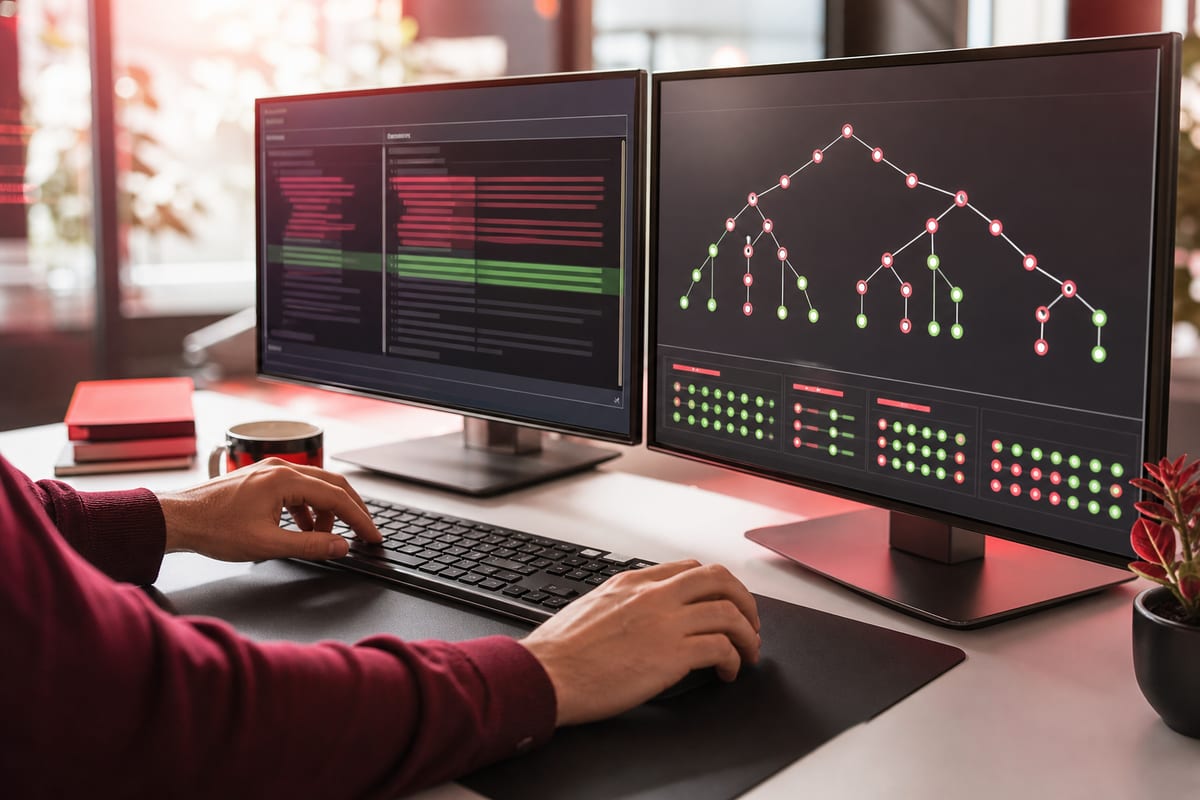
In Opik, @opik.track organizes calls to the model, tools, and recovery components into a tree structure of trace segments. This mechanism works with LangGraph, CrewAI, the OpenAI agents SDK, as well as over 50 other frameworks. The active configuration accompanies each trace to reproduce the request under the conditions of failure, a task that can be challenging during manual verification.
The platform also features evaluations conducted on production traces by language models. These rules serve to signal failures without relying on a complaint.
The AI brief the pros read every evening
The 7 best AI stories, the essentials in 5 min. Free.
Included when you join: our pick of the best AI guides & comparisons.
Choose your rhythm
Free · No spam · Unsubscribe in 1 click
The Software Drives Model Instructions
The harness is the software that surrounds the model: it drives its instructions, tools, context, and execution. It includes the system prompt, prompt templates, and examples, as well as function schemas, programming interfaces, and recovery components with their execution code. Its memory management selects the information passed to the model, summarized or retained.
In a static setup, this operation does not change without intervention in the code. Development involves preparing instructions, connecting tools, and choosing execution control, followed by checks on a few examples, often visual, before real requests arrive. Restarting a tool or resuming the analysis of an invalid JSON during execution does not constitute a lasting modification of this software.
Manual repair requires traversing the traces with sufficient knowledge of the code, then tweaking the instructions, tool descriptions, or execution control. An intervention can create other errors, while a model change may introduce its own failures. For instruction tuning, Opik also offers Agent Optimizer, along with GEPA, MetaPrompt, and an evolutionary optimizer.
Tests for Corrected Incidents
Manual verification of a repair may be limited to locally reproducing the relevant request and a few other examples. Failing to integrate this incident into evaluations leaves a risk of reoccurrence. Ollie can, however, replay the initial input and incorporate its trace into a test suite.
Opik allows criteria to be written in natural language, rather than preparing an annotated dataset and then comparing numerical scores. A rule can, for example, prohibit announcing support for Kubernetes. A language model evaluates each criterion with a binary verdict, success or failure; corrected errors can thus feed tests based on incidents actually encountered in production.
Agent Playground executes the complete agent from the Opik interface, without moving its code off the user's machine. This space allows for modifying the instructions stored in the library, launching execution, and examining the trace of its effects.
Brief AI — AI news in French
The essentials of artificial intelligence news, decoded and explained every day.