ORBIO: AI Revolutionizes Field Management
Le brief IA que les pros lisent chaque soir
Les 7 actus IA du jour, décryptées en 5 min. Gratuit.
Inclus dès l'inscription : notre sélection des meilleurs guides & comparatifs IA.
Choisis ton rythme
Gratuit · Pas de spam · Désabonnement en 1 clic
ORBIO: AI Revolutionizes Field Management
A Significant Fundraising for ORBIO
For nearly twenty years, the enterprise software industry has focused on office workers, leaving a large part of the global workforce behind. ERPs have structured operations, CRMs have transformed sales teams, collaborative tools have digitized exchanges, and HR suites have streamlined workforce administration. However, store employees, restaurant crew members, logistics operators, security agents, healthcare personnel, and call center staff have largely been excluded from this digital revolution.
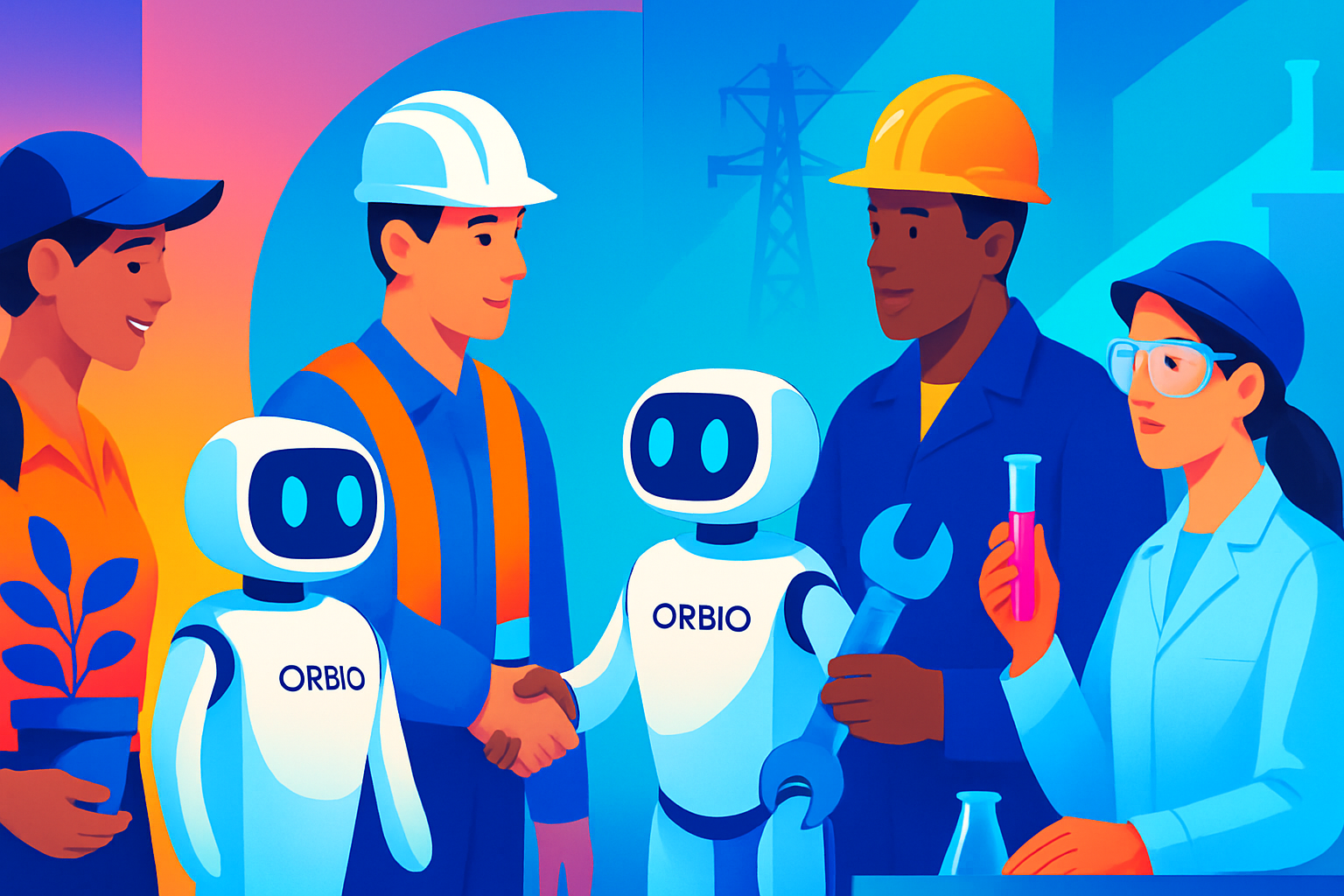
In this context, ORBIO, a Spanish startup founded in 2025 by Sergi Bastardas, Nacho Travesí, and Antonio Melé, has raised €18 million from Dawn Capital. The company is developing a platform of AI agents aimed at automating the recruitment, onboarding, management, and retention of field workers. ORBIO already claims deployments with international groups such as Adecco, Yum Brands, AWWG, Atento, and Poke House, and plans to accelerate its expansion in France.
The Forgotten Ones of the SaaS Revolution
According to ORBIO, nearly 80% of the global workforce occupies field roles, which represents about 2.7 billion people working in retail, hospitality, logistics, industry, healthcare, and services. Unlike office employees, these workers rarely have a professional email address or daily access to business applications. The relationship with the employer still largely relies on phone calls, SMS, WhatsApp, or fragmented administrative processes. In many organizations, a significant portion of recruitment and workforce management still depends on Excel sheets, manual calls, and repetitive tasks performed by operational teams.
This situation creates a paradox: the populations that generate a crucial part of global economic activity are also the ones that have benefited the latest from productivity gains resulting from digital transformation. For investors, this situation now represents a considerable opportunity. While the CRM or collaborative software markets are largely consolidated, the operational management of field workers remains fragmented.
A Workforce Management Problem More Than a Recruitment Problem
For Sergi Bastardas, the issue is not a structural talent shortage but a poor allocation of available resources. In many sectors, companies face turnover rates sometimes exceeding 50% or 70% per year. Each unfilled position can have immediate consequences on operations: a restaurant reduces its seating capacity, a store operates with incomplete teams, a logistics center slows down its operations, and a call center extends its processing times.
The cost of these dysfunctions far exceeds the simple issue of recruitment. It directly impacts revenue, service quality, and operational performance. This is precisely the equation that ORBIO seeks to solve. The company positions itself not just as a candidate acquisition tool but as a platform designed to manage the entire lifecycle of employees.
From HR Co-Pilot to Operational Agent
Most early applications of artificial intelligence in human resources aimed to assist recruiters. The models allowed for writing job postings, filtering resumes, or improving the matching between candidates and positions. ORBIO's agents are designed to act directly with employees and candidates. They can initiate contact, conduct initial interviews, collect necessary administrative information, guide the onboarding of a new employee, track their long-term engagement, or detect signs of disengagement that may indicate a departure.
The software is no longer just a tool used by a recruiter; it becomes an operational actor capable of executing certain tasks without human intervention. This evolution is part of a broader trend observed across the AI market. After assistants and co-pilots, publishers are now looking to build systems capable of operating autonomously on complete business processes.
A New Software Category is Emerging
Most major enterprise software markets are relatively well-defined. Companies use ERPs to manage their resources, CRMs to drive their sales, and HCM platforms to administer their workforce. Historical players in this market remain dominant. Workday, SAP SuccessFactors, Oracle HCM, UKG, and Dayforce still constitute the backbone of HR systems for many large companies, but these platforms were primarily designed to structure information and automate administrative processes. They were never intended to interact directly with millions of field employees.
ORBIO seeks to occupy a different layer and become the operational interface capable of interacting daily with workers. This approach could herald the emergence of a new category that could be termed "Agentic Workforce Management." In this model, the software no longer merely organizes work; it directly participates in its execution.
Competition Extends Beyond Human Resources
While ORBIO operates in the realm of human resources, its potential competitors are far more numerous than just HR software providers. One category includes platforms specialized in recruitment and talent acquisition. Players like Greenhouse, SmartRecruiters, Lever, and iCIMS have been working for years to optimize companies' recruitment processes. A second category encompasses specialists in AI applied to HR, including Paradox, HireVue, Eightfold AI, Mercor, and Moonhub. They too are developing tools capable of automating part of the interactions with candidates.
However, the most significant threat may come from players even further removed from the sector. As language models become more powerful and agent platforms become more accessible, major AI infrastructure providers like OpenAI, Anthropic, or Google could enable the creation of HR agents directly by the companies themselves.
Why Major Employers are Already Adopting This Approach
The company's early clients provide insight into the types of organizations likely to benefit most quickly from these technologies. Adecco, Yum Brands, AWWG, Atento, and Poke House share several characteristics: large workforces, operations spread across multiple countries, multiple languages, and ongoing recruitment needs. In these environments, even the slightest improvement in hiring timelines or retention can generate significant gains. The results presented by ORBIO support this, as the company mentions a reduction of over 60% in recruitment timelines for some clients, as well as significant productivity gains for HR and operational teams.
Even if these figures need to be confirmed on a larger scale, they illustrate the growing interest of large companies in workforce management models based on autonomous agents.
France Could Become a Prime Testing Ground
The French market combines several favorable characteristics for the adoption of such solutions: persistent tensions in certain service jobs, a significant presence of temporary work, administrative complexity, and high costs associated with workforce management. For many companies, the ability to reduce the time between an application and a job offer by several days represents a tangible competitive advantage. France could thus become one of the most interesting European laboratories for observing the spread of these new human resource management models.
The Real Challenge: How Far Can Management Be Automated?
Recruiting, onboarding, or informing an employee are relatively structured processes that lend themselves well to automation. Management, on the other hand, also relies on dimensions that are much harder to model: trust, authority, conflict resolution, individual support, and the building of a corporate culture. The future of these platforms will therefore depend less on their ability to replace recruiters than on their capacity to find their place in the relationship between the company and its employees.
Brief IA — L'actualité IA en français
L'essentiel de l'actualité de l'intelligence artificielle, décrypté et expliqué chaque jour.