Osmo Claims AI Capable of Human-Level Sensing
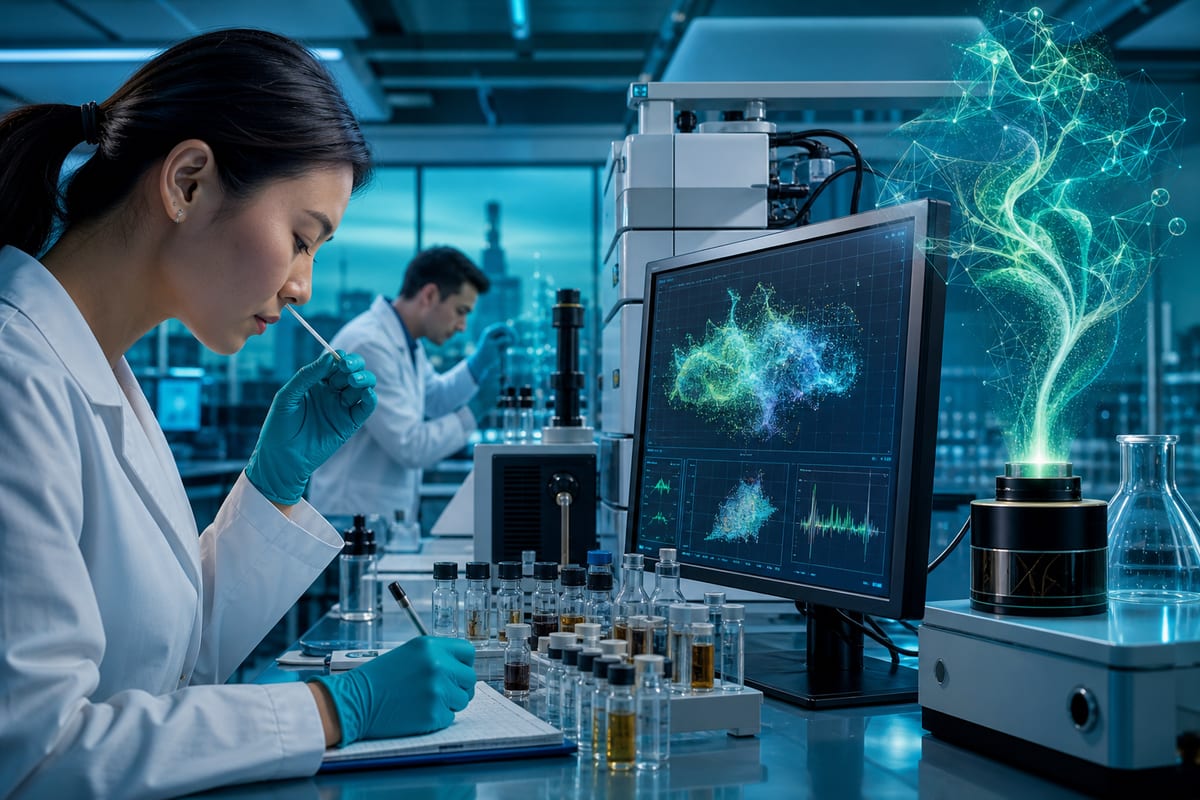
Alex Wiltschko, founder of Osmo, claims that his AI model dedicated to smell has reached human levels and helps brands create perfumes. Medical diagnosis is among the startup's ambitions, though it is not yet a guaranteed outcome.
Researchers Use AI for IVF
Researchers are using AI to identify promising sperm and embryos in the context of in vitro fertilization (IVF). They are also developing robotic systems that could handle certain steps of the process. Controversial genetic modification techniques are also being explored to prevent hereditary diseases.
IVF has enabled the birth of millions of children over the past forty years, but it remains sometimes costly, lengthy, and painful. Its success is not guaranteed. These technologies could make IVF more effective and accessible, while also raising ethical challenges regarding the limits of reproductive medicine.
Osmo Combines Olfactory Descriptions and Chemical Analyses
In New Jersey, researchers are working to detect all earthly odors. Their descriptions, such as "nutty," "peach," or "marine," are paired with chemical analyses to train Osmo's system. The young company presents it as the world's first foundational model dedicated to olfaction.
Its founder, Alex Wiltschko, says he wants to give computers a sense of smell. The detection of counterfeits and the diagnosis of diseases remain potential applications for Osmo; however, the ability of its technology to fulfill these promises is not universally accepted.
Le brief IA que les pros lisent chaque soir
Les 7 actus IA du jour, décryptées en 5 min. Gratuit.
Inclus dès l'inscription : notre sélection des meilleurs guides & comparatifs IA.
Choisissez votre rythme
Gratuit · Pas de spam · Désabonnement en 1 clic
Electricity, Climate, and Chips: The Material Needs of AI
Data centers, like electric vehicles, contribute to the increasing demand for electricity. On the American grid, transformers are used to efficiently transmit power over long distances, but these complex devices are lacking. Their design principle has changed little over the past century.
Modernization projects are emerging. Still in development, solid-state models could limit energy losses and alleviate supply challenges. They could play a significant role in future networks.
According to the U.S. Energy Information Administration, the American Southwest produced 28% less hydroelectricity between April and August than the average of the last ten years, with historically low levels this summer. Most U.S. facilities use dams and reservoirs; an extreme and persistent drought has dangerously lowered the water levels of the two largest regional reservoirs, while climate change intensifies the pressure.
At COP31, only nine countries supported the climate commitment regarding AI, which is voluntary and without binding targets; carbon capture projects also divided the conference. On the chip side, Nvidia reported revenue that more than doubled, driven by sales aimed at AI. The company has halted its shipments of H200 to China, which has threatened countermeasures in response to the new restrictions.
Friendship, Security, and Autonomous Taxis
More than a third of Generation Z is turning to AI for a form of friendship. Those affected are more likely to feel lonely. In the computing realm, AI is also accelerating the detection of vulnerabilities and facilitating online criminal activities.
In transportation, Waymo has pulled its driverless taxis from U.S. highways following the ban on highway trips in California. The Cambridge Dictionary has named "Human" as the word of the year. The dictionary explains this choice by the increased importance of the term in the age of AI.
Brief IA — L'actualité IA en français
L'essentiel de l'actualité de l'intelligence artificielle, décrypté et expliqué chaque jour.