Pangram Raises $9 Million to Combat AI Content Invasion
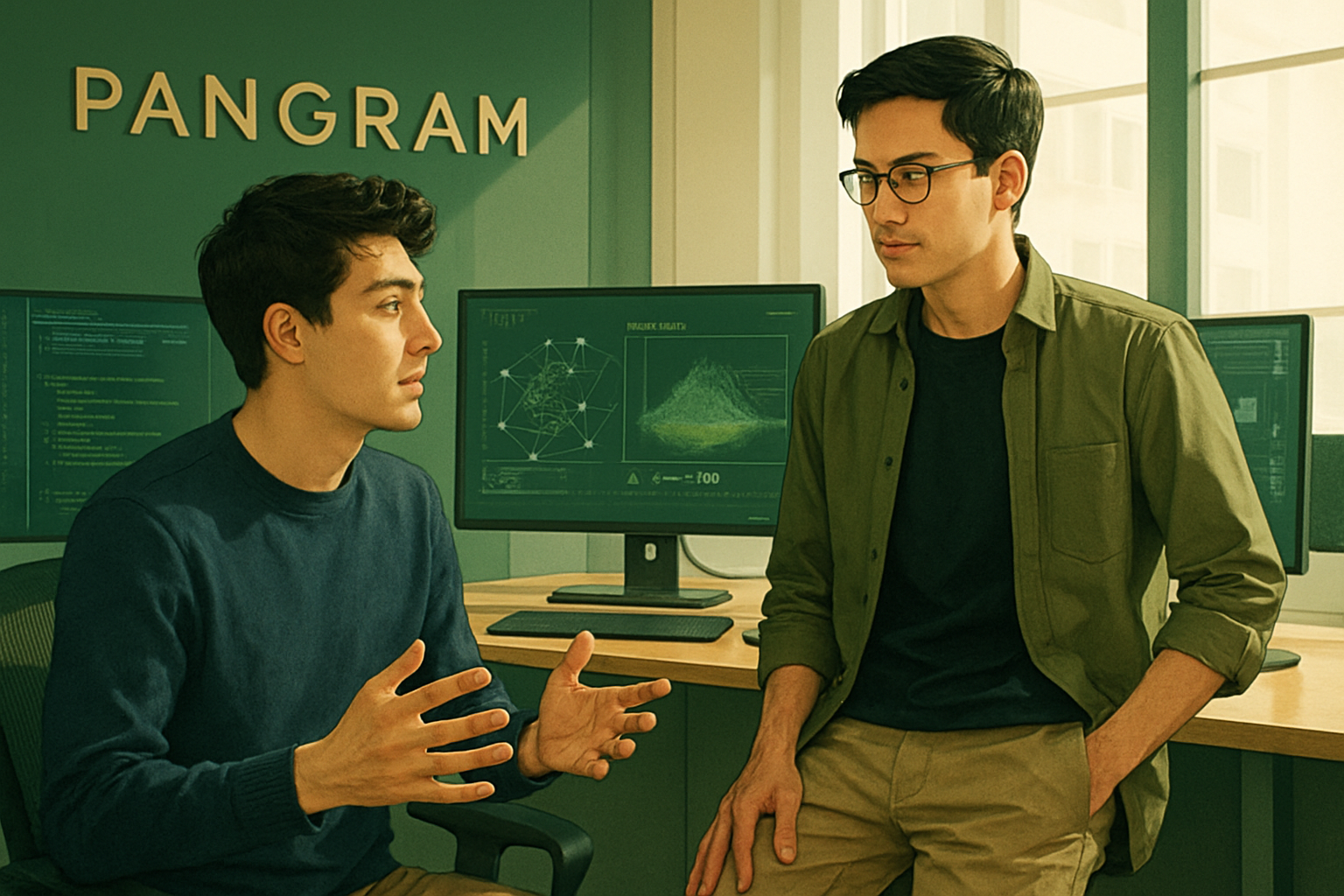
Pangram Raises Funds to Combat AI-Generated Content
The New York-based startup, Pangram, positions itself as a key player in the fight against the proliferation of AI-generated content on the Internet. With a recent funding round of $9 million, Pangram is banking on the increasing demand for tools capable of differentiating human-created content from that produced by machines.
This funding, led by Menlo Ventures and supported by investors such as Haystack, ScOp, Script Capital, and Cadenza, coincides with the launch of their next-generation AI text detection model, Pangram 4, as well as an AI image detection model, Pangram Image.
Accuracy and Technological Innovation
Pangram claims that its new text detection model achieves an accuracy of over 99% in identifying AI-assisted writings as well as mixed human-AI content. This model is also designed to more easily detect AI humanization programs. As for the AI image detector, it is currently in the research phase, but Pangram plans to make it more accessible in the coming weeks.
The founders of Pangram, Max Spero and Bradley Emi, both Stanford graduates in artificial intelligence and machine learning, launched the company about two years ago, shortly after the emergence of ChatGPT. The latter significantly increased the presence of bots and AI-generated SEO content on the Internet, as well as what Spero describes as "Russian disinformation campaigns fueled by LLMs and Emirati-influenced campaigns on Twitter."
A Trust Issue in Information
Max Spero emphasized the importance of knowing whether the content one is consuming is generated by AI or not. According to him, this changes how people perceive text, influencing their level of skepticism and trust. It is crucial to know whether one should be wary of potential AI hallucinations or if they can rely on well-researched content by a journalist.
Pangram's detection system relies on a large machine learning model trained on millions of known human documents. The startup then created a "synthetic mirror" for each document, mimicking the subject, length, and tone, but written by an advanced language model.
Detecting Levels of AI Assistance
For Pangram, AI detection is not limited to determining whether a text is entirely written by AI. It also involves discerning levels of AI assistance, for example, when a person writes a text and then asks AI to modify or enhance it. Spero believes that AI assistance can be acceptable, provided the author discloses their use of AI.
The Growing Impact of AI
Pangram's emergence comes at a time when the use of AI is becoming increasingly common. In some cases, AI-related errors lead to ridicule, such as a Canadian politician reading an AI prompt during a speech. In other cases, like lawyers using false citations generated by ChatGPT, the consequences can include sanctions and fines.
Le brief IA que les pros lisent chaque soir
Les 7 actus IA du jour, décryptées en 5 min. Gratuit.
Inclus dès l'inscription : notre sélection des meilleurs guides & comparatifs IA.
Choisissez votre rythme
Gratuit · Pas de spam · Désabonnement en 1 clic
This situation is not limited to individual embarrassments or penalties; it is also beginning to influence institutional rules. For example, the open-access archive arXiv has implemented a policy stating that submissions containing evidence of a lack of verification by authors of LLM outputs may result in a one-year submission ban.
Fierce Competition
Pangram is not alone in this market. Competitors like Winston AI, Originality.ai, Copyleaks, and GPTZero are also developing their own detectors to meet this growing demand.
Pangram's technology, while not perfect, could play a crucial role in resisting the widespread acceptance of AI-generated content flooding the Internet, courts, and academic publications.
Accessibility and Integration
Users can access Pangram through a $20 per month subscription on the web or download the Chrome extension, which automatically labels posts in real-time on X, LinkedIn, Substack, Reddit, and Medium. It also provides a news feed health score with a percentage breakdown between human and AI content on your screen.
Pangram also offers its technology via an API. Notably, Substack recently integrated Pangram's technology into its platform to show readers which of their favorite authors use AI to write their newsletters. Other API clients include Quora, schools and universities, publishers and agents, as well as recruiters, among others, according to Spero.
Pangram's Performance
Pangram has demonstrated its ability to detect AI-generated content, even when slightly modified by a human. Spero stated that about one human document in 10,000 was incorrectly labeled as AI by the Pangram model. In tests, the text detection model showed great effectiveness, easily flagging entirely AI-generated news articles and resisting my attempts to make AI-generated text appear more human.
However, Pangram also flagged some phrases that I had completely rewritten as being written by AI. The model was not fooled by my attempts to circumvent AI detectors using ChatGPT and Claude.
When testing Pangram with one of my articles enhanced by ChatGPT and Claude, the model gave an AI assistance score of 13%, which likely reflected reality. It detected subtle changes in word choice in some sentences but ignored others. Notably, when I submitted the original article, Pangram classified it as 100% human.
AI Image Detection
Pangram's AI image detection model also proved impressive. Unlike watermark-based checks from OpenAI or Google DeepMind, which primarily detect their own output, Pangram analyzes pixel-level distributions to learn subtle statistical differences between real photos and AI-generated images.
In my tests, the model easily detected AI-generated images, whether photorealistic or cartoon-style. It even managed to identify an AI image embedded in a real-world photo, although it sometimes incorrectly labeled a photo of an AI-generated image as human content.
Towards a Future with More AI Content
Spero expressed his desire not to turn his technology into a witch-hunt tool against those who use AI for writing, but he insists on the need to counter low-quality content. "The future I see is that AI-generated content continues to proliferate," he said. "We are getting new GPUs faster than new people are being born. If we do not actively make the distinction in favor of human content, then we will just see more and more AI, and that will drown out any human signal we have."
Brief IA — L'actualité IA en français
L'essentiel de l'actualité de l'intelligence artificielle, décrypté et expliqué chaque jour.