Pope Leo XIV: AI, a Risk of 'Economic Colonialism'
Le brief IA que les pros lisent chaque soir
Les 7 actus IA du jour, décryptées en 5 min. Gratuit.
Inclus dès l'inscription : notre sélection des meilleurs guides & comparatifs IA.
Choisis ton rythme
Gratuit · Pas de spam · Désabonnement en 1 clic
As companies push the use of AI and its advocates promise efficiency gains, Pope Leo XIV warns of the risks of technological dependence that could lead to 'economic colonialism.' He denounces the power of algorithms that structure visibility and public debate, insisting that laws must place humans before technology. The pontiff also alerts to the possible erosion of the family’s role and outlines the policies he wishes to see emerge.
Companies: Calls for AI and Exemption Granted in May
The Pope's remarks come in a context where tech companies encourage consumers to integrate AI into nearly every aspect of their daily lives. Optimists claim that these systems automate and accelerate tasks, while critics fear destabilization of the job market and the replacement of human workers. Within organizations, many management teams have asked their employees to adopt AI tools. In May, a Unitarian Universalist individual obtained an accommodation from their employer based on their faith to avoid using AI in their duties.
Technological Dependence and 'Economic Colonialism,' the Pontiff's Warning
Pope Leo XIV believes that the rapid advancement of AI risks establishing new technological dependencies, where poorer countries would rely even more on wealthier ones. He calls for vigilance to prevent innovation from becoming a vehicle for ideological or economic colonialism, and he already sees a form of domination at work in the algorithms of social networks. According to him, these systems decide who is visible or not, structure public debate without true accountability, and subordinate the dignity of workers to the optimization of platforms. The pontiff adds that the world does not need an AI that diminishes humanity, but rather human intelligence enlightened by wisdom, political authority guided by conscience, and technological innovation directed by charity. He links these principles to his warning about a possible 'economic colonialism' related to AI.
Family: Preserving the 'Primary Cell' of Society
Pope Leo XIV is concerned about the weakening of the family's role in society due to the effects of AI. He reminds us that it is within the home that trust is learned rather than calculation, generosity rather than competition, dialogue rather than division, and love rather than power. He asserts that AI must never be allowed to erode this 'primary cell,' whether by reducing people and relationships to data and simulations, flooding young people with content that distorts desire, or through economic models that make family life economically precarious.
Political Framework: Centering on Humans and Family Policies
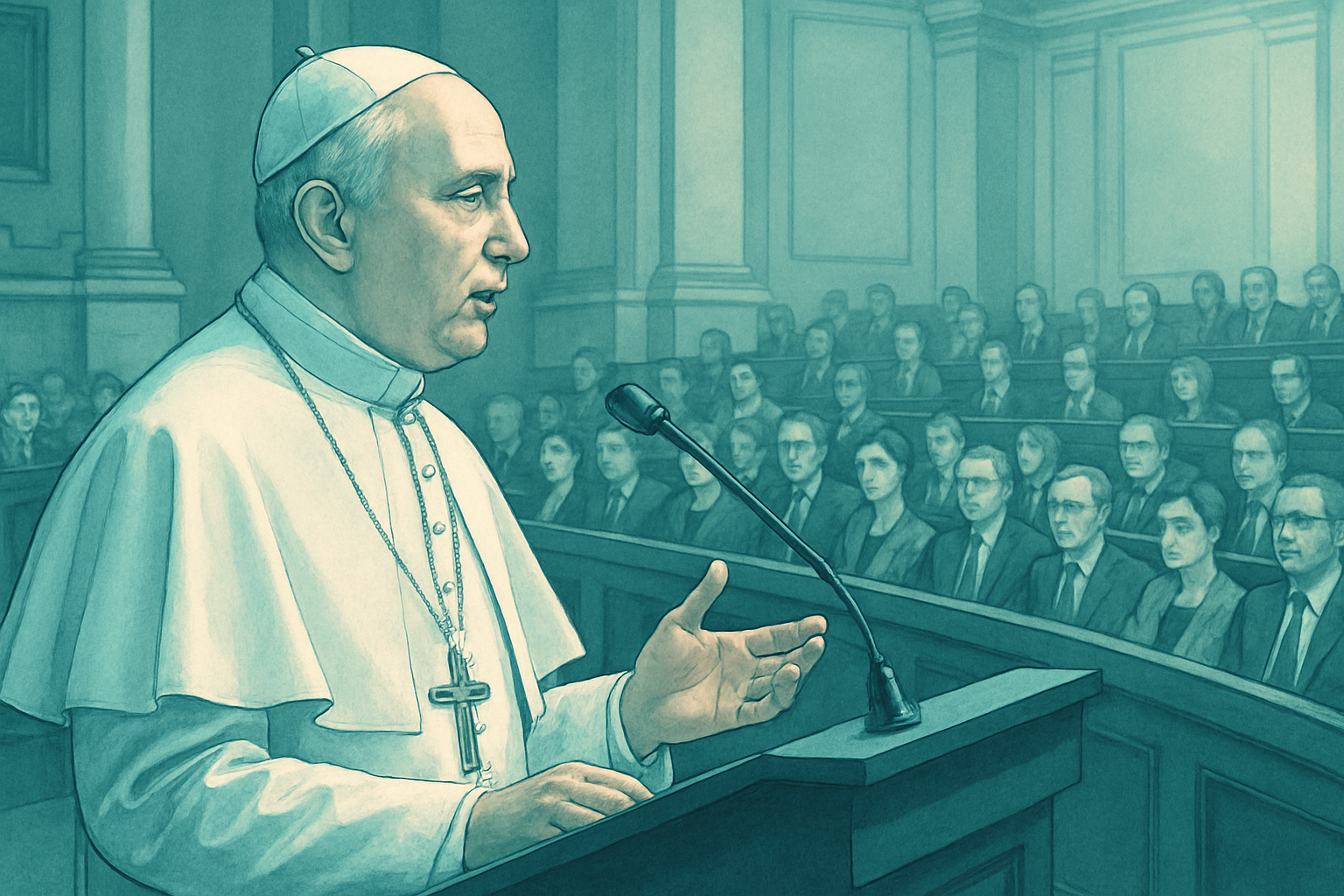
The pontiff invites lawmakers to prioritize humans in artificial intelligence policies and to adopt laws aimed at uplifting citizens. He warns that placing technology before people could lead to serious consequences and calls for measures designed to strengthen marriage and family, support parents in their educational roles, and give young people the opportunity to envision the future with peace of mind. His address took place in Rome during the annual conference of the International Network of Catholic Legislators. From the beginning of his papacy, Pope Leo XIV has placed artificial intelligence at the heart of his concerns: last year, he urged the sector to exercise moral discernment and to develop systems that embody justice, solidarity, and respect for life. In May, he released a letter addressing the effects of artificial intelligence on global employment, the environment, and democracy, which elicited responses from CEOs, political leaders, and academics.
Brief IA — L'actualité IA en français
L'essentiel de l'actualité de l'intelligence artificielle, décrypté et expliqué chaque jour.