Pax Silica: A 1,620-Hectare AI Hub in the Philippines
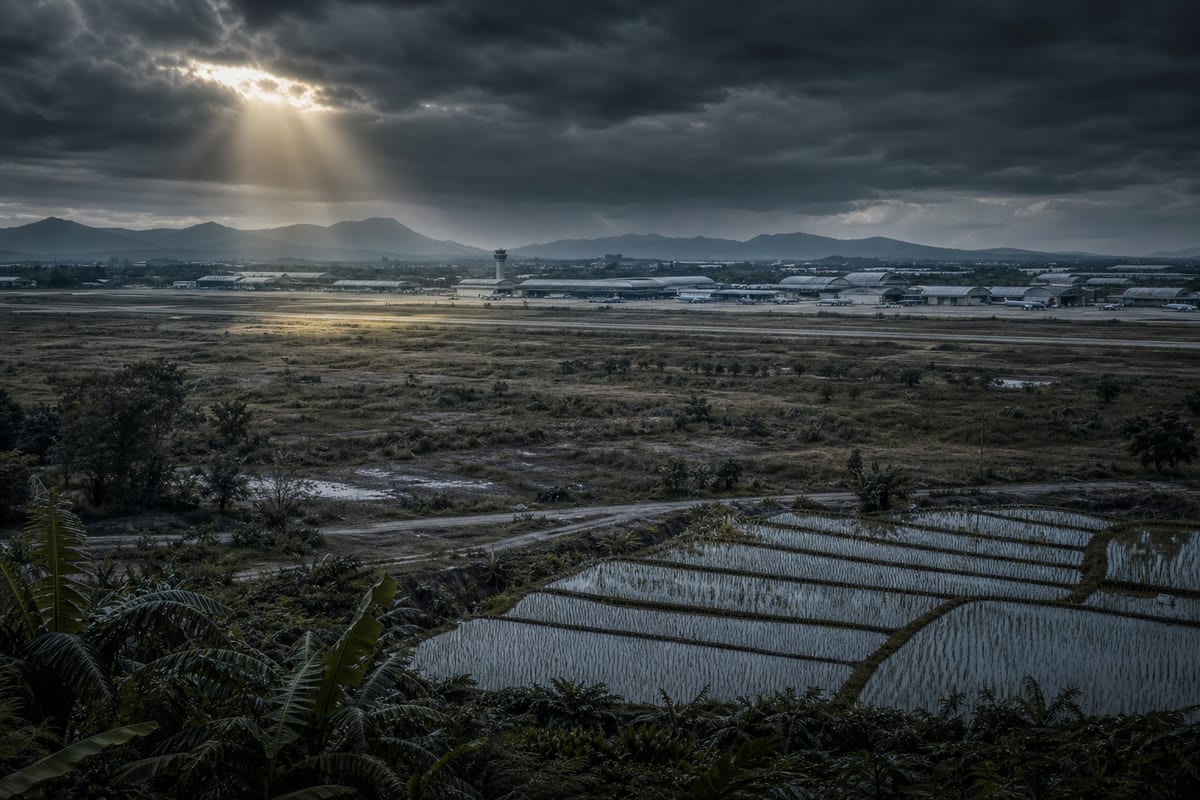
The Philippines and the United States are expected to finalize a framework agreement by the end of the year for a 1,620-hectare Pax Silica industrial hub. The project includes activities related to semiconductors, critical mineral processing, and data centers. Human rights advocates are raising concerns about the displacement it may impose on indigenous populations.
Expected Rental Income on Contested Lands
Nearly $1 billion USD, or about 60 billion PHP: this is the expected rental income for the Bases Conversion and Development Authority (BCDA) of the Philippines during the first 25 years of the project it oversees. The Philippine Constitution reserves private land ownership for citizens of the country, but the agency can offer foreign developers leases of up to 99 years. It states that the facilities will occupy public lands of the former Clark Air Base, built in the early 1900s under American administration.
The recognition of land rights remains contested. The Aeta, whose presence in the archipelago dates back approximately 30,000 years, are among its oldest populations. Since 1994, the Aeta Hungey tribe has been requesting a certificate recognizing their ancestral territory in an area affected by industrial development. This document has not been granted, while the BCDA assures that the facilities will remain outside officially titled ancestral territories.
Petronila Capiz-Muñoz, chief of the Aeta Hungey tribe, explained to Human Rights Watch that the residents have their graves, their church, their crops, and their water there. She claims that BCDA officials have set December as the deadline for them to leave the area. Human rights advocates warn that the displacement would cut them off from their water supply. Lian Buan, a Southeast Asia researcher at Human Rights Watch, also reports the fears of small farmers about losing their land.
Interested but Unidentified Companies
In July, Joshua Bingcang, former president and CEO of the BCDA, reported discussions with about 30 companies interested in establishing a presence in Clark. He refused to identify them, citing confidentiality agreements. The details of the project remain vague and subject to these confidentiality commitments.
In September, Joshua Bingcang indicated that the government wanted to invite Nvidia, TSMC, and Apple. According to him, the expressions of interest mainly came from high-tech manufacturing companies; one or two data center developers had also shown interest.
Le brief IA que les pros lisent chaque soir
Les 7 actus IA du jour, décryptées en 5 min. Gratuit.
Inclus dès l'inscription : notre sélection des meilleurs guides & comparatifs IA.
Choisissez votre rythme
Gratuit · Pas de spam · Désabonnement en 1 clic
The BCDA is also considering, though not guaranteeing, one or two data centers on the site. It anticipates significant activity in mineral processing and chip production, estimating the hub's potential at a maximum of 190,000 direct jobs. The agency, the White House, and the Malacañang Palace had not provided immediate responses to media inquiries.
Gas and Chip Manufacturing: Health Risks
According to Joshua Bingcang, an American energy company was conducting a feasibility study on a liquefied natural gas line and plant to meet the site's significant electrical needs. The former executive described this fuel as clean. However, it is primarily composed of methane, which contributes to smog and has a greenhouse effect greater than that of carbon dioxide.
Joshua Bingcang also referred to the chip industry as clean. The early California factories employed many Filipino immigrants among their workers, who operated in clean rooms to assemble sensitive components. Few knew that their clothing provided inadequate protection from the hazardous substances used. Leaks from tanks have also contaminated soils and groundwater.
In the 1990s, studies reported an abnormally high rate of miscarriages among workers, after which companies promised to limit certain reproductive risk products. Production began to migrate from the United States to Asia during this period, where similar harms associated with the same substances were still observed decades later. Manufacturers claim that their facilities are now much safer, particularly because more tasks are automated. However, environmental and labor advocacy organizations fear a repetition of these harms with the demand for components for generative AI.
Washington Seeks Partners Against Beijing
Pax Silica brings together at least two dozen countries to secure supplies of chips and critical minerals for AI equipment. Washington aims to guard against Chinese dominance in semiconductors and the processing of these minerals. The initiative associates its Latin name with a promise of peace, stability, and sustainable prosperity.
Donald Trump has expressed his desire to win the competition in AI, which requires data centers equipped with graphics processors, GPUs. In the United States, local opposition to IT infrastructure and semiconductor factories is growing. Washington is seeking less wealthy countries to host some of the required capacities, while American and Philippine lawmakers promise a share of the wealth expected from generative AI.
Donald Trump's visit to the Philippines for events associated with the ASEAN summit was also intended to secure new memberships. Hundreds of protesters demonstrated near the airport, holding signs hostile to the American president and at least one fake coffin; some explicitly rejected Pax Silica. Donald Trump met with Philippine President Ferdinand R. Marcos Jr. before departing for Shenzhen, where he was to meet with Chinese President Xi Jinping and Russian President Vladimir Putin.
Brief IA — L'actualité IA en français
L'essentiel de l'actualité de l'intelligence artificielle, décrypté et expliqué chaque jour.