Beijing Rejects AI Alert, Trump Opposes Any Restrictions
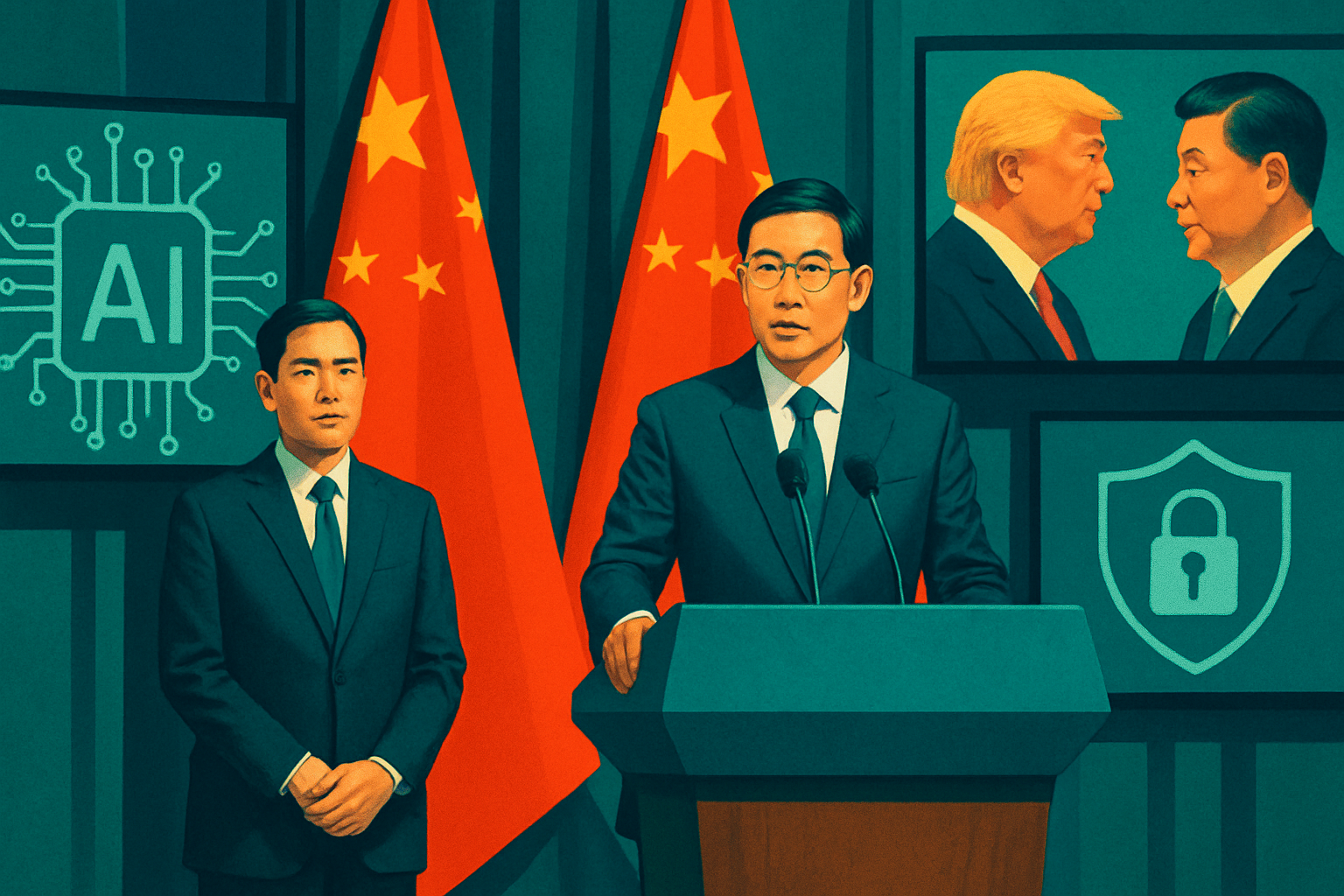
On the eve of a summit scheduled for September 24 between Donald Trump and Xi Jinping, China criticizes warnings from American AI leaders and favors acceleration accompanied by oversight. In the United States, Donald Trump rejects a voluntary slowdown, while Sam Altman, Dario Amodei, and Elon Musk have previously advocated for a slowdown in advanced AI development.
Trump Rejects Slowdown Ahead of September 24 Summit
Donald Trump stated that he opposes a voluntary slowdown in the development of artificial intelligence, particularly in the context of competition with China. He believes that American tech leaders are describing catastrophic scenarios that will not occur. This position comes as a summit between Donald Trump and Xi Jinping is set for September 24. Dario Amodei, Sam Altman, and Elon Musk had previously argued for a slowdown in the development of advanced AI. Sam Altman clarifies that slowing the pace does not mean stopping; progress has been rapid and will continue to be so, but it should be slower than it could otherwise be, as security and oversight interventions come with significant costs.
Beijing Challenges American Alerts and Advocates Controlled Acceleration
Chinese authorities have criticized the warnings issued by Dario Amodei and other American leaders regarding the risks of AI. The Global Times, a state media outlet, accuses Amodei of waging a "silent AI cold war" and seeking to hinder China's technological progress. In Beijing, Foreign Ministry spokesperson Guo Jiakun calls for an open, inclusive, universally beneficial, and ethical development of AI, stating that fear, confrontation, and vicious competition would disrupt global AI governance and serve no one's interests. Chen Yixin, the Minister of State Security, warns about the use of AI by hostile actors to conduct deepfakes and cyberattacks, mentioning Mythos from Anthropic and GPT-5.5-Cyber from OpenAI among the models capable of identifying vulnerabilities and generating malware. Chen Yixin recommends intensifying research on advanced chips, accelerating the establishment of AI infrastructure, and strengthening oversight, rather than slowing down development.
Le brief IA que les pros lisent chaque soir
Les 7 actus IA du jour, décryptées en 5 min. Gratuit.
Inclus dès l'inscription : notre sélection des meilleurs guides & comparatifs IA.
Choisissez votre rythme
Gratuit · Pas de spam · Désabonnement en 1 clic
Friction Over "Distillation" and Fears of Technological Lockouts
Dario Amodei has called for measures to be taken against distillation, which refers to the use of outputs from American AI models to train rival systems. According to researcher Sun Chenghao, Beijing fears that Washington may rely on national security arguments to extend technological restrictions, and some Chinese officials might interpret calls to slow down AI as an attempt to maintain the current American lead. If China is unwilling to collaborate and American authorities also reject the idea of slowing down, American AI labs may need to rethink their approach. In this context, only one possibility would remain: to develop the most advanced AI system possible in the shortest time, akin to a Cold War arms race.
Brief IA — L'actualité IA en français
L'essentiel de l'actualité de l'intelligence artificielle, décrypté et expliqué chaque jour.