Pentagon: AI Now in Control of Military Strikes
Le brief IA que les pros lisent chaque soir
Les 7 actus IA du jour, décryptées en 5 min. Gratuit.
Inclus dès l'inscription : notre sélection des meilleurs guides & comparatifs IA.
Choisis ton rythme
Gratuit · Pas de spam · Désabonnement en 1 clic
The Pentagon Reaches a Technological Milestone
In a major development, the Pentagon has quietly revised its military doctrine to allow artificial intelligence to play a central role on the battlefield. Until now, U.S. military protocols stipulated that while AI could assist in data analysis, the initiative for any strike must strictly remain with a human soldier. This rule ensured that the ultimate decision remained in human hands.
However, last April, this doctrine was revised, as revealed in a Bloomberg report. Now, AI can take the initiative in military actions, under the supervision of a human operator. The stated goal of the Pentagon is to reduce the time between target detection and action execution, thereby increasing operational efficiency. Although the Pentagon assures that humans retain final control over critical decisions, the line between AI autonomy and human control is becoming increasingly blurred. This evolution raises significant ethical and legal questions, particularly concerning excessive reliance on algorithms.
Towards "Military Dominance through AI"
This technological transformation is the result of a clear political will. The U.S. military has already implemented these technologies in the context of the war in Iran, where AI has been used to process massive volumes of intelligence and simulate attack scenarios. Under the Trump administration, the Pentagon adopted an ambitious strategy in January 2026 aimed at establishing "military dominance through AI." This approach positions technology as the central pillar of American defense.
In this context, the Department of Defense must be capable of deploying new AI models in the field within 30 days of their release in the civilian market. This requirement underscores the growing pressure on the military to rapidly integrate technological innovations from the private sector.
Growing Opposition
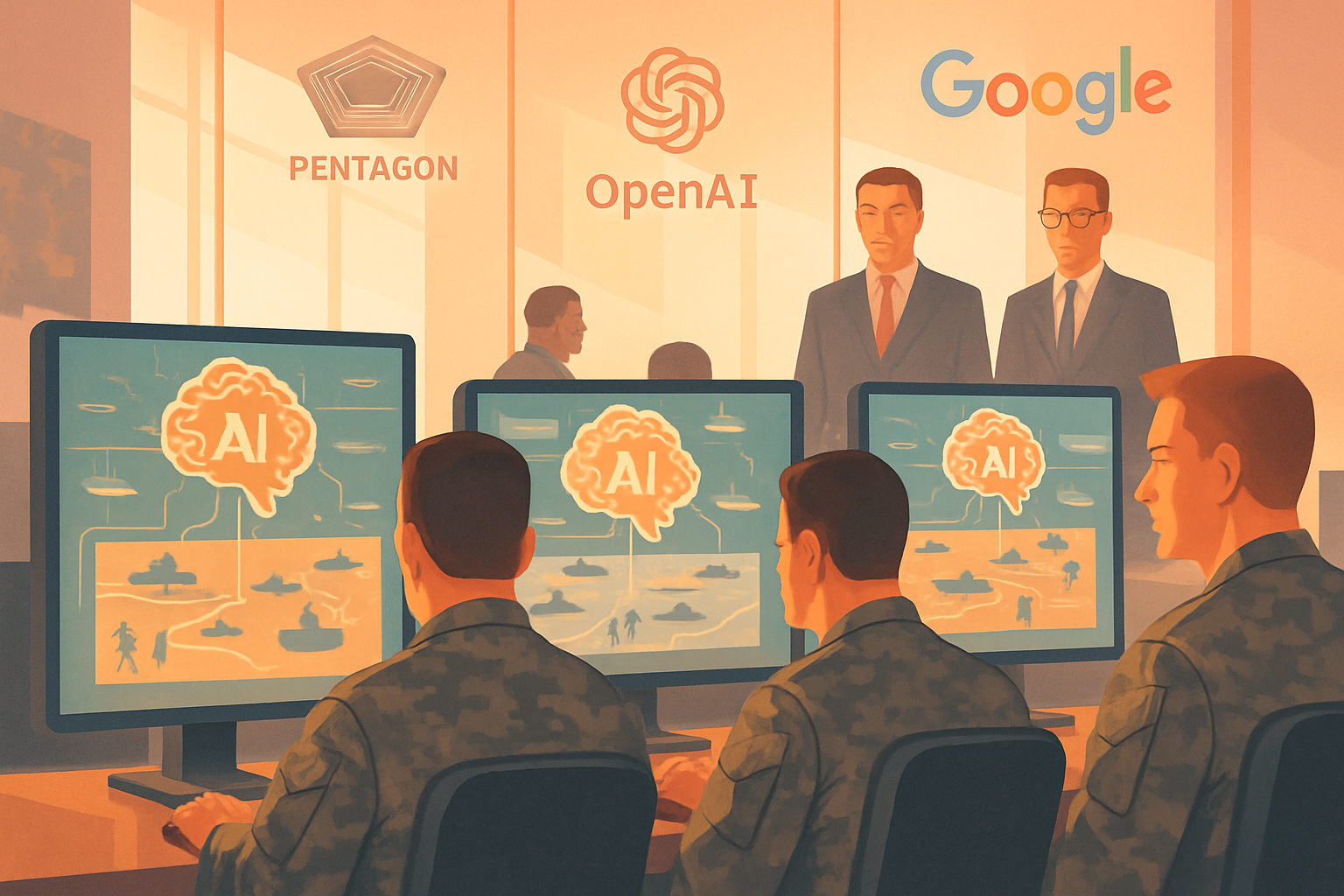
This race for innovation is pushing the military to collaborate closely with tech giants such as OpenAI, Google, xAI, and Palantir. However, this technological advancement has raised concerns. The UN has expressed its worries by calling for a ban on lethal autonomous weapons, labeling them as "morally repugnant."
In the United States, voices are also rising against this evolution. On June 2, Senator Kirsten Gillibrand introduced the Secure and Accountable Military AI Act, a bill aimed at establishing strict parliamentary oversight on the use of AI in military strike decisions. This legislation also seeks to permanently prohibit AI from accessing nuclear weapons.
Despite these initiatives, it remains uncertain whether the Trump administration will heed these concerns, given its history regarding military and technological policy.
Brief IA — L'actualité IA en français
L'essentiel de l'actualité de l'intelligence artificielle, décrypté et expliqué chaque jour.