PISA: AI in Schools, Negative Average Effect but Gains Under Conditions
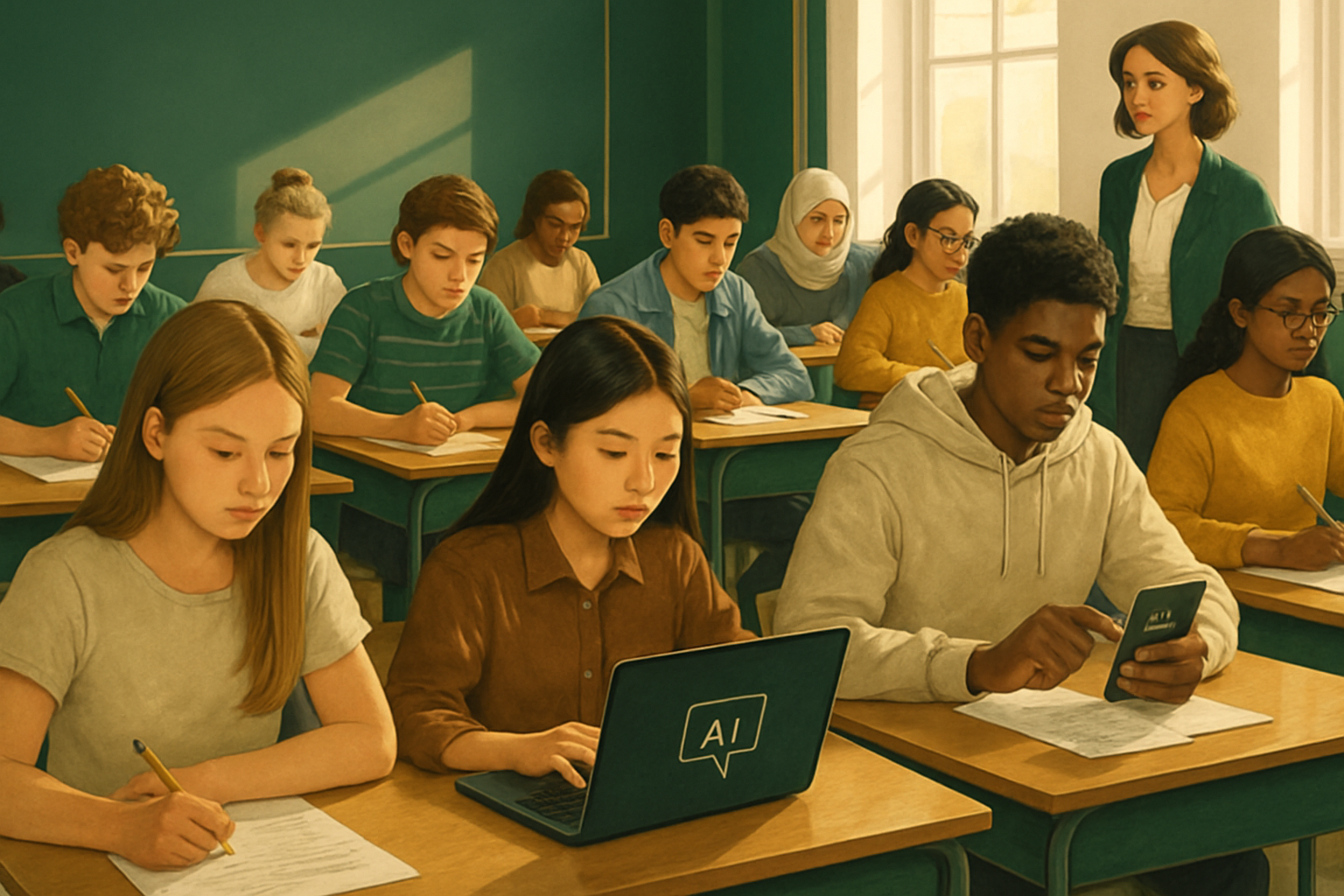
The PISA results based on 2025 data present a nuanced picture of AI usage among 15-year-old students. The average effect is unfavorable, but it varies significantly depending on the task, frequency, and training in evaluating AI responses. The spread of these tools remains uneven across different environments and countries.
AI More Commonly Used by Privileged Students and in Vietnam
Students from relatively privileged backgrounds use AI more frequently than others. This difference is likely due to better access to equipment, a stable internet connection, and paid AI tools. Adoption varies greatly by country: over 95% of Vietnamese students report using AI tools, compared to 60% in Japan. AI users also exhibit higher levels of curiosity, peaking among daily users, but this does not consistently translate into better academic results.
An Unfavorable Average Effect, Modulated by Task and Frequency
On average, after accounting for socio-economic status, students who never use AI perform better in science than those who do. Uses focused on specific tasks, such as summarizing reading texts or writing assignments, are associated with lower performance. Conversely, using AI for preliminary research or as general learning support is linked to a less pronounced drop in results. Frequency of use also plays a role: students who use AI once or twice a year or daily show the worst results, while those who use it monthly or weekly achieve better scores.
Le brief IA que les pros lisent chaque soir
Les 7 actus IA du jour, décryptées en 5 min. Gratuit.
Inclus dès l'inscription : notre sélection des meilleurs guides & comparatifs IA.
Choisissez votre rythme
Gratuit · Pas de spam · Désabonnement en 1 clic
Gains Appear with Weekly Use and Critical Training
In some cases, using AI can be beneficial. Students who report using AI weekly to assist their learning outperform non-users, although the gap remains limited. This advantage becomes more pronounced among students who are regularly encouraged to evaluate the quality of information generated by AI: in this context, all regular AI users for general learning support achieve better results than non-users. The study authors suggest that moderate and thoughtful use of AI for assignments and learning could have positive effects.
What PISA Measures and the OECD's Warning
The Programme for International Student Assessment (PISA), administered every few years, evaluates the skills in science, mathematics, and reading of 15-year-old students. The edition based on 2025 data, the first since the widespread use of AI, relies on over 760,000 students across 91 countries. Andreas Schleicher, director of education and skills at the OECD, emphasizes that learning relies on productive cognitive struggle: technology fosters progress when it supports this effort but can hinder student development if it bypasses it.
Brief IA — L'actualité IA en français
L'essentiel de l'actualité de l'intelligence artificielle, décrypté et expliqué chaque jour.