Pony.ai: 100,000 Autonomous Trucks by 2030
Le brief IA que les pros lisent chaque soir
Les 7 actus IA du jour, décryptées en 5 min. Gratuit.
Inclus dès l'inscription : notre sélection des meilleurs guides & comparatifs IA.
Choisis ton rythme
Gratuit · Pas de spam · Désabonnement en 1 clic
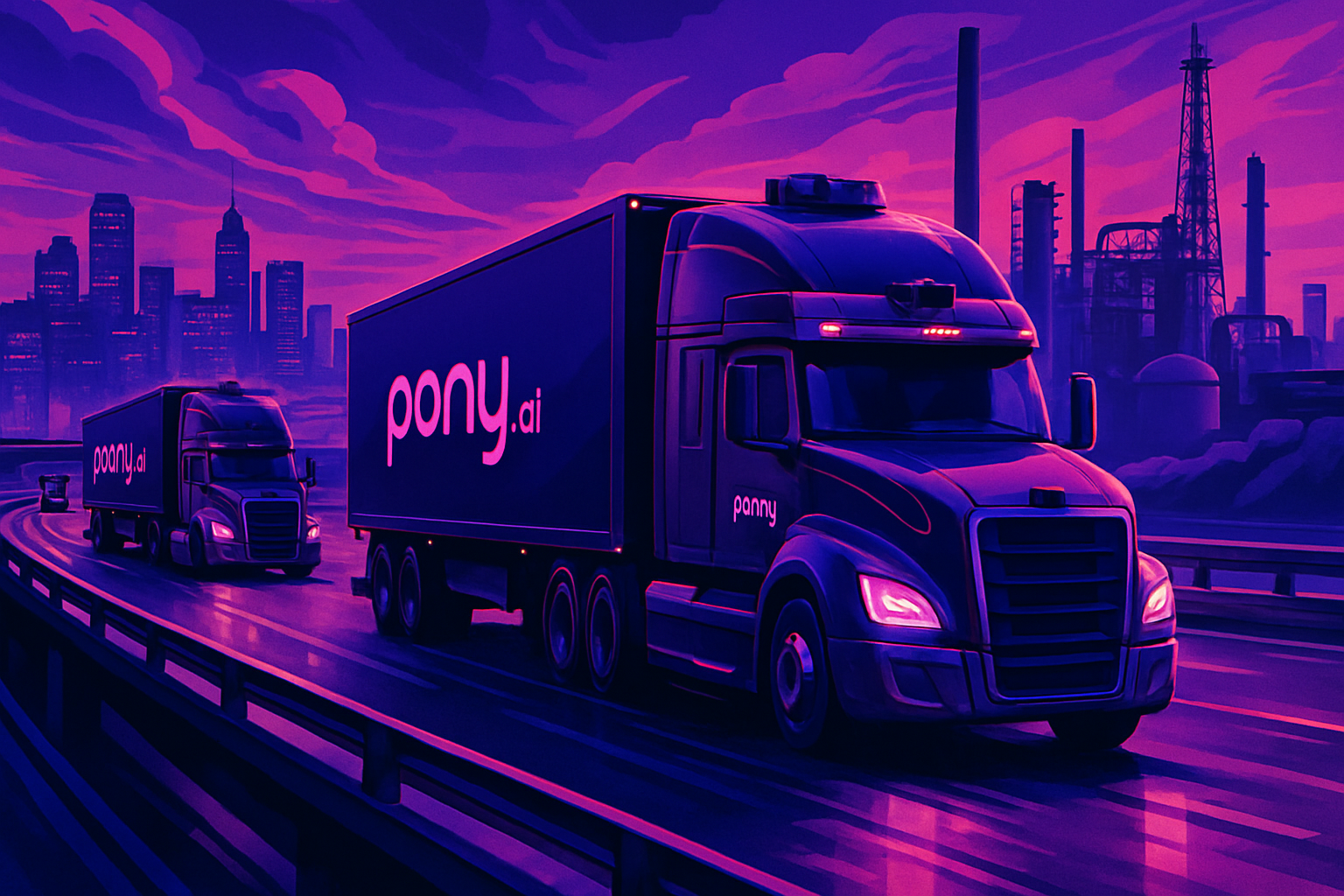
Pony.ai, a Sino-American company specializing in autonomous vehicle technology, has recently announced its ambition to produce 100,000 autonomous trucks by 2030. This announcement marks a significant milestone in the freight transport sector, a field undergoing rapid transformation due to technological advancements. By positioning itself as a key player in this market, Pony.ai could not only redefine industry standards in logistics but also influence economic dynamics on a global scale.
Technical Details or Key Figures
Since its founding eight years ago, Pony.ai has focused its efforts on developing lightweight autonomous trucks. These vehicles are equipped with advanced technologies such as LiDAR sensors, high-definition cameras, and artificial intelligence systems that enable them to navigate autonomously in complex environments. The company has already conducted tests on public roads, demonstrating the reliability and safety of its trucks. With a production target of 100,000 units, Pony.ai plans to significantly increase its production capacity, which will require substantial investments in research and development, as well as close collaboration with industrial partners.
Impact / Consequences for the Sector
Pony.ai's initiative could have profound repercussions on the global logistics landscape. By integrating autonomous trucks into supply chains, companies could benefit from increased operational efficiency and reduced transportation costs. Autonomous trucks are designed to optimize routes, minimize downtime, and reduce fuel consumption. This could also contribute to a decrease in road accidents, often caused by human error. As a result, logistics companies could see their profit margins improve while offering more competitive services.
Reactions or Perspectives
Reactions to this announcement are varied. On one hand, traditional players in the logistics sector express concerns about the increased competition posed by autonomous trucks. Many companies may be forced to adapt quickly to this new reality or risk losing market share. On the other hand, technology advocates welcome this advancement as an opportunity to modernize a sector often criticized for its inefficiency. Governments and regulators will also need to adapt to this evolution by establishing legislative frameworks to govern the use of autonomous vehicles on the roads.
The prospect of widespread adoption of autonomous trucks also raises ethical and social questions. Jobs related to truck driving could be threatened, prompting a need to consider solutions to support workers during this transition. Professional retraining programs may be necessary to help drivers adapt to new roles in a changing work environment.
In conclusion, Pony.ai's ambition to produce 100,000 autonomous trucks by 2030 represents a major challenge for the logistics industry. This initiative could transform not only transportation practices but also economic dynamics on a global scale. It will be crucial to monitor the evolution of this technology and its impacts on the market, as well as the responses from traditional players and regulators in the face of this ongoing revolution.
Brief IA — L'actualité IA en français
L'essentiel de l'actualité de l'intelligence artificielle, décrypté et expliqué chaque jour.