PostgreSQL and Python: A Simplified MCP Server for LLMs
Le brief IA que les pros lisent chaque soir
Les 7 actus IA du jour, décryptées en 5 min. Gratuit.
Inclus dès l'inscription : notre sélection des meilleurs guides & comparatifs IA.
Choisis ton rythme
Gratuit · Pas de spam · Désabonnement en 1 clic
Revolutionizing Data Access with a Python MCP Server
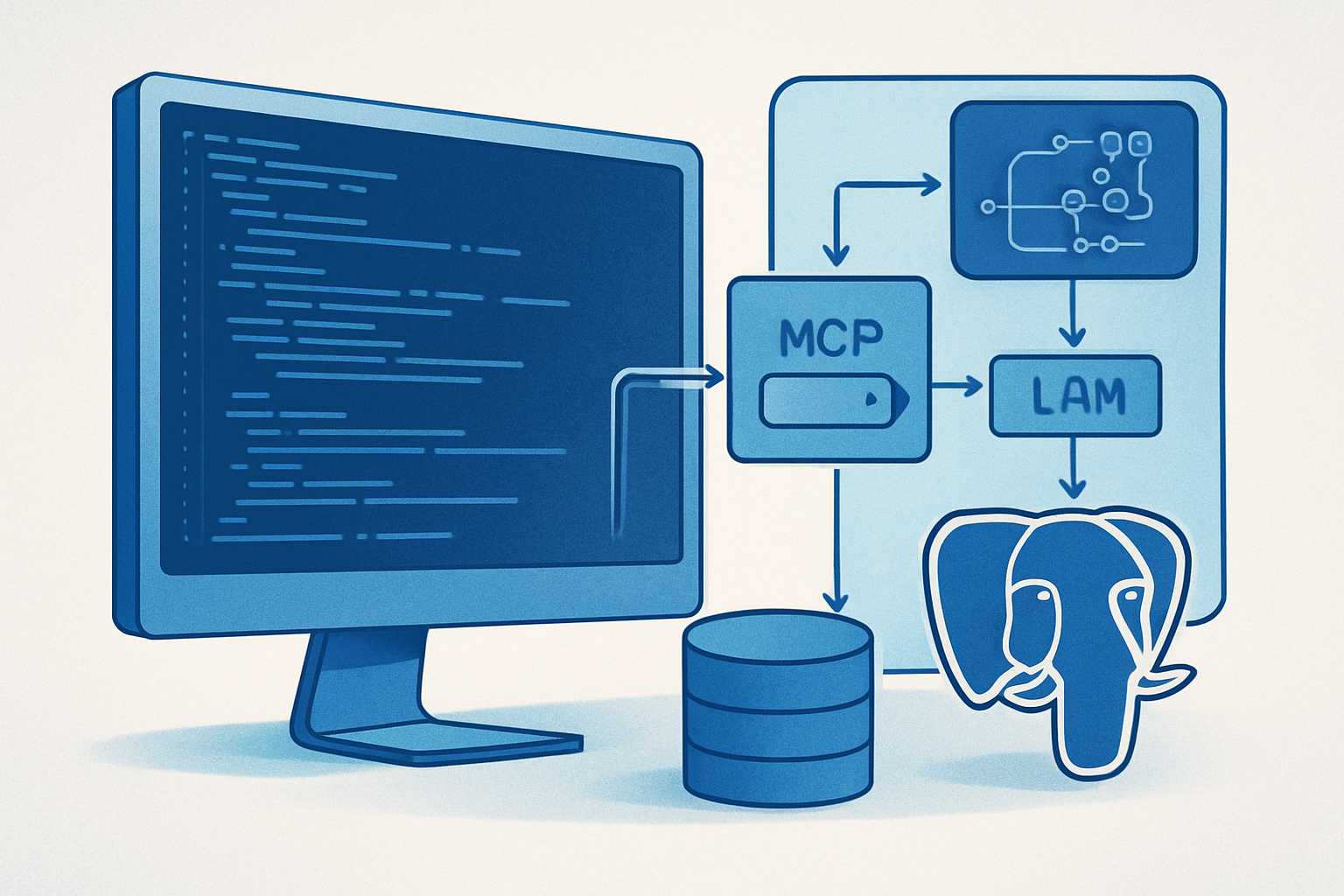
In the world of advanced AI agent development, particularly for e-commerce and SEO analysis, developers often encounter architectural hurdles. A recurring issue is the need to create custom API endpoints to enable language models (LLMs) to communicate with databases. However, a new approach proposes to simplify this process by building a custom Model Context Protocol (MCP) server in Python.
An Optimized Architecture for PostgreSQL
The article highlights a solution that eliminates the "abstraction tax" often associated with custom tool bindings and API wrappers. This tax becomes problematic when schemas and frameworks evolve. By exposing PostgreSQL to LLMs via an MCP server, this approach allows for the removal of 2,000 lines of unnecessary code, thereby simplifying the architecture.
The Python MCP server isolates database access through a dedicated connection configuration. Queries are strictly read-only, ensuring data security and integrity. Additionally, specific audit tasks, such as identifying missing SEO tags or inventory discrepancies, are encapsulated in semantic Python functions.
Simplified Integration with mcp/FastMCP
The use of the official mcp/FastMCP library plays a crucial role in this architecture. It allows for the conversion of docstrings and type annotations into MCP tool schemas, thus facilitating the integration of LLMs with databases.
Finally, the article details how to configure and run the server locally via stdio. A compatible MCP assistant can then discover and call tools dynamically, enabling the issuance of natural language queries that trigger structured audits and return synthesized results.
Brief IA — L'actualité IA en français
L'essentiel de l'actualité de l'intelligence artificielle, décrypté et expliqué chaque jour.