Qwen 3.8 and Kimi Code CLI: Netflix and Alibaba Redefine AI
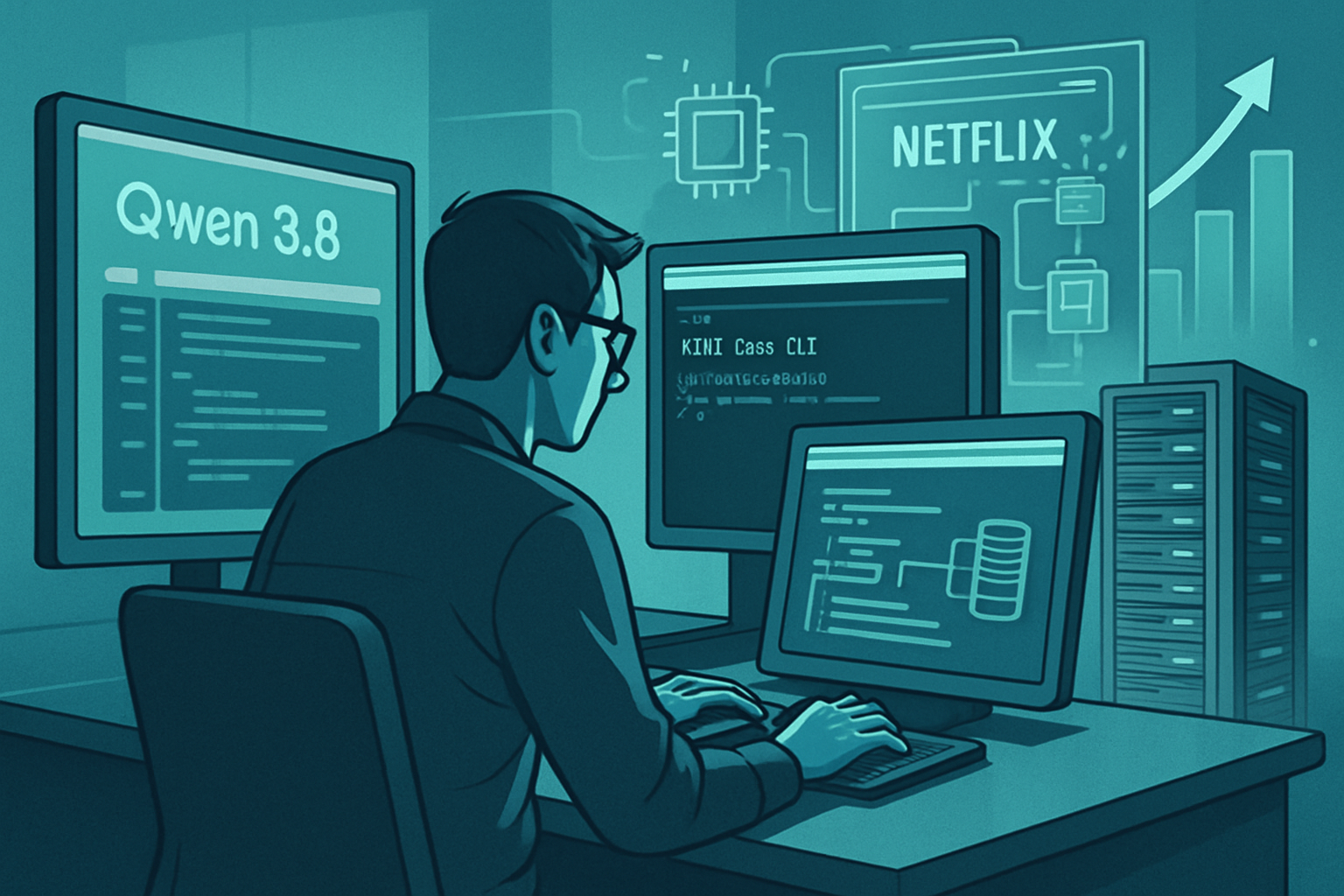
Qwen 3.8: Accessibility and Innovation
Qwen 3.8, a significant advancement in the field of artificial intelligence, is now open-weight. This decision allows developers to leverage its advanced features without any restrictions, thus opening up new opportunities for innovation and the development of AI applications.
Kimi Code CLI: A New Interface for AI
The Kimi Code CLI is now available on GitHub. This command-line interface offers users a new way to interact with AI models, simplifying the development and integration process of AI technologies into various projects.
Netflix's LLM Infrastructure: Performance and Scalability
Netflix has established a robust infrastructure for its language models, optimizing the performance and scalability of its AI services. Netflix's LLM stack is designed to efficiently handle the growing demand from its users, with a scalable infrastructure that allows for resource adjustments based on needs. The focus is on performance, ensuring fast and efficient response times.
Le brief IA que les pros lisent chaque soir
Les 7 actus IA du jour, décryptées en 5 min. Gratuit.
Inclus dès l'inscription : notre sélection des meilleurs guides & comparatifs IA.
Choisissez votre rythme
Gratuit · Pas de spam · Désabonnement en 1 clic
Other Technological Developments
Alibaba recently open-sourced its AI chip management software at WAIC, aiming to compete with Nvidia's CUDA lock-in. Additionally, a Chinese AI startup is preparing to reach $1 billion in sales while offering its best models for free. Furthermore, early GPU financiers are turning to inference chips in a $400 million deal. Finally, Moonshot AI plans to go public in Hong Kong following the unexpected success of its Kimi K3 model.
Brief IA — L'actualité IA en français
L'essentiel de l'actualité de l'intelligence artificielle, décrypté et expliqué chaque jour.