RAG in Business: From Naive Pipelines to Modular Architectures
Le brief IA que les pros lisent chaque soir
Les 7 actus IA du jour, décryptées en 5 min. Gratuit.
Inclus dès l'inscription : notre sélection des meilleurs guides & comparatifs IA.
Choisis ton rythme
Gratuit · Pas de spam · Désabonnement en 1 clic
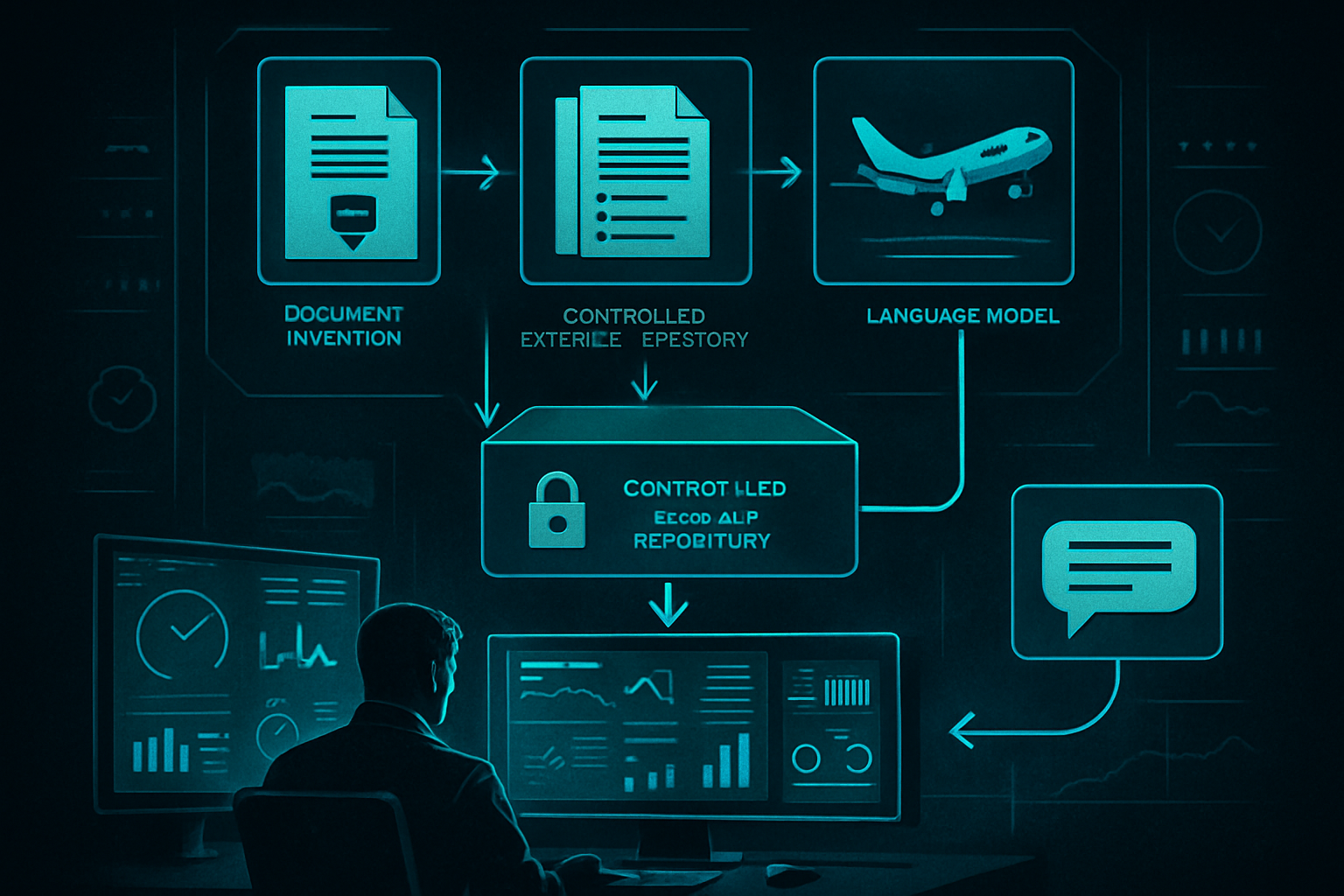
The Retrieval-Augmented Generation (RAG) is described as an architecture that separates access to knowledge from linguistic generation and retrieves evidence on-the-fly from controlled repositories. Beyond the components, production deployment relies on end-to-end engineering and a layered mental model to diagnose failures. RAG architectures are presented as having evolved from naive pipelines to modular and agentic systems, with a critical boundary between offline and online processing.
From Naive Pipelines to Modular and Agentic Architectures
RAG is portrayed as having progressed from naive chaining to modular architectures, and then to agentic ones. A critical boundary separates offline and online processing, influencing design and operation. A three-layer mental model—ingestion, retrieval, generation—is proposed to reason about failure points and choose the appropriate approach.
Business Needs and Limitations of LLMs Alone
The needs span a variety of sectors: assistants capable of handling questions about AML and KYC in the banking sector, reviewing insurance contracts, quickly consulting aeronautical maintenance manuals, analyzing contracts for legal professionals, as well as providing accurate responses backed by internal documentation for support teams. Solutions relying solely on LLMs are seen as limited, as the knowledge embedded in these models is static, not linked to constantly evolving proprietary data, and the responses provided often lack reliability or source referencing.
What RAG Brings and What Production Requires
By separating access to knowledge from generation and retrieving, upon request, evidence from controlled external repositories, RAG aims for more up-to-date, traceable, and governable responses. Technical discussions often focus on components like embeddings or vector search, while success in production depends on end-to-end engineering: managing noisy documents, handling retrieval and context assembly failures, adhering to security constraints, implementing evaluation and observability mechanisms, as well as controlling latency and cost.
Brief IA — L'actualité IA en français
L'essentiel de l'actualité de l'intelligence artificielle, décrypté et expliqué chaque jour.