Rainbow: AI Replaces Models, Tensions and Lawsuits
Le brief IA que les pros lisent chaque soir
Les 7 actus IA du jour, décryptées en 5 min. Gratuit.
Inclus dès l'inscription : notre sélection des meilleurs guides & comparatifs IA.
Choisis ton rythme
Gratuit · Pas de spam · Désabonnement en 1 clic
Rainbow Announces a Shift Towards AI, Raising Concerns
Fashion retailer Rainbow recently informed its models of an impending transformation in their industry, marked by job reductions due to the increasing integration of artificial intelligence. Last June, a message from Phil Caraway, head of Rainbow's studio, warned models that AI would transform their work environment, rendering some positions redundant. Caraway emphasized that the company had already begun using AI to style products and generate avatars, although he could not guarantee that this would lead to immediate job losses.
In his email, Caraway predicted a "huge increase in the use of AI" starting this fall, which triggered a wave of anxiety among the models. He also wrote that "fewer people will be needed" in the long term. This email, which had not been previously reported, marked the beginning of a year that models described as filled with anxiety and anger. They noted that the company was developing synthetic models near their workplace, while their own working days gradually decreased at the New York office. Nearly a year after this warning, Rainbow began to rehire some models, but many remain unemployed.
The Emergence of AI Doubles: A Source of Conflict
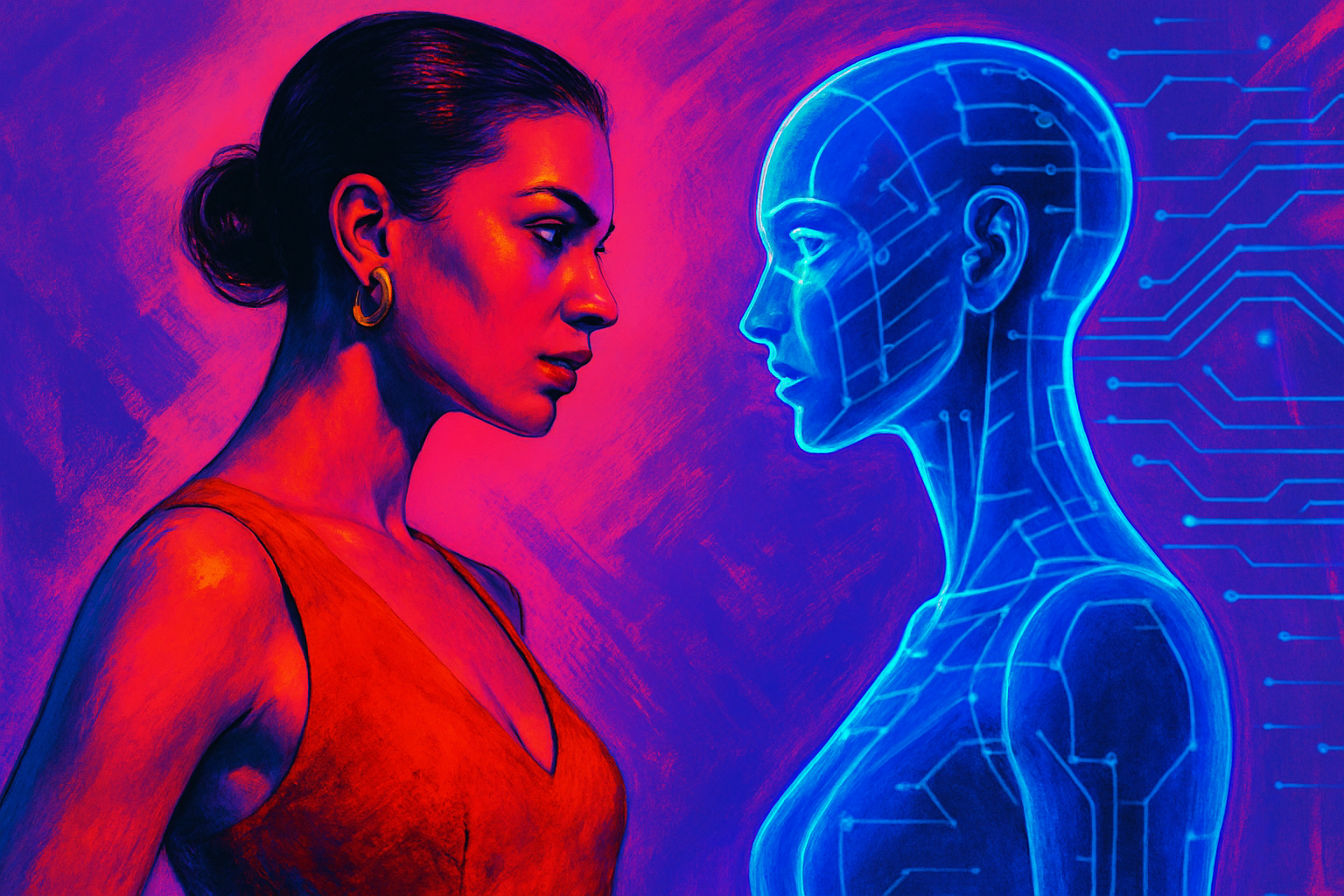
In March of this year, models noticed marketing images from Rainbow that appeared to be their lookalikes, but in poses or locations different from those of the photo shoots they had participated in. These AI doubles were spotted on Rainbow's website, social media, and in its newsletters. This situation led to a series of protest emails sent to Rainbow, as well as a lawsuit filed by one model.
As AI improves, many sectors, including fashion, are exploring its use while facing implications for human employment. Models, in particular, find themselves on the front lines of this evolution, as AI-generated images and videos gain in quality.
The Impact of AI on the Fashion Industry
AI is becoming increasingly common in the fashion industry. A 2025 study conducted by the Worker Institute at Cornell University and Data & Society, in partnership with the Model Alliance, revealed that jobs in e-commerce are "more vulnerable to replacement by AI technologies." Business Insider gathered testimonies from several employees and contractors at Rainbow, all of whom requested anonymity, and examined numerous email exchanges, images, and modeling contracts.
David Cost, Rainbow's digital director, told Business Insider that the company is responsibly evaluating emerging AI technologies and is committed to using them appropriately. He clarified that Rainbow's relationships with its employees and independent contractors are private and disputed many alleged "facts." Cost declined to comment on specific questions posed by Business Insider.
The Origins of Rainbow and Its Recruitment Strategy
Founded in Brooklyn over 90 years ago, Rainbow operates more than 800 stores nationwide and is privately held. The retailer targets budget-conscious consumers with significant discounts, similar to Fashion Nova or PrettyLittleThing. It also operates the similar brand KissDon'tTell.
For its e-commerce photo shoots, Rainbow's team sought models without agency ties, according to a former stylist who helped recruit models. Two models reported being discovered on Instagram and having little paid modeling experience. Rates varied among models, although many stated they earned around $50 per hour.
Three models indicated that a Rainbow employee had asked them to be available for five days of work per week. The former stylist specified that Rainbow asked its freelancers to be available from Monday to Friday, but this was not written in their contracts. Two models stated they had left their previous jobs to join the company.
The Arrival of AI in Rainbow's Studio
By mid-2025, models began to notice changes in the studio: the introduction of AI training. Employees would lay out clothing on a flat board, take photos, and upload them to an AI program called Lica, an employee stated. Lica generated fully synthetic AI models, distinct from human model duplicates, for Rainbow, the employee added.
The AI training caused significant anxiety among the models. To lighten the mood, some joked that the system might replace them. Two models reported instances where the fitting of a garment on their body was compared to an AI avatar, highlighting where the avatar needed to be more realistic.
The Decline of Work and the Appearance of Doubles
After Caraway's email in June, models prepared for a reduction in their work. For months, several continued to receive regular bookings, but this slowed down, and by mid-March of this year, work dried up. Some models submitted their availability but received no response.
During this time, two Rainbow employees, who are not models, reported having gone weeks without seeing any human models in the studio.
Models Confronted with Their AI Doubles
Models began to spot their doubles on Rainbow's social media. They had previously participated in product shoots wearing Rainbow clothing, such as a long floral dress, while being photographed against simple backgrounds. The doubles they later noticed bore striking resemblances — the same silhouettes, facial features, and outfits they had worn — but were photographed with their bodies in completely different positions. Business Insider saw more than a dozen such images.
The second clause of the contracts that many models had signed allowed Rainbow to use their images "whether intact or in part, composites or altered in character or form, cropped or modified, without restrictions on changes or transformations."
Legal and Contractual Consequences
One image that sparked discussions showed what the models suspected to be an AI lookalike altering the original skin tone of the model. The model and the alleged AI lookalike shared certain similarities — hairstyle and parting placement, as well as accessories and shoes — but also some differences, such as nose shape.
None of the employees Business Insider spoke with had directly seen the creation or editing of these doubles.
Several models who suspected that Rainbow was modifying their likenesses with AI raised issues with the company via email.
One model, Francheska Pujols, sued Rainbow on May 22, alleging that the images defamed her and caused confusion regarding her endorsement of the company's products, among other allegations.
Pujols stated in a sworn declaration that her contract only covered images captured during photo shoots and "does not in any way authorize the creation of entirely new images, scenes, poses, or compositions that did not exist in the original content."
Rainbow published photos of what Pujols claimed to be her AI double; in one, she is straddling a stool. Another shows her sitting, wearing a short skirt, with one leg raised.
Pujols stated in her lawsuit that these two photos resembled her, but that she had never been photographed in those poses.
"As Rainbow has previously stated regarding this matter, Ms. Pujols' images were used correctly and in accordance with the agreement she signed," wrote Joan McGillycuddy, Rainbow's legal head, in a statement to Business Insider. "There is no violation of her rights."
Rainbow's contracts stipulated that models would receive double their daily rate for the use of images outside of this second clause. Some models requested compensation for the suspected AI images but were denied, according to their messages, which were reviewed by Business Insider.
The Revision of Contracts and Models' Resistance
Then, the contractual back-and-forth began.
On March 10, amid the slowdown in work, Caraway sent an email to the models. "To account for rapidly evolving technologies and usage expectations, Rainbow has developed an updated model contract template," wrote Caraway.
One clause of the new contract was particularly controversial — one that models interpreted as granting Rainbow extended rights over AI.
The new clause allowed Rainbow to use "various technologies, tools, or production methods now known or developed later, including automated or computer-assisted techniques." The clause was to be interpreted "broadly" as long as the company did not "materially distort the model," the contract stated.
Some models reported refusing to sign it.
Brief IA — L'actualité IA en français
L'essentiel de l'actualité de l'intelligence artificielle, décrypté et expliqué chaque jour.