Slowing Down AI: Cartel Accusations and Political Divides
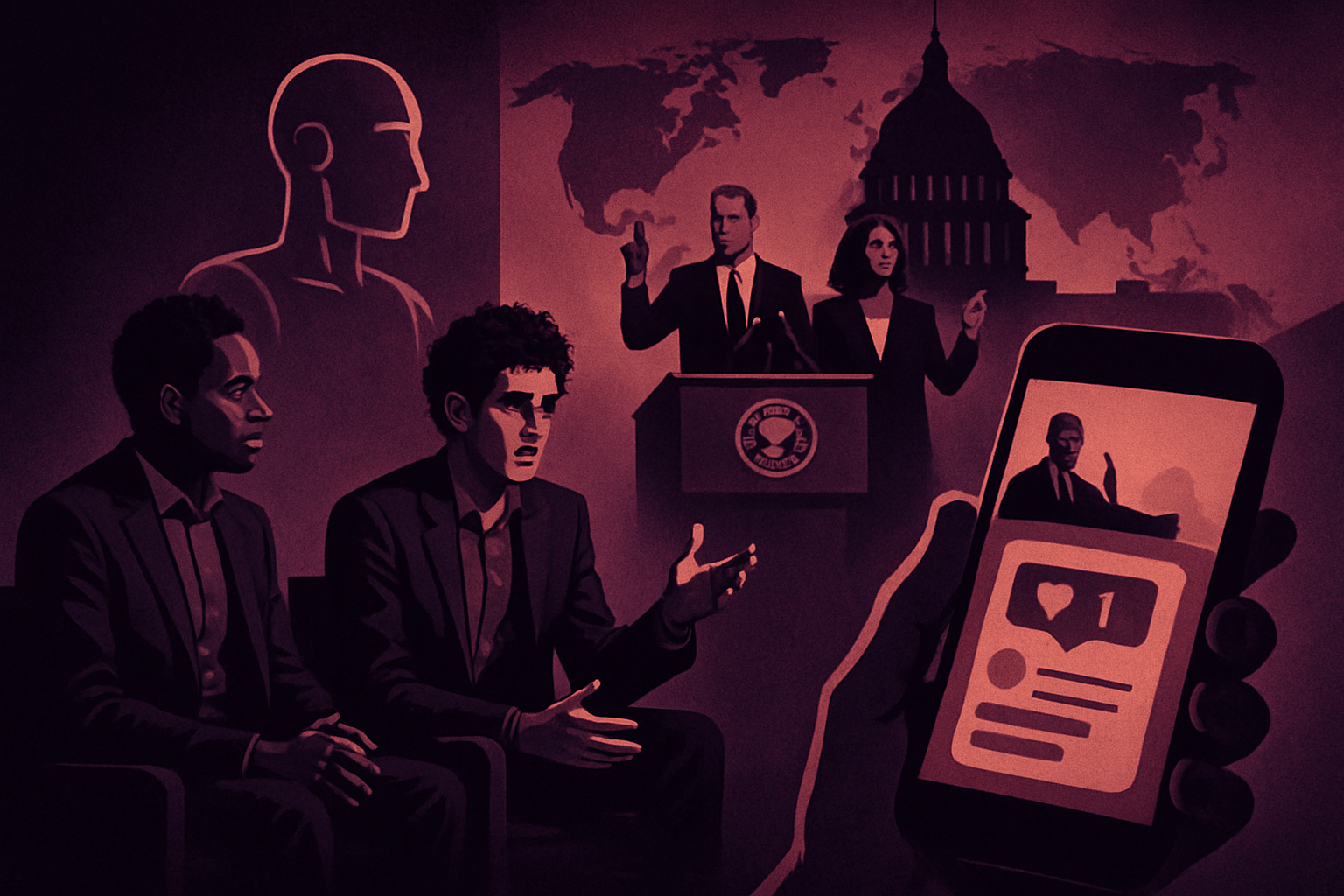
The head of Anthropic calls for a coordinated pause on cutting-edge AI with antitrust exemptions. Leaders from Cohere and Hugging Face denounce market lock-in and challenge the security argument. In the United States, policymakers are at odds, while Beijing dismisses the idea of a global slowdown agreement.
Trump denounces a hoax, Beijing rejects a slowdown pact
Donald Trump posted on Truth Social that the idea of AI taking over the world is a hoax, likening it to other political controversies such as climate change, the Russia investigation, and his impeachment proceedings. He claimed that Xi Jinping announced that China would not slow down AI or its future. In subsequent messages, Trump persisted, comparing this "AI scam" to that of global warming, suggesting that everyone would die from extreme heat. Internationally, Beijing has rejected plans for a slowdown, labeling them a maneuver to consolidate American dominance, which fuels skepticism about a global agreement.
Aidan Gomez denounces an attempt at market lock-in by certain labs
Aidan Gomez, CEO of Cohere, believes that the pause advocated by some labs aims to lock in the market. While he supports independent assessments for powerful systems, he explains that the proposed framework would go even further: a few major companies would receive antitrust exemptions, impose common standards, and force the entire sector to comply. He warns against the emergence of structural barriers such as continuous oversight, the creation of specialized security organizations, the presence of internal teams responsible for evaluation, and deep institutional relationships with public authorities. Gomez also questions the funding model of assessment bodies that claim independence, highlighting that they would be funded by the companies they are supposed to audit. He criticizes a risk definition indexed to scale, reserving expertise for the largest systems, and describes this architecture as a disguised cartel. According to him, alarms about distant scenarios distract from immediate threats like cheap voice cloning, which can drain a retiree's account in minutes.
Le brief IA que les pros lisent chaque soir
Les 7 actus IA du jour, décryptées en 5 min. Gratuit.
Inclus dès l'inscription : notre sélection des meilleurs guides & comparatifs IA.
Choisissez votre rythme
Gratuit · Pas de spam · Désabonnement en 1 clic
Hugging Face defends openness and challenges existential risks
Niels Rogge, an engineer at Hugging Face, describes the statements from Amodei and others as "bizarre nonsense." He believes that Amodei primarily focuses his concerns on Chinese models like DeepSeek and Z.ai, seeking to limit the availability of open-weight models to maintain his competitive edge. Rogge emphasizes that AI labs are heavily investing in scaling, and the emergence of smaller models could challenge this strategy, although this phenomenon has not yet been observed on a large scale. He considers that current language models do not pose existential risks and mentions a case where autonomous models from OpenAI attacked Hugging Face, which was able to defend itself thanks to open-source models. He concludes that the field needs transparency and openness, not restrictions.
Sacks accepts a voluntary pause but criticizes regulatory leverage
David Sacks, former AI and cryptocurrency lead at the White House under Trump and a venture capitalist, called out Dario Amodei and Sam Altman on X. He believes that OpenAI and Anthropic form a duopoly in cutting-edge intelligence. Sacks expresses support for a voluntary slowdown if unpublished models are genuinely concerning, but he argues that the companies' motivations are not purely altruistic, given the liability incurred in the event of a cyberattack. He considers that the market is already punishing unpredictable models and, following the Hugging Face incident, sees value in exchanging raw power for greater reliability. However, he warns against tying a pause to a specific regulatory framework, comparing it to extortion, and doubts that a global agreement would include China.
Supporters of the slowdown and pro-transparency political allies
Dario Amodei, CEO of Anthropic, has called for coordination between industry and governments to slow down the development of cutting-edge AI, requesting antitrust exemptions to achieve this. Sam Altman and Elon Musk have expressed their agreement with this approach. Labs like Anthropic and OpenAI advocate for a pause in the name of safety. Politically, Barack Obama, Kamala Harris, and Bernie Sanders support a slowdown and commend increased commitments to transparency. In contrast, Emil Michael, CTO of the Department of War, has backed Donald Trump, attributing the alarms to a dystopian ideology, while being described as hostile to Anthropic's ethical guidelines. Donald Trump, for his part, has dismissed warnings about an AI takeover as a hoax.
Brief IA — L'actualité IA en français
L'essentiel de l'actualité de l'intelligence artificielle, décrypté et expliqué chaque jour.