Reese Witherspoon and the Gender Gap in AI: A Challenge
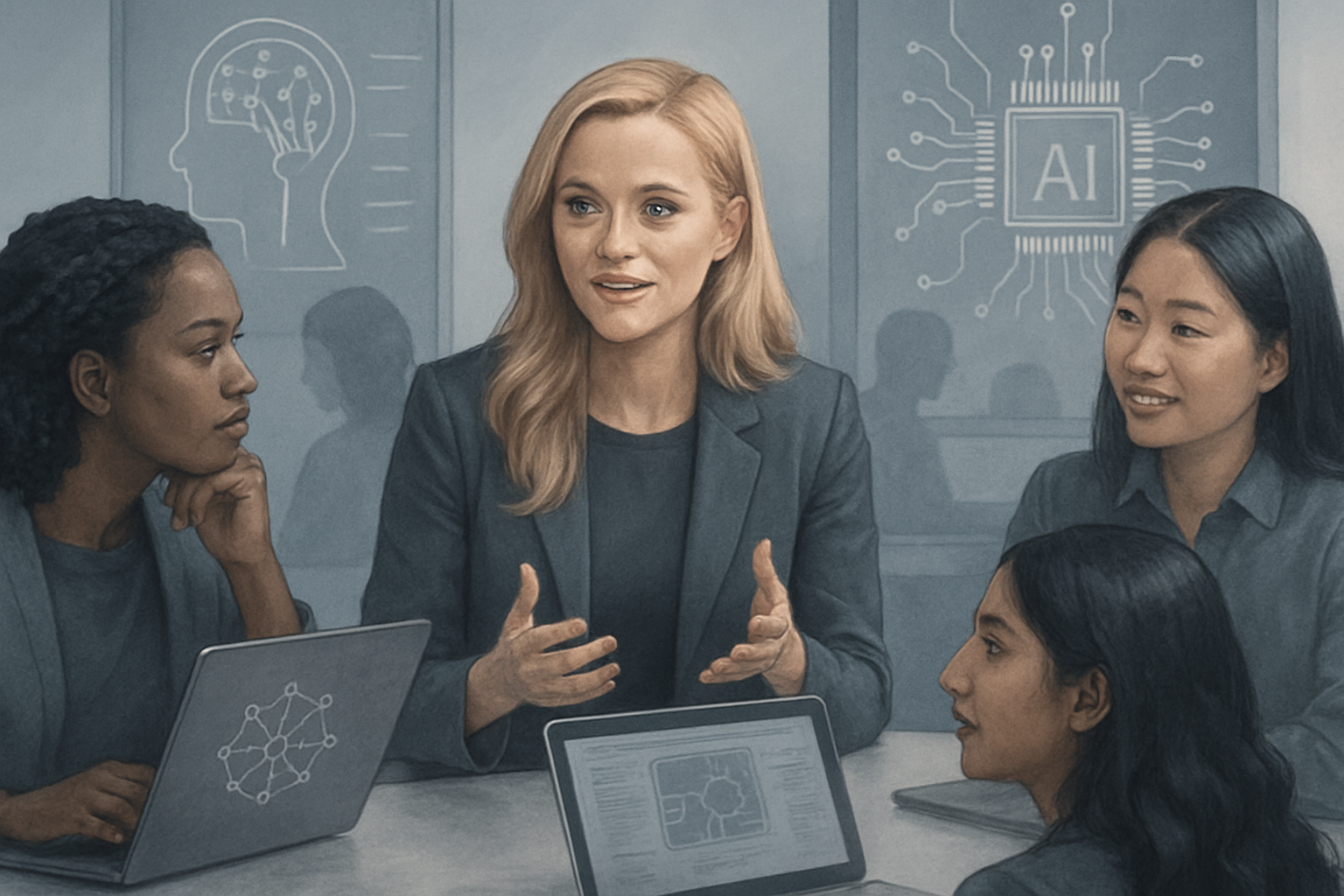
Reese Witherspoon and AI: A Call to Action
Recently, actress Reese Witherspoon took to Instagram to encourage her millions of followers to engage more deeply in learning about artificial intelligence. In a video, she emphasized the importance for women to familiarize themselves with this rapidly expanding technology, concluding with a call to action to learn AI alongside her.
However, her initiative has not been without criticism. Reese Witherspoon received thousands of comments criticizing her for her lack of sensitivity towards issues such as environmental impact, data center critiques, and inherent biases in AI.
Nevertheless, Witherspoon highlighted a real issue: the growing gender gap in the field of artificial intelligence. The mixed reaction to her message may reveal deeper reasons explaining why this gap persists. If even Elle Woods, the iconic character from Legally Blonde, cannot mobilize millennial women, who can?
Women and Technology: A Persistent Gap
Recent research shows that women tend to be more cautious about risks than men, making them more hesitant to adopt AI, especially when its economic and societal implications remain unclear. Women perceive AI as riskier, particularly when its economic and societal effects are uncertain. Furthermore, the underrepresentation of women in the tech sector is alarming. By 2025, they will make up only about a quarter of the global tech workforce, and less than one-fifth will hold leadership positions. This disparity is exacerbated by the fact that men apply for jobs even if they meet only 60% of the qualifications, while women wait to meet 100% of the criteria before applying.
Gender diversity in the tech sector is crucial, but it is only part of the problem. The use of AI across society is also at stake. A meta-analysis from Harvard Business School, conducted in April, examined 18 studies covering over 143,000 individuals in 25 countries, revealing that women are 22% less likely to use generative AI compared to men.
Moreover, a Deloitte study from November 2024 showed that AI adoption decreases with age, and the gender gap is particularly pronounced among individuals aged 45 and older.
A report from recruitment firm Randstad, published a year ago, revealed that 71% of skilled AI workers are men, compared to only 29% women, a gap of 42 points. Men are also more likely to receive AI training from their employers (35% versus 27% for women), and women are largely underrepresented in generative AI skills (69% versus 31%).
Michael Morris, Global Head of Platform and Talent at Randstad, told CNET that women represent the largest pool of underutilized talent in the professional workforce. He emphasizes that the skills required for high-risk roles, such as relationship management, operational coordination, ethical reasoning, and stakeholder communication, are precisely those that new roles in the AI era demand.
However, acquiring these skills is not always straightforward for some women, particularly mothers. Morris insists that employers must integrate AI learning into the work framework rather than imposing it outside office hours, a time when many women often have more responsibilities than their male counterparts.
Le brief IA que les pros lisent chaque soir
Les 7 actus IA du jour, décryptées en 5 min. Gratuit.
Inclus dès l'inscription : notre sélection des meilleurs guides & comparatifs IA.
Choisissez votre rythme
Gratuit · Pas de spam · Désabonnement en 1 clic
Organizations that are making the most progress view AI literacy as a collective responsibility rather than an individual one. Although women are less present in core technical roles, adjacent jobs to AI could offer transition opportunities. This includes areas such as AI ethics and governance, AI in healthcare, education and customer experience, as well as product and operations roles involving AI implementation and data analysis with a focus on social impact.
Barriers to Women's Adoption of AI
Lakma Algewatthage, a lecturer in entrepreneurial management at the Australian Institute of Business, identifies several factors contributing to the gender gap in AI adoption, including access, socialization, stereotypes, and organizational support.
She points out that lack of time is a significant and often underestimated factor. Women continue to bear a disproportionate share of family and household responsibilities, leaving them with less time to explore emerging technologies, take training, or build their confidence through experimentation.
According to Algewatthage, AI literacy and adoption do not develop through mere one-time exposure. They require ongoing practice, curiosity, and reflection, all of which demand time.
In her role as a lecturer, Algewatthage observes that women are less interested in using AI solely to produce results, preferring to understand how to use it effectively and authentically in their own professional contexts.
This reflects a strong desire not only to adopt AI but also to develop the judgment and confidence necessary to use it meaningfully. When women learn to evaluate and apply AI responsibly, rather than simply learning how to use it, they become significantly more confident and ready to engage with the technology.
Ultimately, closing the gender gap involves rethinking learning experiences to foster critical judgment, ethical decision-making, and lifelong adaptability.
The Importance of Community Support
Community-based learning, flexible access, and visible role models are essential levers to encourage more women to engage in AI, as seen in other fields such as STEM and finance.
Elizabeth Ngonzi, an executive advisor in AI, board member of the American Society for AI, and assistant professor at New York University, stresses the urgency of closing this gap before it turns into a larger economic divide.
She emphasizes that employers should integrate AI literacy into paid work time, rather than viewing it as an additional burden. Leaders should make access to tools, training, and use cases an integral part of workforce development, particularly in functions where women are concentrated.
This could involve designing adoption around real workflows, making experimentation feel useful. Ngonzi encourages mothers and caregivers to start using AI for everyday tasks they already manage, such as scheduling, pickups, and meal planning.
This makes AI immediately useful, helps reduce mental load, and boosts the confidence they can bring to work. Kandis Tagliabue, a technologist and mother of five, asserts that women do not need to do things like men. It’s a huge privilege that men do not realize they have, but women should not feel discouraged. They can approach it as a hobby.
Tagliabue recently created a family operating system designed to reduce the mental load of family responsibilities. Leticia Mooney, a working mother who also homeschools her son, uses AI to generate activity ideas and learning sheets. This has been helpful, as I have a limited vision and no time for brainstorming, she says.
However, Mooney points out that beyond menu planning, shopping lists, and schedules, AI poses a barrier to her workflow.
Brief IA — L'actualité IA en français
L'essentiel de l'actualité de l'intelligence artificielle, décrypté et expliqué chaque jour.