Replit: When AI Transforms Programming into a More Human Art
Le brief IA que les pros lisent chaque soir
Les 7 actus IA du jour, décryptées en 5 min. Gratuit.
Inclus dès l'inscription : notre sélection des meilleurs guides & comparatifs IA.
Choisis ton rythme
Gratuit · Pas de spam · Désabonnement en 1 clic
The Impact of AI on Programming According to Replit
Amjad Masad, the CEO of Replit, sees artificial intelligence as a catalyst for creativity among programming engineers. He describes the work environment at Replit as having become more dynamic and stimulating thanks to AI.
Masad believes that AI has made software engineering within his company more intellectual and enjoyable. This vision contrasts with widespread concerns about a potential "SaaSpocalypse," where AI could replace programming jobs in tech companies. In an interview on Casey Newton's podcast, Masad explained that coding agents have transformed daily life at Replit, allowing engineers to focus on more creative tasks.
"You experiment a lot, you generate ideas quickly," he said. "Two years ago, everyone was glued to their keyboards, and clicks were everywhere."
Today, he describes the environment as being much more lively.
Mixed Opinions on the Future of the Software Industry
Other industry players share Masad's optimism. Jared Spataro, an executive at Microsoft overseeing the marketing of AI-powered work tools, stated that predictions about the disappearance of enterprise software are largely exaggerated. However, this view is not universally shared.
Investors, for example, have expressed reservations. The idea that AI could enable companies to develop their own software without relying on external developers unsettled markets earlier this year.
Engineers themselves have noted that while AI makes coding more efficient, it can also lead to rapid burnout. At least a dozen major companies have laid off workers, citing AI as the reason. This summer, Meta laid off nearly 1,000 engineers, although Mark Zuckerberg attributed these cuts to AI-related costs rather than automation.
Replit and the Shift Towards "Vibe Coding"
Replit, founded by Masad in 2016, experienced a turning point in 2025 with the arrival of Anthropic's Opus models, capable of coding more efficiently. This advancement prompted Masad to rethink his initial mission of teaching coding.
"My life mission around teaching coding is changing," he reflected at the time. "Everything I work for seems a bit vain."
Replit thus adjusted its mission, shifting from teaching to facilitating coding. The company developed an AI agent capable of creating programs from simple natural language requests, a process known as "vibe coding."
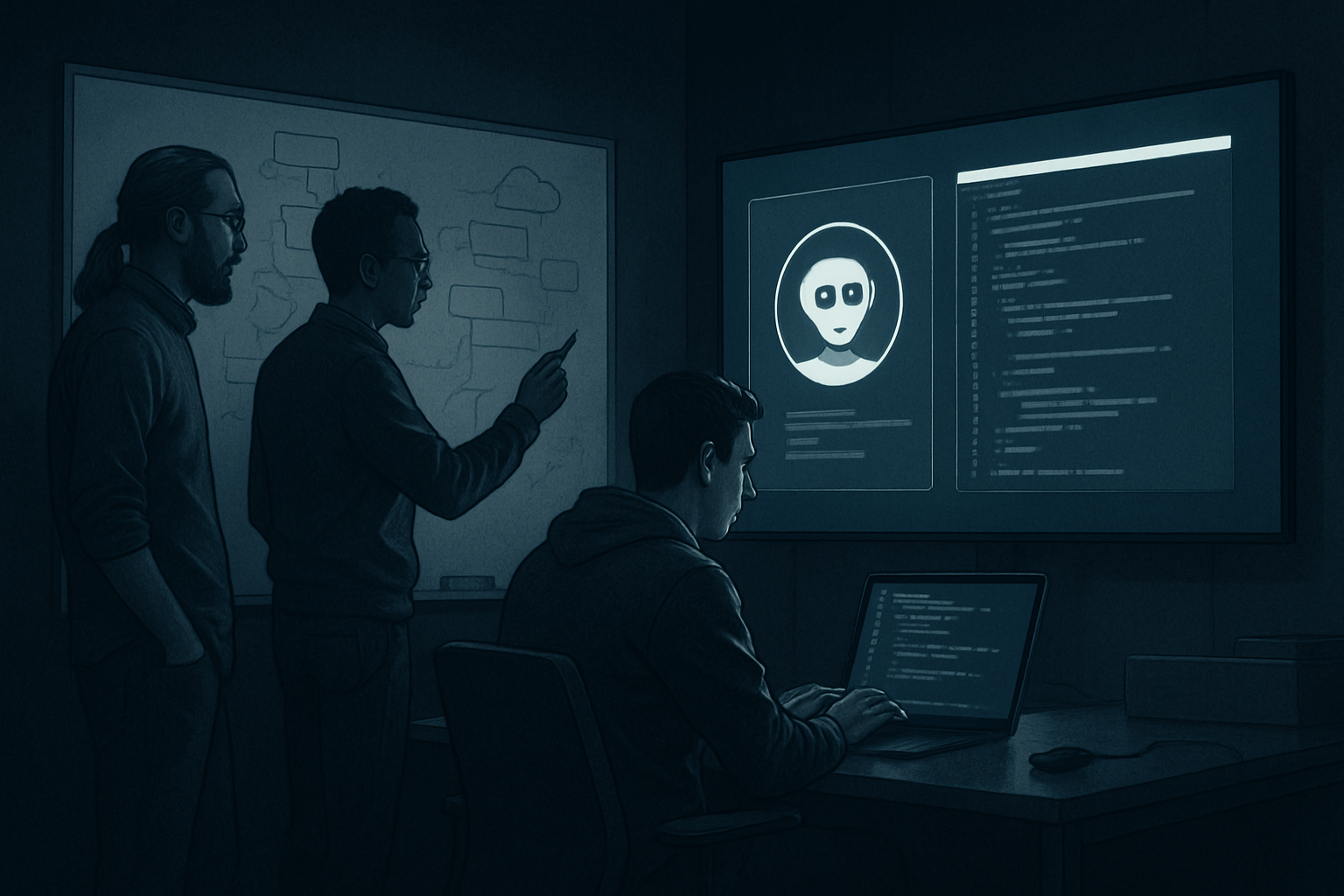
Today, Replit engineers spend more time conceptualizing on whiteboards, taking breaks to send their requests to an AI agent.
"You create a culture where it's fun to build things," Masad said. "You create a culture where it's not intense all the time."
Brief IA — L'actualité IA en français
L'essentiel de l'actualité de l'intelligence artificielle, décrypté et expliqué chaque jour.