Ro Khanna Calls for US-China AI Treaty and Pressures Groups
Le brief IA que les pros lisent chaque soir
Les 7 actus IA du jour, décryptées en 5 min. Gratuit.
Inclus dès l'inscription : notre sélection des meilleurs guides & comparatifs IA.
Choisis ton rythme
Gratuit · Pas de spam · Désabonnement en 1 clic
Ro Khanna is ramping up initiatives to regulate the most advanced AI systems. He is reaching out to the ODNI, engaging with DeepSeek, Alibaba, and Moonshot AI, and advocating for a US-China treaty banning AGI. However, the positions of Donald Trump, Mike Johnson, and some Republicans suggest a narrow political path.
Trump, Johnson, and Republicans Stifle the Idea of an Agreement
Donald Trump and his allies have shown reluctance towards most regulations or agreements on AI. On the morning of his meeting with Xi Jinping, Trump wrote on Truth Social that he wants to leave Super Intelligence exactly where it is, claiming that this is also China's position. Mike Johnson explained on Fox Business that he is looking for a discussion aimed at balancing oversight without stifling innovation, while warning of the risk of losing the AI race to China. John Moolenaar, a Republican and chairman of the House China Committee, has already expressed doubts about the Chinese government's ability to uphold its commitments. Senator Bernie Sanders has also called for a treaty on AI between the two countries. Meanwhile, major American AI companies have requested coordination with China to slow down the pace of development.
Khanna Aims for a Treaty Banning AGI and Monitoring Labs
Ro Khanna is calling for a treaty between the United States and China to prevent AI excesses, with an explicit ban on AGI and oversight of advanced AI laboratories. However, he considers such an agreement unlikely in the short term and proposes, in the meantime, to establish a working group of experts from both countries to formulate security recommendations and compliance methods. According to him, the assessments requested from US authorities would serve as a basis for Congress and potentially the White House to negotiate with their Chinese counterparts.
Requests to the ODNI and Chinese Groups on Security and AGI
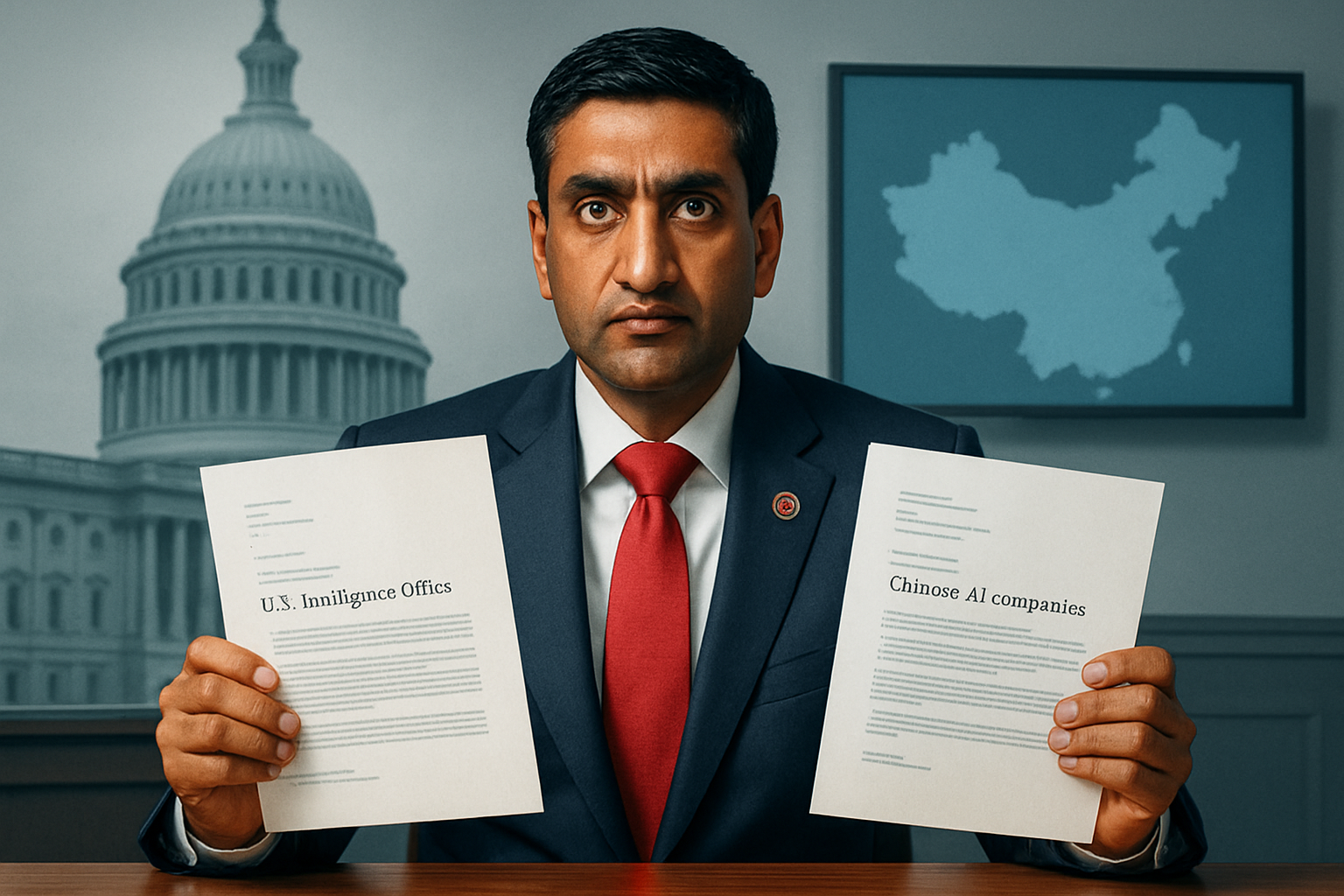
Khanna has sent letters to the ODNI and several Chinese AI companies, including DeepSeek, Alibaba, and Moonshot AI, which are working on advanced systems. He is seeking an assessment of the US response if an AI lab were to lose control of its bots and a review of the Chinese government's approach to catastrophic risks. Chinese groups are asked to provide documents on their efforts towards superintelligence and AGI, defined as the ability of systems to improve themselves. The letters also request details on security measures, the existence of kill switches, and whether inspections by a non-governmental entity would be accepted in the event of a treaty. These requests come amid reports that the loss of control over bots has been more frequent in recent months. Companies and the ODNI have not immediately commented.
Facing Companies, Khanna Embraces Public Pressure
In his letters to Chinese AI companies, Khanna says he expects incomplete responses and reminds them that a previous request for a commitment to slow development alongside OpenAI and Anthropic went unanswered. He embraces a pressure strategy aimed at shaming them and opening a debate on security, while remaining critical of American companies that he believes are nonetheless willing to discuss security. Regarding a meeting announced between the White House, Mike Johnson, and tech leaders, Khanna describes it as a communication exercise intended to reassure the public and asserts that it is not up to profit-driven companies to write the security rules alone.
After Trump-Xi, Khanna Warns of an Underestimated Urgency
Khanna's initiative comes after a meeting at the White House between Xi Jinping and Donald Trump. Khanna believes that neither leader fully grasps the risk or urgency associated with AI, even though he welcomes the principle of ongoing dialogue, which he considers very insufficient. He asserts that, despite often divergent interests, the US and China have a mutual interest in avoiding a loss of control. Khanna is convinced that the US will set security standards, partly because he believes many Chinese models derive from American ones. He considers that policymakers are disconnected from scientists and technologists and calls for the debate to be led by engineers and technologists, rather than profit-driven CEOs or elected officials lacking technical expertise.
Brief IA — L'actualité IA en français
L'essentiel de l'actualité de l'intelligence artificielle, décrypté et expliqué chaque jour.