Roku Bets on AI with a Continuous Generated Content Channel
Le brief IA que les pros lisent chaque soir
Les 7 actus IA du jour, décryptées en 5 min. Gratuit.
Inclus dès l'inscription : notre sélection des meilleurs guides & comparatifs IA.
Choisis ton rythme
Gratuit · Pas de spam · Désabonnement en 1 clic
Roku Bets on AI with a Continuously Generated Content Channel
The appeal of free ad-supported streaming television (FAST) channels lies in their ability to facilitate the (re)discovery of classic movies and series. However, Roku's latest experiment in the FAST space is less focused on traditional entertainment and entirely centered on providing viewers with a constant source of AI-generated content.
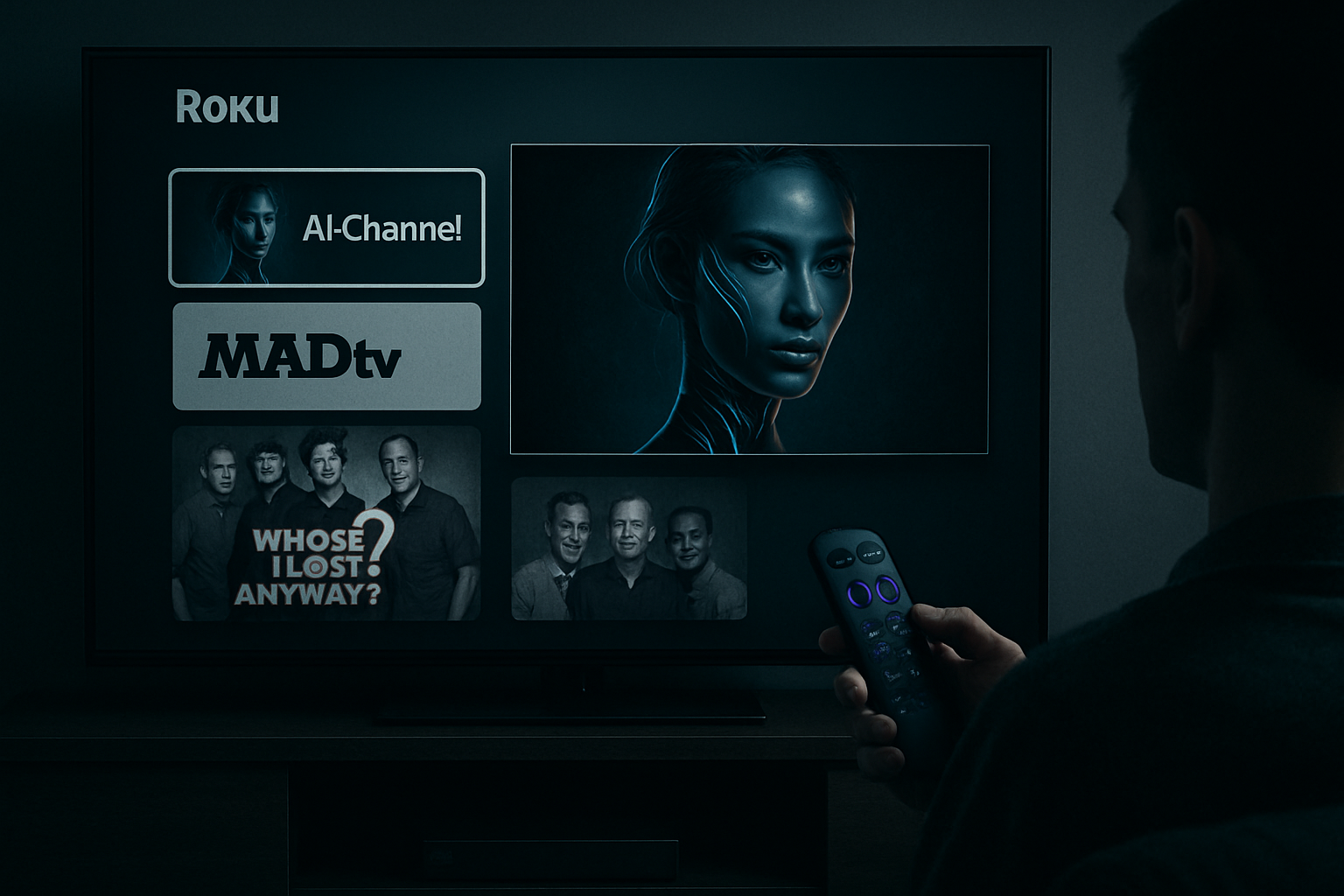
This week, Roku added four new channels to its streaming program library. In addition to dedicated streams for classic episodes of Mad TV, Whose Line Is It Anyway?, and a variety of African American sitcoms, the platform also launched a 24/7 stream filled with projects from Colin Petrie-Norris's AI startup, Fairground. Partnering with Roku marks a significant advancement for Fairground, which was launched in 2025 and is reportedly working on its own AI-generated adaptations of Robin Hood and Dracula. However, watching the Fairground channel gives the distinct impression that Roku hasn't gained much from this deal, apart from the ability to claim involvement in the generative AI trend.
Like all FAST channels, Fairground AI Creator TV is filled with a selection of programs that you are meant to watch rather passively. While you can fast forward and rewind a few seconds, it is not possible to choose exactly what types of videos the channel offers. This could add a fun aspect to discovery if the channel featured truly captivating series and films. But everything I saw while watching for about an hour was more or less the same type of short, unengaging content for which text-to-video models are known.
Aside from being produced by AI, there is no consistent theme or genre in Fairground's programming — all of it being created by a selection of content creators who collaborated with the company. Some videos clearly seem to be generated by models trained on sequences extracted from professionally produced anime, while others simply resemble terrible "realistic" CGI. Surprisingly, there were semi-coherent narratives in some of the videos I watched. I was able to follow what was happening in a "live" horror film about people defeating a demon by mocking it, and I felt that a fantasy about Greek heroes might have been inspired by The Odyssey.
One can guess, from the length of the videos and how their audio is mixed, that there has been some degree of post-production editing. But the overall lack of visual polish makes it clear that they were assembled from machine-generated clips rather than takes made by a human artist. And the general mediocrity of Fairground's programming becomes particularly evident whenever the stream cuts to an advertisement — it is a FAST channel — for one of the traditionally produced movies and shows that Roku offers.
Fairground's website emphasizes that it pays its content partners for their creations, in addition to giving them an undisclosed share of the platform's revenue. It does not mention which models are used to create Fairground's content or whether rights have been obtained to use the training data in play. But Fairground insists that its programming is designed for "the living room, not the news feed," which says a lot about the type of niche that Petrie-Norris and his team are trying to carve out.
Most AI production startups present themselves as ready to revolutionize the entertainment industry with technologies that will render traditional production streams obsolete. Generally, those who claim that "Hollywood is doomed" insist that AI will soon be capable of producing films and shows comparable to those from major studios, but this does not seem to be the approach that Fairground is taking. Rather than trying to be as good or better than classic programming, it seems that Fairground simply wants its content to exist in the same general space as things that people might intentionally search for. Apparently, Roku believes that Fairground's offerings are good enough to be highlighted, which is disheartening but not really surprising as the company enters its Fox era.
Fairground's content is not impressive at all, but its presence on Roku provides the startup with a way to reach a broad potential audience. It is easy to imagine an AI company seeing a business opportunity in the audience "looking for something mindless to put in the background," but this content does not seem to be something anyone would really want to watch.
Brief IA — L'actualité IA en français
L'essentiel de l'actualité de l'intelligence artificielle, décrypté et expliqué chaque jour.